REVIEW · GRAN CANARIA
Las Palmas: 2-Day Padi Scuba Diving Course
Book on GetYourGuide →Operated by Blue Water Diving · Bookable on GetYourGuide
Two days. One new underwater skill.
This PADI Scuba Diver course in Las Palmas is a fast way to learn fundamentals with a small group of up to 4 people, guided step-by-step by English- and Spanish-speaking instructors from Blue Water Diving. I like that you get real structure: skills in a controlled setting, then application in the ocean. One thing to consider up front: it’s not suitable for kids under 10, pregnant women, or anyone with pre-existing medical conditions.
You start each morning around 8:30AM and wrap up around 2:00PM, which leaves your afternoons mostly yours. Day 1 focuses on a heated swimming pool onsite, where you complete the first three training sessions and build comfort with the core scuba skills. After that, you can download your open water diver manual and do the theory portion either at the dive center or from your hotel room—useful if you want downtime after a full morning of practice.
Day 2 shifts to the ocean for two open-water training sessions, using the skills you drilled in the pool while you take in the marine life off Gran Canaria. If you pass the course, you earn PADI Scuba Diver certification, which allows you to go to a maximum depth of 12 meters. The course price covers a lot (gear, manual, certification), but food and drinks are on you.
In This Review
- Key things I’d watch for before you book
- Las Palmas and Gran Canaria: why this format works for first-timers
- Your 2-day PADI Scuba Diver course, morning to early afternoon
- Day 1 in the heated pool: skills, safety, and confidence
- A note on the “controlled environment” idea
- Theory time with your open water diver manual (and your hotel room option)
- Day 2 in the ocean: two open-water sessions that apply Day 1 skills
- PADI certification: what you can do with the 12-meter limit
- Price and value: what $371 covers, and what it doesn’t
- Equipment and what to bring so mornings go smoothly
- Who this course is best for (and who should skip it)
- FAQ
- FAQ
- How long is the PADI Scuba Diver course in Las Palmas?
- What’s included in the price?
- Do I need to bring my own scuba equipment?
- Where do the training sessions happen?
- What certification do I receive, and how deep can I go?
- What should I bring with me?
- Should you book this 2-day PADI course in Las Palmas?
Key things I’d watch for before you book
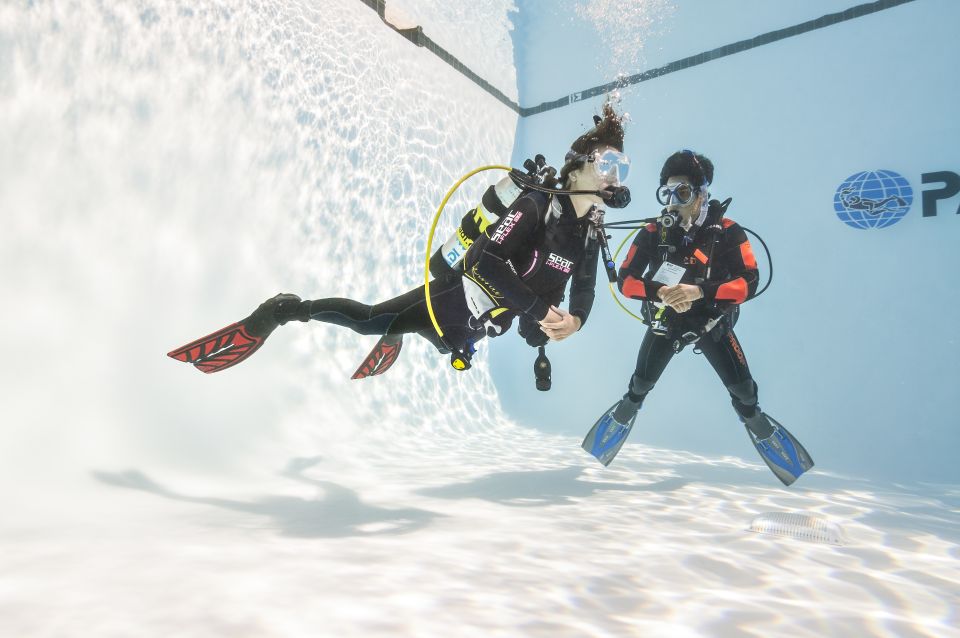
- Heated pool training onsite on Day 1 so you learn the basics in a calm, controlled setup
- Small group size (max 4), which usually means more attention during skill practice
- Manual download + theory flexibility so you can study at the dive center or in your hotel
- Two ocean training sessions on Day 2 that apply what you practiced in the pool
- Certification depth limit of 12 meters right after finishing the course
- Built-in hotel pickup and drop-off in the local area, so mornings start easier
Las Palmas and Gran Canaria: why this format works for first-timers
Las Palmas on Gran Canaria is a smart choice when you want an intro course that feels doable. The big reason is the pacing: the program starts with pool work right onsite, then moves to the ocean once you’ve practiced the basics enough to stay focused.
This kind of two-stage learning matters more than people expect. In the pool, your body learns the motions—breathing rhythm, buoyancy control, and how to handle basic equipment—without the extra variables of open water. Then, on Day 2, you’re not starting from zero. You’re trying those skills again in the ocean environment, where conditions can feel different.
I also like that the schedule gives you a clean break after lunch. You’re not locked into a full-day grind. You learn in the morning, then you’re free to relax in the afternoon with the sun and downtime.
You can also read our reviews of more scuba diving tours in Gran Canaria
Your 2-day PADI Scuba Diver course, morning to early afternoon
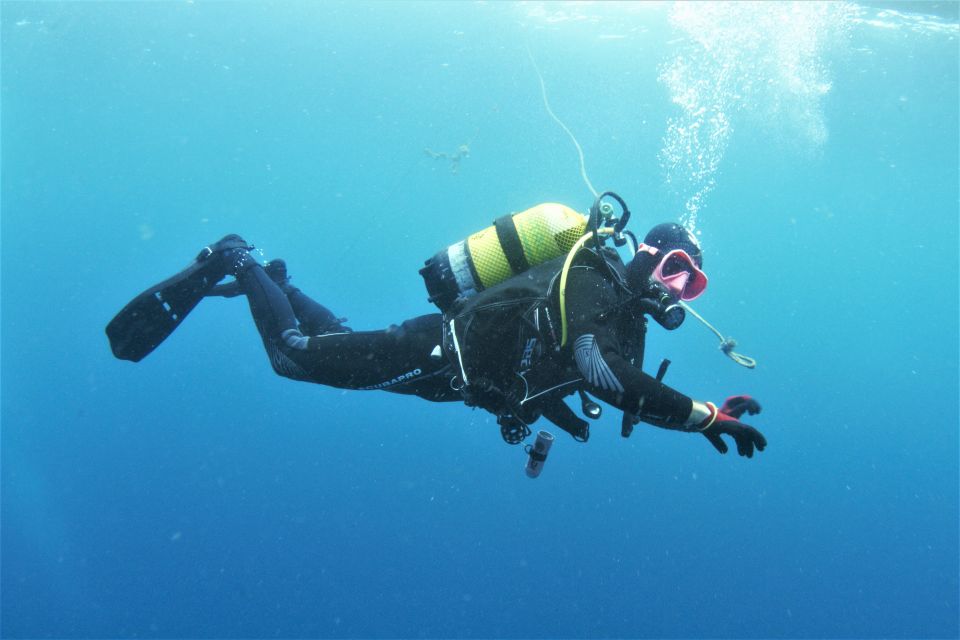
The course runs for 2 days, and each day starts around 8:30AM and ends around 2:00PM. That timing is great if you’re building a short trip and want your learning block to stay compact.
Small group size is capped at 4 participants. For a beginner course, that’s a big deal. It usually means less waiting, more direct coaching, and easier troubleshooting when something feels awkward. If you learn best with hands-on feedback, this setup can make the difference between feeling rushed and feeling steady.
Instructors are available in English and Spanish. If you’re comfortable in either, you’ll likely get the explanations and safety guidance you need without friction. Even if you’re brand new, you should expect the instructors to keep things structured and clear.
Day 1 in the heated pool: skills, safety, and confidence
Day 1 is the heart of the “learn first, then apply” approach. You head to the heated swimming pool onsite and complete the first three training sessions there. This is where you build the physical and mental comfort needed for scuba fundamentals.
Think of the pool as your practice lab. The water is controlled, the pace is managed, and you can repeat key skills until they feel natural. That’s exactly what a beginner course needs: not just information, but repeated practice with real equipment in your hands.
I like that this day also includes the start of your theory work in a way that doesn’t steal your afternoon. Instead of dumping everything on you immediately, the program guides you through the practical portion first, then you move into the manual afterward.
You’ll need to be comfortable in swimwear and ready to move. The program expects you to bring swimwear and a towel, and the day’s format supports that: you’re dressed for water practice, then you’re done and back out into the sun afterward.
A note on the “controlled environment” idea
Pool sessions aren’t automatically easy, but they tend to feel safer because you’re not also figuring out navigation, currents, or deeper water effects. You’re learning the why and the how at the same time. That’s a smart trade for a 2-day course—especially if you’re nervous.
Theory time with your open water diver manual (and your hotel room option)
After your pool sessions on Day 1, your guides help you download your open water diver manual. From there, you’ll do some theory work either at the dive center or in the comfort of your hotel room.
This flexibility matters. Not everyone wants to spend daylight doing reading once they’ve already had a full training morning. If you’re staying nearby, the hotel option can turn theory from a chore into a manageable break.
What you’re aiming for is practical understanding, not cramming. Your theory helps you make sense of what you practiced earlier—how safety rules connect to your buoyancy, breathing, and equipment use. That connection becomes important as soon as you step into the ocean on Day 2.
You can also read our reviews of more tours and experiences in Gran Canaria
Day 2 in the ocean: two open-water sessions that apply Day 1 skills
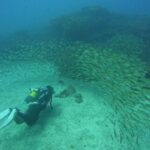
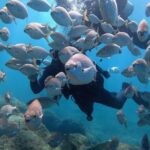
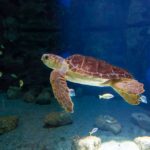
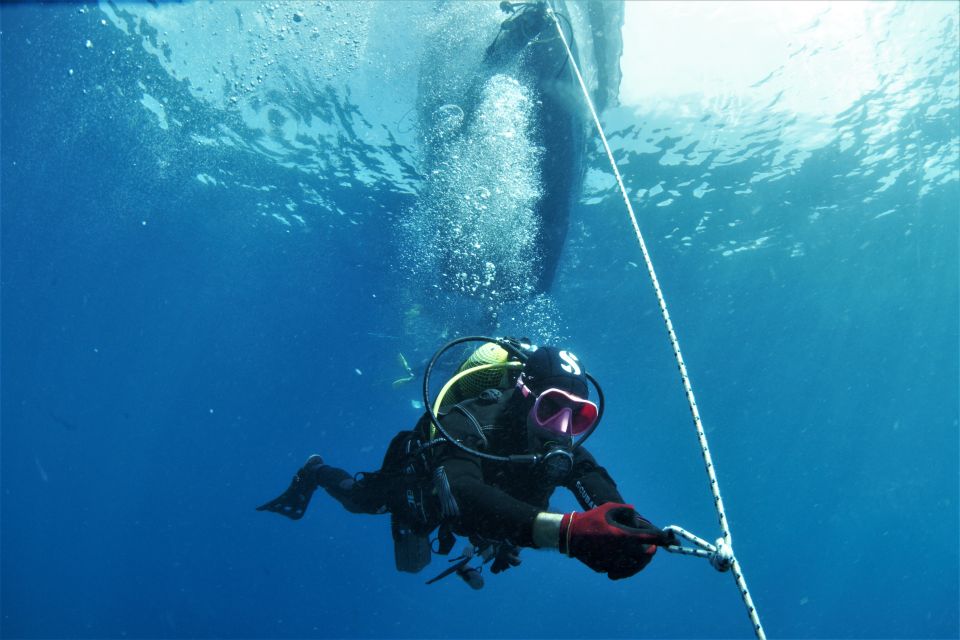
Day 2 is where the course shifts from “practice space” to “real environment.” You head to the ocean and complete two open-water training sessions. During these sessions, you’ll use the scuba skills you worked on in the heated pool while also taking in the marine life off Gran Canaria.
Two sessions doesn’t sound like much on paper, but it’s a reasonable amount for a beginner qualification course. It gives you time to apply your skills without turning the day into a marathon. You should treat it like practice in context: your job is to execute what you learned, stay relaxed, and let the instructor help you adjust.
The morning-to-afternoon schedule still holds—around 8:30AM to roughly 2:00PM—so you can keep your overall vacation rhythm. If you’re the type who likes to have the rest of the day free after an activity, this structure fits well.
PADI certification: what you can do with the 12-meter limit
Finishing the course successfully earns you PADI Scuba Diver certification. With that certification, you’re allowed to dive to a maximum depth of 12 meters.
That matters because scuba credentials aren’t just paper—they come with limits and expectations. A 12-meter maximum is an important boundary for new divers. It keeps you within the range that matches the training you completed during the 2-day course and the skills you were taught in the pool and ocean sessions.
If you’re planning future trips, this certification is a stepping stone. You can use it to build comfort and decide what kind of scuba experience you want next. If you’re hoping for a quick, legit credential rather than just a one-off underwater outing, this course is designed for that path.
Price and value: what $371 covers, and what it doesn’t
The listed price is $371 per person for 2 days. For a beginner certification course, that price is meaningful when you look at what’s included:
Included:
- equipment hire
- manual and certification
- local hotel pickup and drop-off
Not included:
- food and drinks
Here’s why that mix can be good value. Equipment hire and certification fees can add up if you piece everything together. By bundling those items, you know what you’re paying for from the start. Pickup and drop-off also reduces friction—especially on the first morning when you’re still figuring out how the day runs.
The one financial reality to plan for is food and drinks. Since the day typically runs until about 2:00PM, you may want to budget for lunch out or pick something convenient near your pickup area.
If you’re comparing options, I’d focus less on the headline price and more on whether gear, manual, and certification are truly included. In this case, they are.
Equipment and what to bring so mornings go smoothly
You only have two specific items listed for what to bring:
- Swimwear
- Towel
That simplicity is a quiet win. The course includes equipment hire, and the manual and certification fees are included too. So you’re not juggling a long gear list before you even arrive.
Plan to be ready for water practice at the start of each day, since the schedule starts early. If you can, pick swimwear that dries fast and lets you move comfortably. Nothing fancy—just comfortable.
Also keep in mind the course has medical restrictions. If you have any health concerns, get advice before booking, because medical restrictions may apply.
Who this course is best for (and who should skip it)
This activity is not suitable for:
- children under 10 years
- pregnant women
- people with pre-existing medical conditions
If you fit into the “yes” category, this 2-day format is particularly attractive if you want a beginner qualification without a long time commitment. The small group size helps, the heated pool makes the first lessons feel manageable, and the manual-theory piece has flexibility.
If you’re anxious about the ocean part, the structure helps: pool first, then ocean. If you want to prove you can do it in a real setting, Day 2’s ocean sessions are the goal.
FAQ
FAQ
How long is the PADI Scuba Diver course in Las Palmas?
It’s a 2-day course.
What’s included in the price?
Equipment hire, the manual and certification, and local hotel pickup and drop-off are included.
Do I need to bring my own scuba equipment?
No. Equipment hire is included.
Where do the training sessions happen?
Day 1 is in a heated onsite swimming pool. Day 2 is in the ocean for two open-water sessions.
What certification do I receive, and how deep can I go?
If you complete the course successfully, you receive PADI Scuba Diver certification, which allows you to dive to a maximum depth of 12 meters.
What should I bring with me?
Bring swimwear and a towel.
Should you book this 2-day PADI course in Las Palmas?
I’d book it if you want a straightforward beginner path to a real PADI credential—fast, structured, and supported with gear, manual, and certification included in the price. The small group size (up to 4) and the heated pool start are especially good if you like calm coaching and practice before you’re in open water.
Skip it if you’re in a category that doesn’t fit the program rules (children under 10, pregnant, or anyone with pre-existing medical conditions). Also, if you hate doing any theory work, note that you’ll have manual-based theory on Day 1.
If you do book, a practical bonus is the flexibility: you can cancel up to 24 hours in advance for a full refund, and you can reserve first and pay later. That combo makes it easier to hold your spot while you iron out the rest of your Gran Canaria plans.