REVIEW · GRAN CANARIA
Surf Gran Canaria : Premium Surf Lessons for All Levels
Book on GetYourGuide →Operated by PRO SURFING COMPANY S.L.U · Bookable on GetYourGuide
Two hours later, you’ll chase your first wave. Surf Gran Canaria turns a nervous beginner moment into a coached, safety-first surf session on Gran Canaria, with private-group attention and tide-based spot choices.
I love the way they start on land with a beach theory session and drills so you know what to do before you get wet. I also love the in-water coaching style: constant feedback from your instructor, plus the leash, lycra, and board setup handled for you.
The only real catch is timing: lessons run about 4–5 hours total and can shift with tides and weather, sometimes meaning you go to the best spot that day rather than one fixed beach.
In This Review
- Key things that make Surf Gran Canaria different
- Where the day starts: the shop briefing and gear handoff
- Beach training that actually prepares your body
- Safety and tide-based planning: why your lesson might move
- Two hours in the water with continuous feedback
- What the instructors do for mixed skill levels
- Shuttle to the beach, plus the small comforts you’ll notice
- Price and value: what $77 buys you in a one-day lesson
- Who should book this (and who should skip it)
- What to bring (and what not to bring) for a smooth session
- Tips to get better fast on your first surf morning
- Should you book Surf Gran Canaria premium surf lessons?
Key things that make Surf Gran Canaria different
- You get real coaching, not just board rental: instructors guide your pop-up, balance, and wave positioning, step by step.
- 2 hours in the water: that’s a lot of hands-on time for one day, including guided practice.
- A structured land-to-water flow: stretch, warm up, beach training, then water time with support.
- Safety basics are built in: safety introduction, leash on the board, and ongoing in-water supervision.
- They chase conditions, not a photo-op: scheduling follows tides and weather, and the spot may change.
- Small extras that matter: water plus a chocolate bar or energy bar, and free photos from group sessions.
Where the day starts: the shop briefing and gear handoff
Your session kicks off at the shop. This is where you pick up what you need—surfboard, safety leash, and a lycra/rash guard—so you’re not wasting time figuring out equipment on the beach.
You’ll also get a briefing and an intro to the instructors before you head out. It’s a small detail, but it helps you get your bearings fast when you later step onto the sand and start practicing.
Tip: bring biodegradable sunscreen and comfortable clothes for the beach training. If you show up in stiff shoes or gear that’s hard to move in, you’ll feel it once you start stretching and practicing balance.
You can also read our reviews of more tours and experiences in Gran Canaria
Beach training that actually prepares your body
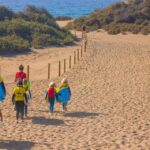
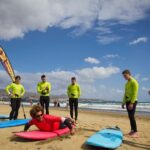
A lot of surf lessons either skip the hard part (what your body needs to do) or throw you straight into the water. Here, the process is more patient: you start with stretches, a warm-up, and a beach session focused on the fundamentals.
On land, you work on:
- how to do the pop-up
- maintaining balance
- positioning yourself to catch waves more effectively
You also get a theory lesson on the beach. Even if you’re a total beginner, you leave with a clearer mental plan. That means your first attempts in the water feel less random, more like coached practice you can build on.
One nice touch from the experience details: after the beach work, you’re not just released into the ocean. Your instructor stays with you, which makes it easier to translate what you learned from sand to surf.
Safety and tide-based planning: why your lesson might move
Surfing is weather math and water timing. That’s why your lesson scheduling is based on tides and weather conditions to aim for the best experience.
The important part for your plans: your total day is about 4–5 hours, and the lesson location may change. You could visit different beaches depending on conditions, so think of this as a flexible surf day that’s trying to give you usable waves.
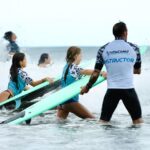
They also build safety into the flow. You’ll get an introduction to safety before you go in, you’ll have a leash on the board, and you’ll have qualified instructors with you while you’re on the water.
Two hours in the water with continuous feedback
The headline is simple: you get 2 hours on the water. For a one-day lesson, that’s where the real learning happens—enough time to try, fail, adjust, and improve.
Your time in the water is guided, not sink-or-swim:
- you get help when you’re catching your first waves
- you receive continuous feedback to correct technique
- you’re supported so you can focus on what your body is doing
In the best-case moments, you’ll start feeling the rhythm: paddle, position, pop up, balance, then ride the wave long enough to understand what “working” looks like. Several instructors in the provided experience info are known for encouragement and listening closely to different ability levels, which is especially valuable if you’re brand new or returning after a break.
Real-world detail that helps: one review mentioned a coach named Dani guiding a group through the process, starting with what to know on the sand and then pushing confidence once you’re in the water. That land-to-water approach is the pattern you’ll feel in your own lesson.
What the instructors do for mixed skill levels
This is marketed for all levels, and the way it’s described makes that practical. You should expect a lesson that adapts to the group you’re with—whether everyone is new, or you have a mix.
That adaptation matters because surf skills don’t all improve on the same timeline. Beginners often need help with:
- timing the pop-up
- staying balanced when the board moves
- not panicking when waves approach
More experienced surfers usually need nuance: positioning, reading waves, and refining technique so they catch more consistently.
Even in a private group setting, instructors still need to manage pace. The setup here is designed for that: beach training first, then supported water time, with feedback throughout.
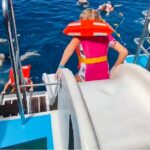





Shuttle to the beach, plus the small comforts you’ll notice
Getting from the shop to the surf spot is handled with a shuttle bus to the beach included in the experience. That’s one less thing to stress about, especially if you’re pairing this with a holiday itinerary.
There’s also an extra note: pick-up is not included in the base price. If you need shuttle service, it’s available for an additional €15 per group (up to 8 people). That’s helpful if you’re traveling with friends or want to make sure transportation is taken care of.
On top of that, you’ll have water, plus a chocolate bar or energy bar. It sounds small, but after a salty, active morning, it’s the kind of simple recovery that keeps your energy up for the full session.
And yes, you’ll get free photos from the group lessons. You won’t need to hunt for your own shots while you’re learning. You can focus on riding and not juggling a phone at the wrong moment.
Price and value: what $77 buys you in a one-day lesson
At around $77 per person, this lesson can feel like a fair deal because it bundles the stuff that typically adds up:
- surfboard and safety leash
- lycra/rash guard
- theory and beach training with instructors
- 2 hours of water time
- shuttle bus to the beach
- water plus a snack
- free group photos
The value gets even better if you’re comparing the real costs of doing this on your own: you’d still need equipment, someone to teach you the fundamentals safely, and enough time in the water to actually improve.
The one thing to watch is transportation planning. Since pick-up isn’t included in the base price, your true cost may be slightly higher if you need the shuttle service outside what’s already included for your group logistics. If you’re staying near the meeting point, you may not need that extra fee.
Who should book this (and who should skip it)
This lesson is designed for adults and older kids who can meet the safety and physical requirements. It’s not suitable for:
- pregnant women
- non-swimmers
- people with back problems, heart problems, respiratory issues, epilepsy, or people with certain medical conditions
- people prone to seasickness
- wheelchair users and anyone using mobility aids like mobility scooters
- people over weight limits listed in the information (and it includes a wide set of thresholds)
- children under the listed minimum ages
If you’re healthy, within the limits, and willing to get wet and work on basics on the beach first, this is a great “learn for real” option.
If you’re unsure about your fit, the safest approach is to check the restrictions carefully—because surf lessons are active, and the water time plus waves mean technique and stamina both matter.
What to bring (and what not to bring) for a smooth session
To keep your day easy, bring:
- biodegradable sunscreen
- comfortable clothes
- beachwear
Don’t bring:
- high-heeled shoes
- pets (assistance dogs allowed)
- weapons or sharp objects
- oversize luggage
The rules also exclude a bunch of items for safety and comfort. Practically, that means travel light and keep it simple: change into your beach gear, grab your rash guard when you arrive, and you’ll be good.
Tips to get better fast on your first surf morning
You’ll learn more if you treat this like practice, not a performance. A few things you can do that match the lesson style:
- Listen on land: the beach training is where the pop-up mechanics and balance cues start.
- Go in with patience: getting up takes tries, and you’ll be coached through those corrections.
- Follow the safety intro seriously: it’s not “boring” stuff. It’s what lets you relax once you’re in the water.
- Eat and hydrate before you arrive: water and a snack are provided, but you’ll move more smoothly if you start the day fueled.
- Expect a changing spot: tides and weather guide where you surf, so don’t lock your schedule tightly around a single fixed beach address.
Should you book Surf Gran Canaria premium surf lessons?
I’d book this if you want a structured beginner-to-intermediate surf experience with real instruction, not just renting gear and hoping. The combination of beach training, 2 hours in the water, continuous feedback, and free photos is exactly what makes a one-day lesson worth your time.
I would hesitate if your plans are inflexible and you can’t handle a 4–5 hour window that shifts with tides and weather. Since the spot may change to match conditions, be ready for that kind of “surf day logic.”
If you meet the physical and health guidelines and you want a guided, encouraging day on the water, Surf Gran Canaria is a strong choice for learning fast and having fun doing it.