REVIEW · GRAN CANARIA
Playa del Inglés surf lessons
Book on GetYourGuide →Operated by Canary Wave Surf School · Bookable on GetYourGuide
Surfing in Gran Canaria is surprisingly doable. What makes this course appealing is that you get guided, real-time coaching for a full 3 hours, and you’re in a small group (up to 8) so questions don’t get lost in the noise. You’ll be taught how to handle the board and move with better technique, not just stand up and hope for the best.
The main thing to be aware of is that the beach and the start time can shift based on sea conditions, so your day needs a little flexibility. The lesson is usually around Playa del Inglés or Maspalomas near the Lighthouse, but it can change when weather rolls in.
In This Review
- Key Things You’ll Notice Right Away
- Entering Canary Wave Surf School: The Maspalomas Meeting Point That Actually Makes Sense
- How The 3 Hours Really Work: Setup, Sand Basics, Then Time in the Water
- Meloneras Focus: Where You Build Control Before You Hunt Waves
- Playa del Inglés vs. Maspalomas by the Lighthouse: Surf Where It’s Working
- The Instructor Factor: Why This Course Earns a 4.8 Rating
- Price and Value: Is $58 Worth It for 3 Hours?
- Who This Surf Lesson Fits Best on Gran Canaria
- Quick Practical Tips So You Don’t Waste Wave Time
- Should You Book This Playa del Inglés Surf Lesson?
- FAQ
- Where do I meet for the surf lesson?
- Is there a hotel transfer?
- How long is the experience?
- When does the lesson start?
- What beach will we surf on?
- What’s included in the price?
- What languages are available for the instructor?
Key Things You’ll Notice Right Away
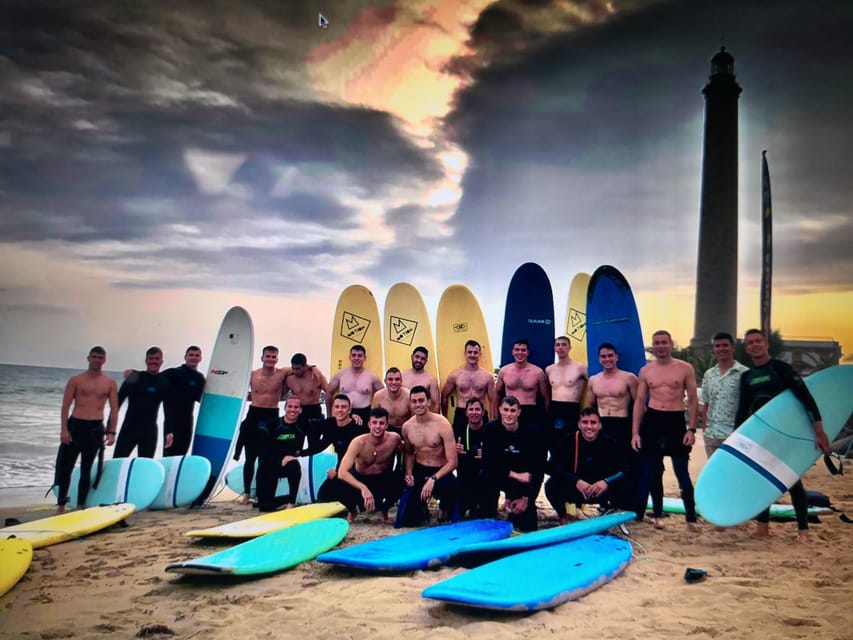
- Small-group format (up to 8), which means more attention and more attempts
- Technique-focused coaching so you learn what to do next, not just what to try
- All-level sessions, including complete beginners who want to stand and feel safe
- Location may move between Playa del Inglés and Maspalomas near the Lighthouse depending on conditions
- English-speaking instruction plus more languages, which makes instructions easy to follow
Entering Canary Wave Surf School: The Maspalomas Meeting Point That Actually Makes Sense
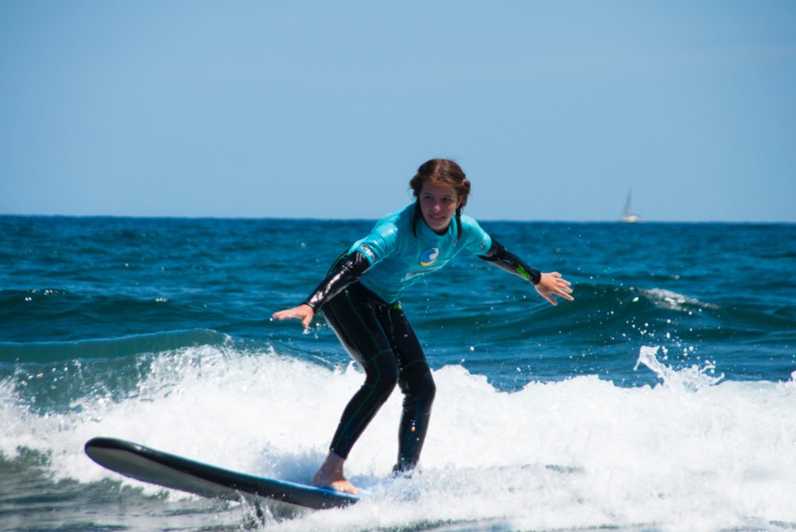
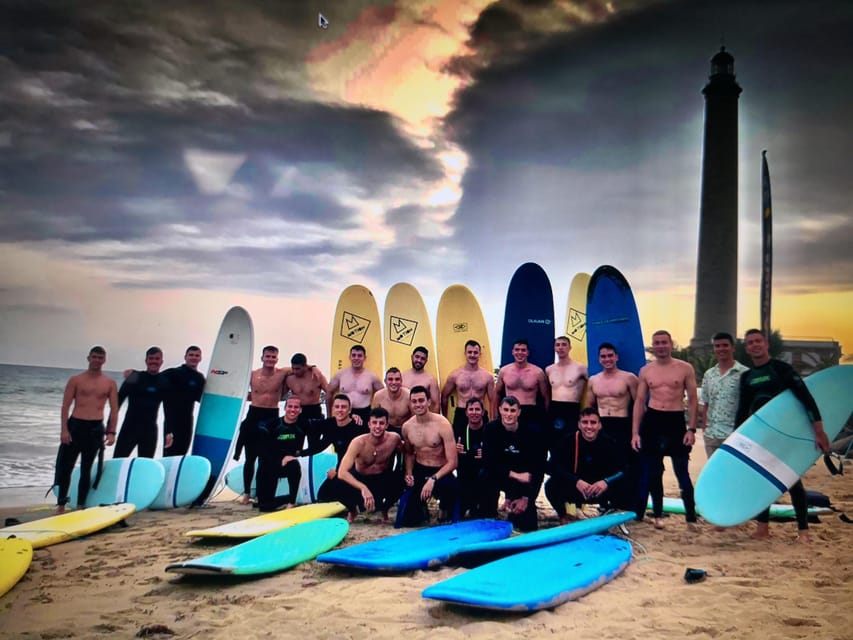
Your lesson starts at Canary Wave Surf School By Nixon, inside the Oasis Shopping Center area in Maspalomas. The specific meeting point is the Oasis Shopping Center at the Maspalomas beach, behind the Red Cross lifeguard tower. It’s also described as being near the Faro Maspalomas area, so if you picture the Lighthouse area in your head, you’re on the right track.
If you’re staying in the south of Gran Canaria, you may have a transfer included depending on the option you select. If not, you’ll make your own way to the meeting point. Either way, show up a bit early if you can. One booking notes that parking can be awkward, and they ended up using secured parking and paying about 6 euros total—so arriving a little ahead can save stress.
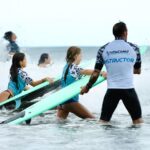
Once everyone’s together, your guide will get you sorted with your board and gear before heading toward the water. That early “setup” time matters because it reduces the chaos later when you’re trying to focus on waves, timing, and your stance.
You can also read our reviews of more tours and experiences in Gran Canaria
How The 3 Hours Really Work: Setup, Sand Basics, Then Time in the Water
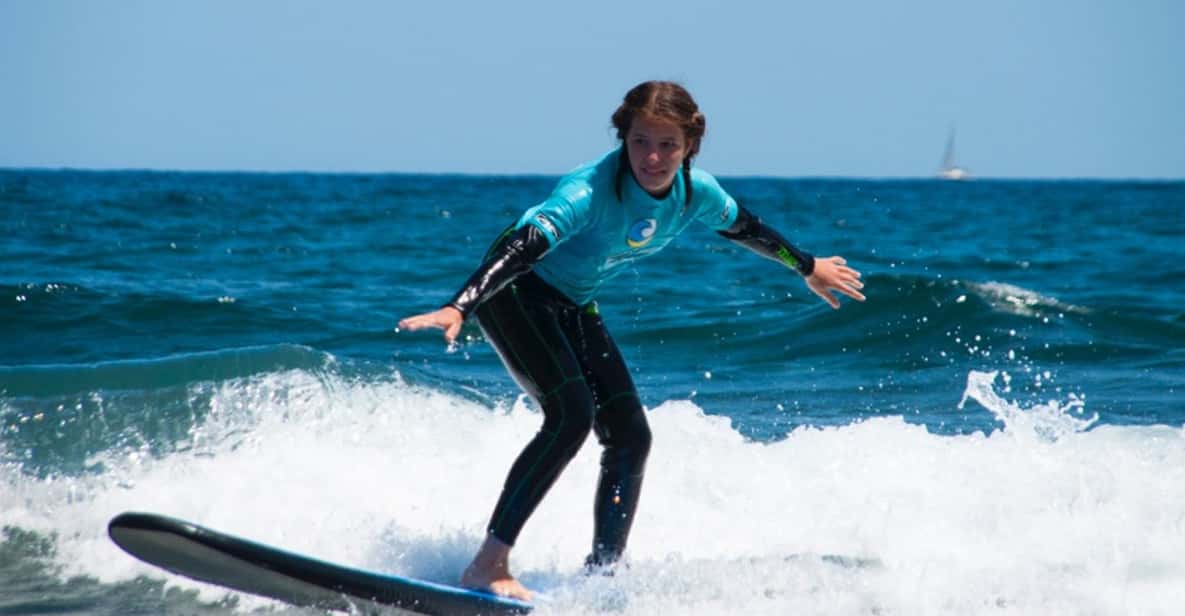
The total experience is scheduled for 3 hours, with the main class time described as about 2.5 hours. In practice, those hours are built around a simple reality of surfing: you need enough time for basics on land and enough time actually trying the wave.
You’ll typically spend time on:
- getting your board allocated and suited up
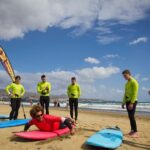
- learning key basics on land (so you don’t start the water guessing)
- then moving into the ocean with a focused coaching rhythm
A helpful detail from one booking: the session includes preparation of the suit and board allocation. That means you’re not left to figure it out alone on the beach while everyone else is already in the water.
Also, the course is designed for all levels. That doesn’t mean everyone learns the exact same thing at the same pace—it means the instructor can adjust the challenge so beginners aren’t overwhelmed and returning surfers still feel like they’re improving.
Meloneras Focus: Where You Build Control Before You Hunt Waves
The course time includes a Meloneras class block (listed as about 2.5 hours). Even if you don’t think “Meloneras” when you picture surfing, this part is where the lesson becomes useful instead of random.
What you’re working on here is board control and movement. The course aims at technique—how to position yourself, how to handle the board, and how to move in a way that actually helps you ride. That’s the difference between a session where you bounce around and a session where you start to recognize patterns, like better timing or a more stable stance.
And because it’s taught in a small group, instructors can spot the specific problem you’re having—whether that’s trouble standing, balancing, or simply staying confident when waves push you around.
This is also where you’ll likely see coaching styles turn into real progress. In bookings that mention instructor names like Rayco, Doramas (and others with similar names), the common thread is patience and clear instruction. One booking described the instructor starting with basics on the beach before going in, which is exactly what you want if you’re new and nervous.
Playa del Inglés vs. Maspalomas by the Lighthouse: Surf Where It’s Working
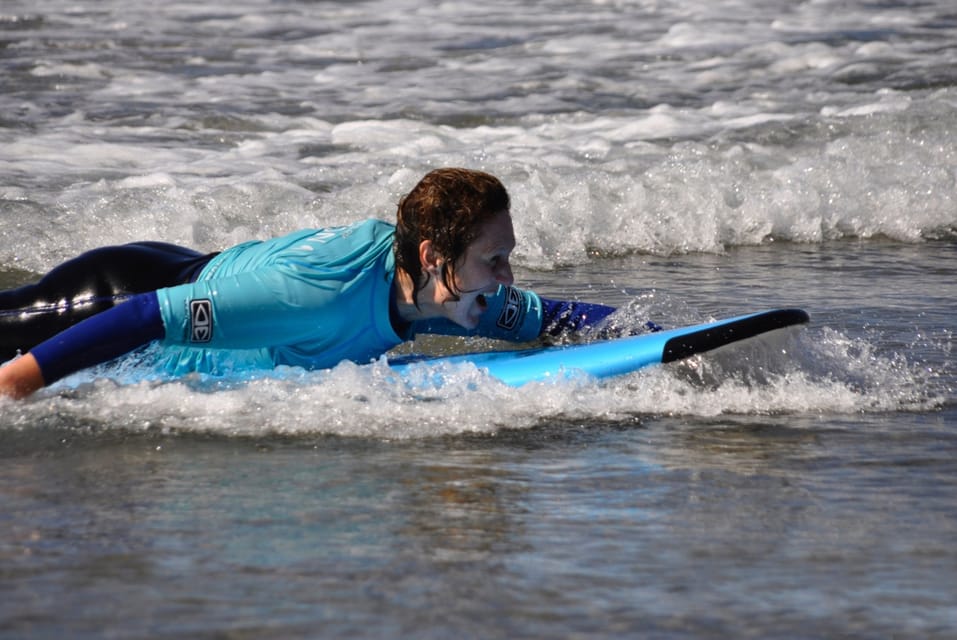
One of the smartest parts of this program is that the lesson often happens near the Lighthouse area, between Playa del Inglés and Maspalomas. But here’s the key: the exact spot can change based on weather and sea conditions.
That can sound annoying, but it’s actually practical. Surf isn’t one uniform thing. Some days give you cleaner, friendlier wave shapes in one area; other days are better somewhere else. Your provider confirms the start time and, when conditions require it, the lesson location too.
You should expect your instructor to adapt. One booking specifically notes that the coach changed location and gave extra time when conditions shifted. So while you might not get the exact beach you pictured when booking, you’re more likely to get a session that matches the water on that day.
A quick safety note to keep in mind: if you’re entering the water in a busy area, watch for other swimmers. One booking calls that out directly—surfers and swimmers share space, and staying aware helps everything run smoother.
The Instructor Factor: Why This Course Earns a 4.8 Rating
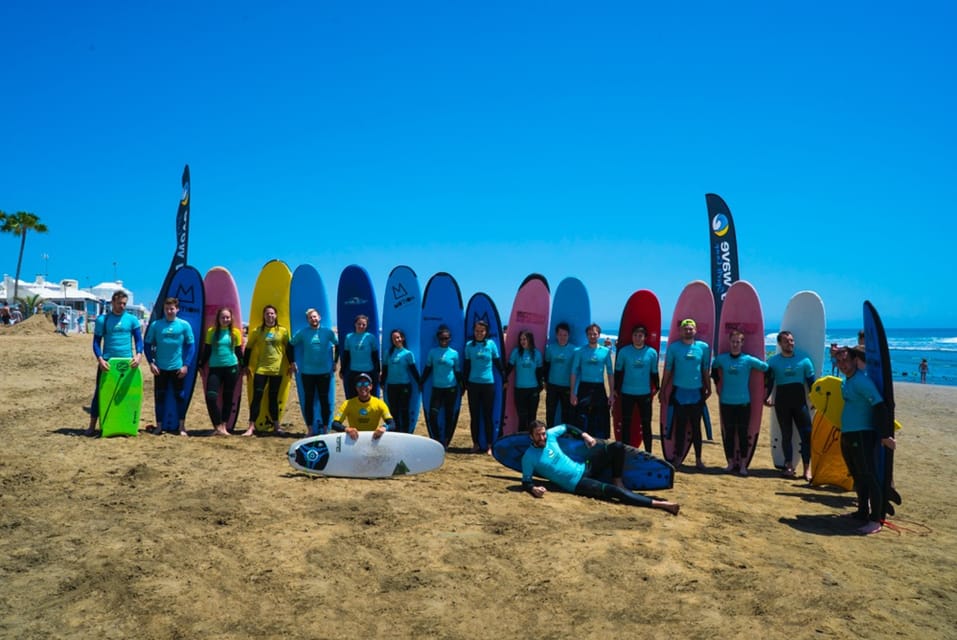
This is where the value really lives: you’re not just buying board time. You’re buying coaching.
The course is led by an instructor who helps you handle the board and learn technique, and the format (small groups up to 8) makes that assistance frequent, not distant. That shows up again and again in the kinds of comments people leave. Coaches are described as welcoming, enthusiastic, and patient—especially with kids and first-timers.
You may have different instructors depending on the day. Names that come up include Rayco, Doramas, Toramas (spelled similarly), and Charlie. The important part isn’t the spelling—it’s the teaching approach:
- clear explanations at the start
- quick checks on whether you’re getting it
- reassurance when you’re not standing yet
One booking mentions that instructors believed students could improve and kept encouraging them to keep trying. Another highlights that language support is strong, including solid English, plus other languages like Italian, Spanish, and French. That matters because surfing has a lot of “micro instructions,” and if you miss one, it can throw you off balance in the water.




Price and Value: Is $58 Worth It for 3 Hours?
At about $58 per person for a 3-hour course, this sits in the “serious try-it” category rather than the “tourist photo op” category.
Here’s what you’re paying for:
- professional instruction
- surf equipment
- a small-group teaching environment (up to 8)
- and for guests in the south of the island, a transfer can be included depending on the option
The big value question is usually this: will you get enough time actually practicing? With this format, the answer is “yes” because the group is small and the lesson is structured around fundamentals plus time in the water.
What’s not included: water. That’s a small miss in a practical sense. Bring or plan to buy water before you start—especially if you’re meeting in the morning and working up a sweat in sun and salt.
Also, don’t judge it like a sports movie where one lesson turns you into an advanced rider. One booking is refreshingly honest: it’s hard, and you won’t become a pro in a day. But with coaching, you can still catch some good waves and stand during the session.
Who This Surf Lesson Fits Best on Gran Canaria
This course is a great fit if you’re vacationing in the south and want something active that doesn’t require a week-long commitment.
It’s especially well-suited for:
- First-time surfers who want structured instruction and a confidence boost
- Families with kids: bookings include students around 10, 12, and even teens, with instructors described as patient and welcoming
- Mixed-level groups: the course is adapted for all levels, so you’re not punished for being new
- Anyone who wants a guided experience near the Lighthouse area without needing to plan the surf logistics themselves
If you’re the type who needs everything locked down to the minute, the weather-dependent location and sea-based start timing might be your only real challenge. But if you’re okay with flexibility (and you want better waves rather than a stubborn plan), you’ll probably enjoy the approach.
Quick Practical Tips So You Don’t Waste Wave Time
Here are the details that make the experience smoother:
- Arrive at the Oasis Shopping Center meeting point near the Red Cross lifeguard tower so check-in doesn’t eat your practice time.
- Plan for a morning start, but know it depends on sea conditions and the provider confirms the starting time.
- Expect the beach to be Playa del Inglés or Maspalomas near the Lighthouse, and be ready for a shift if conditions require it.
- Bring water, because it’s not included.
- If you’re driving, give yourself a little extra time for parking, since one booking called it tricky and mentioned paying for secured parking.
Small things like this matter in a surf lesson because your window for catching usable waves can be brief.
Should You Book This Playa del Inglés Surf Lesson?
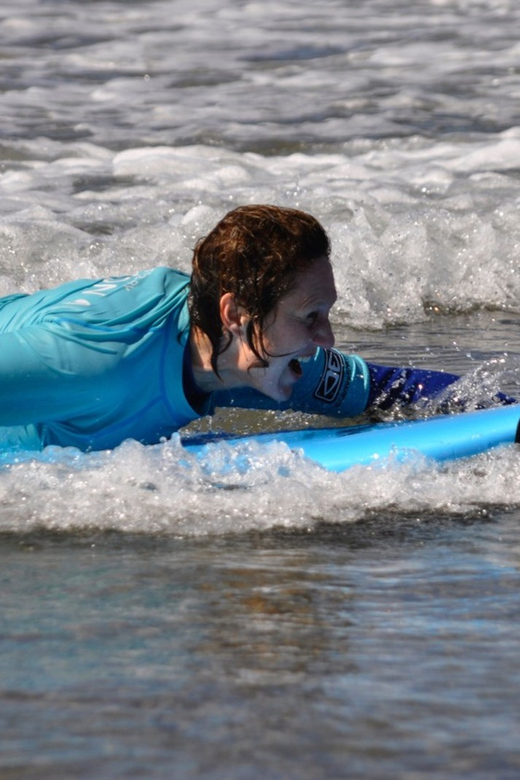
If you want a structured surf introduction with small-group coaching, a real instructor who can keep you moving in the right direction, and the chance to surf in some of the South’s best-known spots, I’d book it.
I’d hesitate only if you dislike flexibility. Since the session can shift between Playa del Inglés and Maspalomas near the Lighthouse based on conditions, you’re trading guaranteed geography for better surf conditions and a more practical plan.
For most people on Gran Canaria—especially beginners and families—that trade is worth it. You’ll spend the 3 hours learning how surfing works, not just watching it from the shore.
FAQ
Where do I meet for the surf lesson?
Meet at Canary Wave Surf School By Nixon in the Oasis Shopping Center at the Maspalomas beach, behind the Red Cross lifeguard tower.
Is there a hotel transfer?
A transfer to/from your hotel is included only for guests staying in the south of the island. For other areas, you’ll make your own way to the meeting point.
How long is the experience?
The course lasts 3 hours.
When does the lesson start?
The starting time is usually in the morning, but it depends on sea conditions. The provider contacts you to confirm the start time.
What beach will we surf on?
It’s usually carried out on Playa del Inglés or Maspalomas beach next to the Lighthouse, but the exact location can change depending on weather conditions.
What’s included in the price?
Surf equipment and an instructor are included. Water is not included.
What languages are available for the instructor?
Instructors are available in English, Italian, Spanish, and French.