REVIEW · GRAN CANARIA
Gran Canaria: Maspalomas Surf Lessons
Book on GetYourGuide →Operated by Canary Wave Surf School · Bookable on GetYourGuide
Surfing on Gran Canaria is easier when the day is planned.
Canary Wave in Maspalomas keeps things practical, from shore coaching to a quick van ride when conditions change.
I’m drawn to small groups (up to 8) where you actually get feedback, not vague encouragement. I also like the multilingual instruction so you can learn technique without guessing.
One thing to keep in mind: if the sea is busy or crowded with other schools, you may spend more time waiting for your turn on a safe wave.
In This Review
- What You Really Get From Canary Wave Surf Lessons
- Key Points Worth Booking For
- Entering The Surf School in Maspalomas (and Finding the Meeting Point)
- Timing: Morning Start, Weather Checks, and Flex Time
- What Happens First: Theory, Then a Practical Build-Up
- The Big Advantage: Chasing Better Waves Around Maspalomas and Meloneras
- How the Coaching Actually Helps You Progress
- Equipment and Extras: What’s Included vs What You Bring
- Group Size: Why Up to 8 People Works for Learning
- Price and Value: Is $58 Fair for Two Hours?
- Who This Surf Lesson Fits Best (and Who Might Want Another Option)
- Small Practical Tips to Make Your Day Easier
- Should You Book Canary Wave Maspalomas Surf Lessons?
- FAQ
- What language are the surf instructors?
- How many people are in each surf lesson group?
- Where do I meet Canary Wave Surf School?
- What time does the lesson start?
- Where does the lesson take place?
- Is equipment included?
- Do I need to bring a towel?
- Is water provided?
- Is pickup available from my hotel?
- How long is the course?
What You Really Get From Canary Wave Surf Lessons
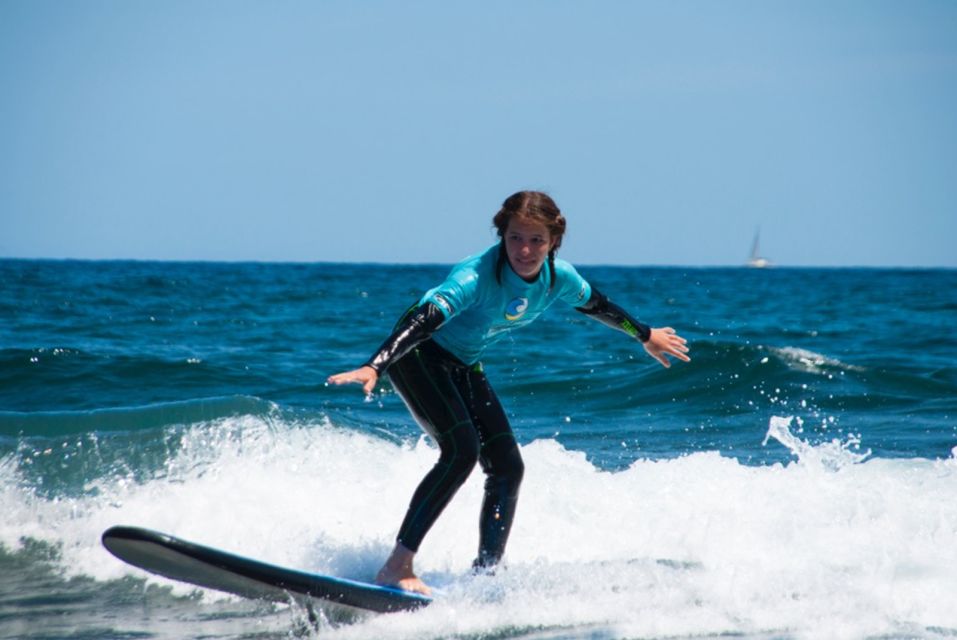
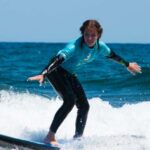
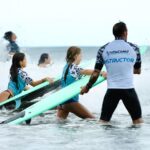
For me, the best surf lessons aren’t just about getting wet. They’re about getting clear, fast coaching that helps you understand what to do with your body once you’re out there. At Canary Wave, the structure is built around that idea: a short theoretical start, a practical warm-up, then time in the water with an instructor watching your form and correcting as you go.
The whole experience is designed to match the conditions. If Maspalomas is flat or the waves aren’t cooperating, you might be moved to where the surf is better. That flexibility is a big deal, because surfing is never the same twice on Gran Canaria.
You also get lessons for different levels: beginners, intermediate, and advanced. That matters because the instructor can tailor the focus. A first-timer needs basics and safety cues. An intermediate surfer needs cleaner takeoffs and better positioning. Even advanced surfers can work on specific technique rather than just “having a go.”
Finally, the tone from the coaching style is consistently supportive. In the past sessions I looked at, people talked about instructors being friendly, professional, and detailed. Names came up too: Rayco and Tony were singled out for attentive coaching and positive energy.
Key Points Worth Booking For
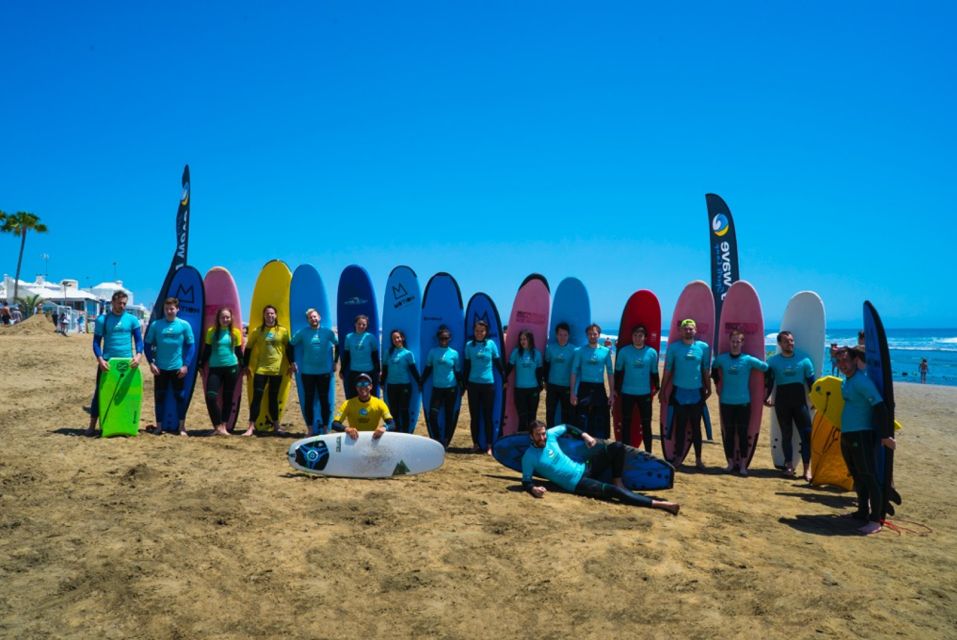
- Up to 8 people per group for close coaching and fewer long waits
- Multilingual instructors in Spanish, English, and Italian
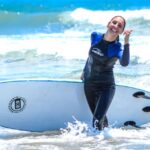
- You get the equipment and sun protection (wetsuit, rashguard, leash, and sunblock)
- Location changes with the waves between Maspalomas and Meloneras areas
- A/c surf van if your home beach isn’t producing
You can also read our reviews of more tours and experiences in Gran Canaria
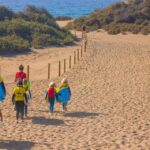
Entering The Surf School in Maspalomas (and Finding the Meeting Point)
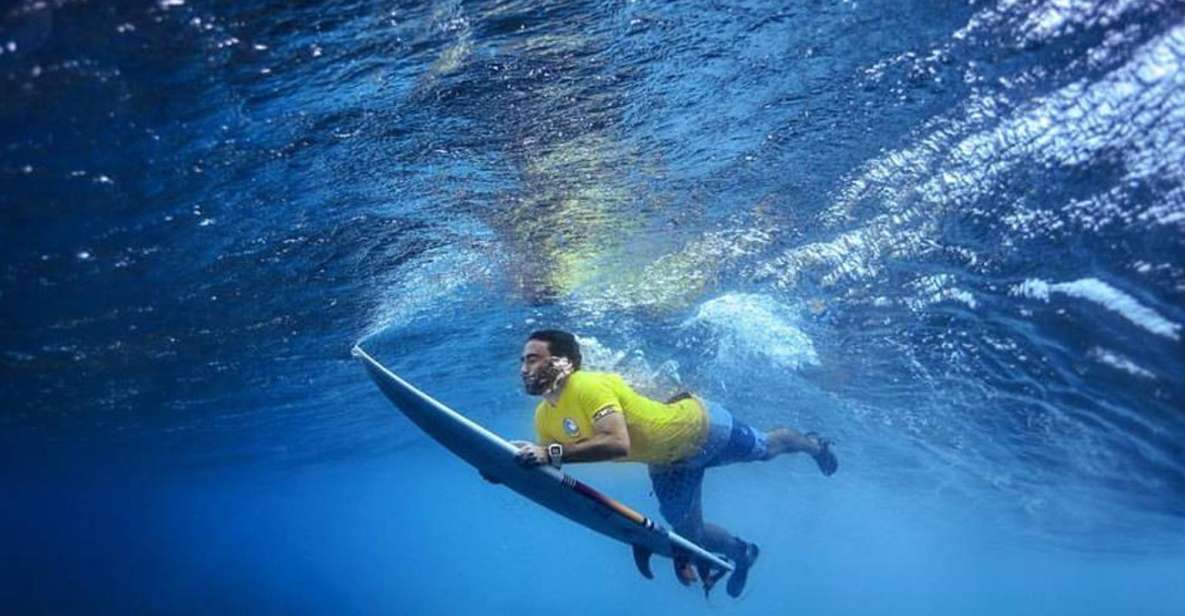
Meet-up is simple and beach-close: Canary Wave Surf School By Nixon is inside the Oasis Shopping Center in Maspalomas, behind the Red Cross lifeguard tower on the beach side. If you’re staying in the Playa del Inglés or Maspalomas area, this is a pretty convenient starting point. You’re not starting half an hour away and fighting traffic before you even touch a board.
The meeting spot also hints at how the day runs. This isn’t a far-flung tour. It’s a surf day built around being near the water, then using the van only when it’s actually needed.
Timing: Morning Start, Weather Checks, and Flex Time
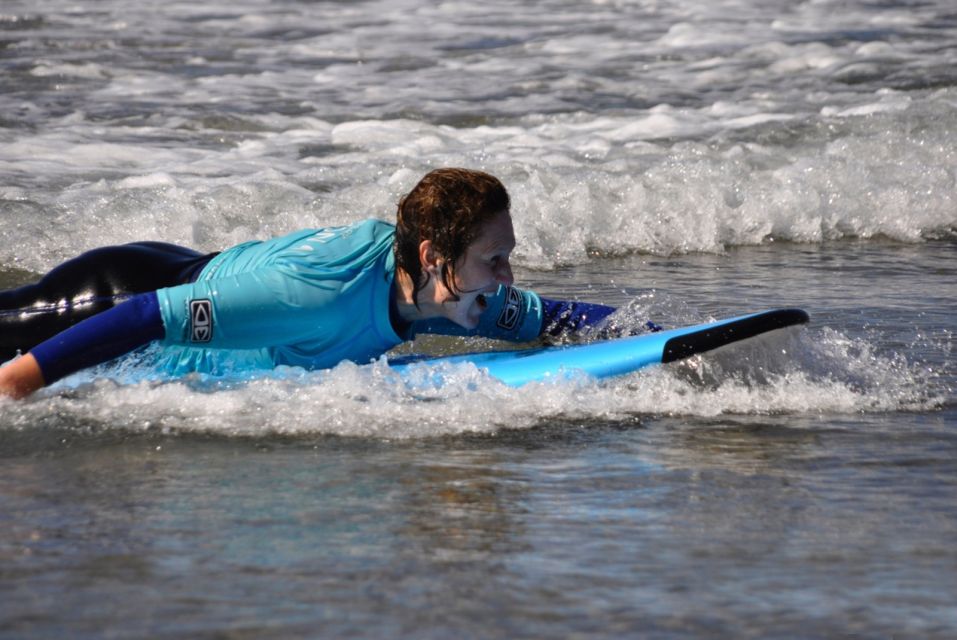
Your lesson usually starts in the morning. A common meet-up time is 08:30, but it can shift based on sea conditions. The provider confirms the start time if anything changes, so you’ll want to keep your phone available around the morning window.
Why this matters: surf sessions live and die by timing. Wind and swell can turn the best wave spots on and off quickly. Starting early also helps you avoid building sun and heat, especially if you’re not yet used to how long you’ll be in and out of the water.
Also watch the wording around duration. The experience is listed as 2 hours, but the inclusions mention 3 hours of surf class. That doesn’t mean you should assume something wrong—just that you should confirm the exact schedule when you book so your expectations match the day’s plan.
What Happens First: Theory, Then a Practical Build-Up
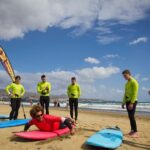
The lesson starts with both theory and practice. The idea is straightforward: you’ll get the key concepts on shore before you’re asked to figure everything out in the lineup.
In practical terms, this “first stage” usually helps you understand:
- How to handle your board before you’re in the waves
- What to focus on for balance and turning
- How to move safely in and out without fighting your leash or your board
You also get sunprotector cream provided before you start. That’s a small thing until you’re out there and realize you’re both sunburn-prone and salt-spray-exposed. The lesson is in the Canary Islands, where the sun can be sneaky even when you’re not thinking about it.
Then you move into the water for the main part. The goal isn’t just to stand once. It’s to keep building the basics so you can stand more often, paddle more efficiently, and avoid the most common mistakes.
The Big Advantage: Chasing Better Waves Around Maspalomas and Meloneras
One of the most useful features here is the “go where the waves are” approach. The lesson is usually carried out on Meloneras beach or Maspalomas beach, next to the lighthouse area. But it can change depending on the weather conditions.
If your home beach doesn’t deliver, you can go by surf van. The van has A/C, which sounds like a luxury until you’re changing outfits in warm temperatures and then need to cool down on the way to the next spot.
Here’s why this strategy is valuable for you:
- Beginners get more usable wave time because the instructor can aim for better beginner conditions
- Intermediate surfers spend more time working on technique instead of waiting for the right set
- Everyone benefits from reduced “dead time” when surf is poor
And yes, timing can still mean some waiting. Surf involves timing, luck, and timing again. But having a plan that adapts to conditions is better than locking everyone into one spot and hoping it works out.





How the Coaching Actually Helps You Progress
Let’s talk coaching style, because that’s what tends to make people recommend a surf school. In the feedback I saw, instructors were described as friendly, professional, passionate, and attentive. The key theme: they didn’t just say what to do. They watched you do it, then corrected you while you were still trying.
A beginner’s biggest problem is usually confusion: feet position, paddle rhythm, when to stand, and how to keep the board lined up. When an instructor gives specific corrections in real time, you can fix one thing at a time instead of guessing.
Names came up in the stories too. Rayco was praised for helping a beginner have fun while learning. Tony was highlighted for detailed corrections and the kind of energy that keeps you trying even after wipeouts. If you want technique with a bit of good mood, that’s the vibe you’re likely to find.
Also, there’s a practical safety element. People noted instructors made them feel safe and confident in the water. That matters even if you’re fearless. Confident is calmer. Calmer is safer. And calmer helps your brain learn faster while you’re getting tossed around.
Equipment and Extras: What’s Included vs What You Bring
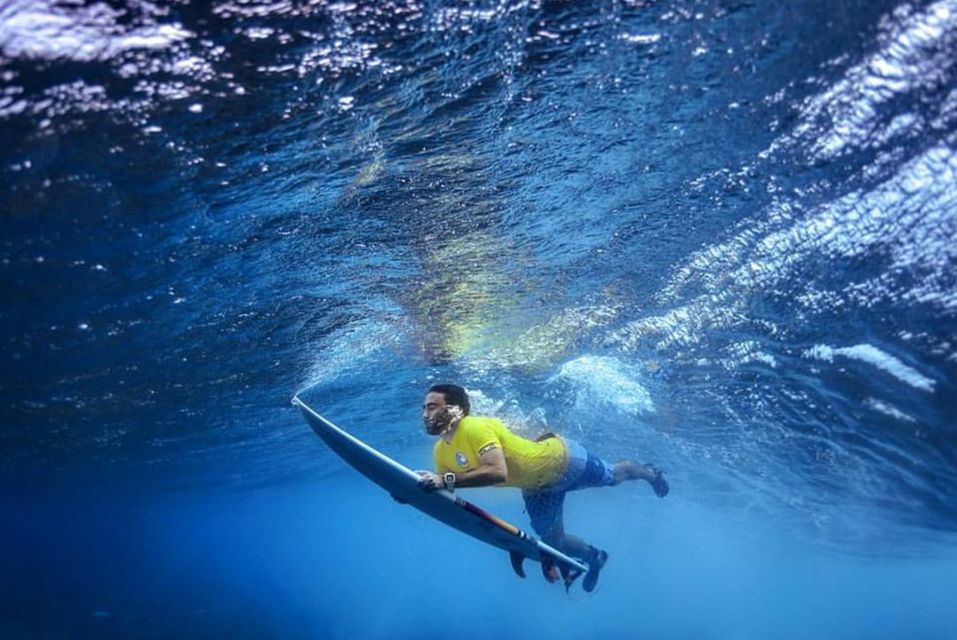
You’re not showing up empty-handed. The lesson includes surf equipment and key protection items:
- Wetsuit options (short or long wetsuit)
- Leash
- Rashguard
- Surfboard (and bodyboard is also mentioned as part of the gear)
- Sunprotector cream
- Insurance
- Theoretical and practical instructions
- Water to drink
- Photos of the surf class sent to you, if available (you can ask)
So what do you bring? Just the basics:
- Swimwear
- Towel
If you’ve never surfed before, the provided gear is a big value. Getting the right wetsuit thickness and the right board type can be expensive if you’re renting everything separately. Here, it’s bundled into the lesson.
Group Size: Why Up to 8 People Works for Learning
A lot of surf schools advertise “small group,” then deliver a crowd. Here, the limit is up to 8 participants. That’s a manageable number for coaching because instructors can:
- keep an eye on multiple beginners at once
- explain corrections without repeating everything for 30 people
- reduce time spent watching others instead of practicing
In real life, surfing has lots of short bursts: paddle, set yourself, catch, stand, then reset. If you have too many people, that rhythm breaks. With a smaller group, you keep the pace—and you’re more likely to stand sooner.
One caution from the kind of conditions that happen sometimes: if the day is busy and other schools are in the water, you might feel the crowd and wait longer for the safer wave. That doesn’t mean the coaching stops being good—it means the ocean doesn’t care about your schedule.
Price and Value: Is $58 Fair for Two Hours?
At $58 per person for a lesson around 2 hours, the value is strong if you care about real instruction. You’re paying for more than just board rental. You’re paying for:
- instructors who teach across levels
- provided surf gear and insurance
- sun protection and water
- photos (when available)
- the “best waves” flexibility, plus an A/C surf van if needed
To judge value, ask what would cost you more if you tried to DIY it. If you booked equipment and found a guide for proper technique, you’d likely pay more than a fixed surf lesson rate. And without coaching, you often lose time doing the wrong things—then the whole day gets longer and less fun.
Also, the school has a high average rating: 4.6 across 113 reviews. That’s not a guarantee, but it’s a good signal that the day usually lands on the right side of expectations.
Who This Surf Lesson Fits Best (and Who Might Want Another Option)
This is ideal if you:
- want a first surf lesson with structured basics
- care about technique corrections rather than just a board ride
- like learning in small groups with instructors who watch you closely
- want multilingual support in Spanish, English, or Italian
It also works well for mixed-level groups in your own party, since the program includes beginners, intermediate, and advanced options. You won’t be forced into one generic approach.
Who might think twice? If you hate waiting and crowded lineups at all costs, you should understand that surf days can get busy, especially when multiple schools are operating. If you’re sensitive to that, plan to stay flexible and treat waiting as part of surfing.
Small Practical Tips to Make Your Day Easier
A few practical things help you enjoy the lesson more:
- Bring a towel you’re willing to use right after the wetsuit comes off. You’ll want it fast.
- Wear swimwear that works with a wetsuit and doesn’t take ages to dry.
- Use the sunprotector cream the team provides, and reapply if you’re prone to burning.
- Don’t overthink your first goal. For beginners, the best win is standing more than once, even if it’s near shore.
If you go in expecting the ocean to teach you humility, you’ll enjoy it more. That’s half the magic of surfing on Gran Canaria.
Should You Book Canary Wave Maspalomas Surf Lessons?
If you want a focused surf lesson with small-group coaching, provided equipment, and instructors who correct your form, this is a good bet at $58. The “move to better waves” approach is practical and helps you get more useful water time instead of hoping for luck.
Book it if:
- you’re a beginner who wants clear steps and safety coaching
- you want instruction in Spanish, English, or Italian
- you like the idea of up to 8 people getting attention
Skip or adjust expectations if:
- you’re extremely bothered by crowds or waiting in busy surf conditions
- you’re very strict about exact timing, since start times depend on sea conditions
FAQ
What language are the surf instructors?
The instructors speak Spanish, English, and Italian.
How many people are in each surf lesson group?
Groups are limited to a maximum of 8 participants.
Where do I meet Canary Wave Surf School?
Meet at Canary Wave Surf School By Nixon in the Oasis Shopping Center at the Maspalomas beach, behind the Red Cross lifeguard tower.
What time does the lesson start?
The lesson usually starts in the morning, with a typical meet-up time of 08:30, but it depends on the weather and sea conditions. The provider contacts you if the time changes.
Where does the lesson take place?
It’s usually carried out on Meloneras beach or Maspalomas beach next to the lighthouse, but the location can change depending on conditions.
Is equipment included?
Yes. The lesson includes surf equipment such as short or long wetsuit, leash, rashguard, and surfboard (and bodyboard is also listed), plus sunprotector cream and insurance.
Do I need to bring a towel?
Yes. Bring swimwear and a towel.
Is water provided?
Water to drink is included.
Is pickup available from my hotel?
Pickup is available from your accommodation if available, but pickup is not offered outside the Maspalomas Playa del Ingles area. Contact them to confirm options.
How long is the course?
The activity is listed as 2 hours. The inclusions also mention 3 hours of surf class, so confirm the exact schedule when booking.