REVIEW · GRAN CANARIA
2 Hour Stand Up Paddle Lesson in Gran Canaria
Book on Viator →Operated by Sup Fit Yoga · Bookable on Viator
A calm ocean lesson can change your vacation. This 2-hour stand up paddle (SUP) class in Gran Canaria focuses on getting you standing, paddling, and feeling safe fast, with coaching that makes the whole thing feel doable. I especially like the small group size (max 4) because it keeps the attention on you, and the boards are set up for stability so beginners aren’t fighting the water from minute one. The main thing to consider is the session depends on good weather, so timing can shift if conditions aren’t right.
I also like that the lesson starts with a clear on-the-beach briefing and safety talk, then moves into warm-up exercises and technique drills before you head into open water. The payoff is real: you get a full-body workout for arms, shoulders, back, chest, legs, and core, and you also come away calmer, with that after-outing reset. One possible drawback: because it’s only two hours, you’ll get great fundamentals, but you won’t leave as a seasoned paddler.
You’ll meet at World Sport Canarias Solrik WSCC, Miguel Marrero Rodríguez 57, 35120 Arguineguín, Las Palmas, Spain, and the activity ends back at the start point. The course is offered in English, and confirmation comes at booking with a mobile ticket. If you’re booking for a group, there are group discounts, and on average this gets booked about 5 days ahead.
In This Review
- Key Highlights Worth Booking For
- Entering The Lesson in Arguineguín (World Sport Canarias Solrik WSCC)
- The 2-Hour Flow: From Beach Safety to Open Water
- On the beach: gear, rules, and how to stay safe
- Warm-up: joints and muscles first
- Learning to stand and balance
- Technique practice, then open water
- On-Water Learning: What You Actually Improve
- Instructor Energy: Small-Group Attention That Feels Personal
- The Workout Side: A Full-Body Sweat Without the Gym Mood
- Views, Sea Moments, and Photo Timing
- Price and Value: Is $64.71 Worth It?
- Logistics That Matter: Booking, Confirmation, and How the Lesson Starts
- Who Should Take This SUP Lesson (and Who Might Want to Wait)
- Should You Book This SUP Lesson in Gran Canaria?
- FAQ
- Where does the SUP lesson start?
- How long is the stand up paddle lesson?
- How much does it cost per person?
- What language is the lesson offered in?
- How big are the groups?
- Is there a mobile ticket?
- Do I get confirmation when I book?
- What if weather is bad?
- Is free cancellation available?
- Is this lesson suitable for beginners?
Key Highlights Worth Booking For
- Max 4 people, more coaching per paddle stroke: you’re not lost in a crowd
- Stable boards for balance-first learning: standing feels possible early on
- Safety + technique before open water: you’re taught what to do, not just what to try
- Warm-ups that prepare your body: joint and muscle exercises before the sea
- Ocean time can include wildlife spotting: one session included seeing fish
- Photos and videos can be part of the moment: at least one lesson included sunset shots taken during the session
Entering The Lesson in Arguineguín (World Sport Canarias Solrik WSCC)
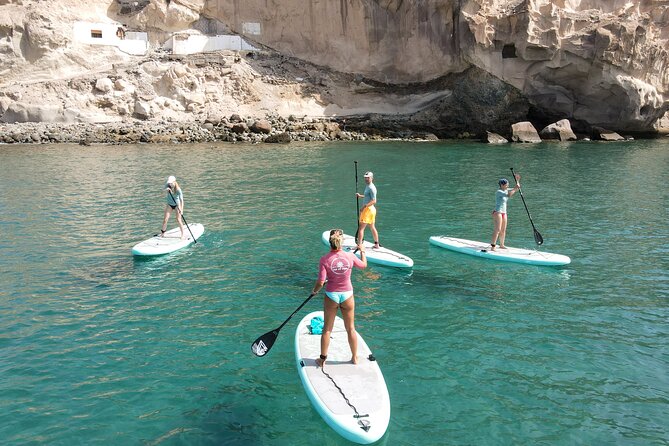
The experience begins at World Sport Canarias Solrik WSCC in Arguineguín, at Miguel Marrero Rodríguez 57. Expect a straightforward start: you arrive at the meeting point, find the team with the SUP boards, and get ushered into the lesson rhythm quickly. It helps that the meeting point is described as near public transportation, so you’re not forced into complicated logistics just to start paddling.
The timing is simple on paper: about 2 hours total. On the ground, it feels like two phases. First you build confidence on shore and with the board close to you. Then you head out and start applying those basics in open water while your instructor keeps nudging your technique.
You can also read our reviews of more tours and experiences in Gran Canaria
The 2-Hour Flow: From Beach Safety to Open Water
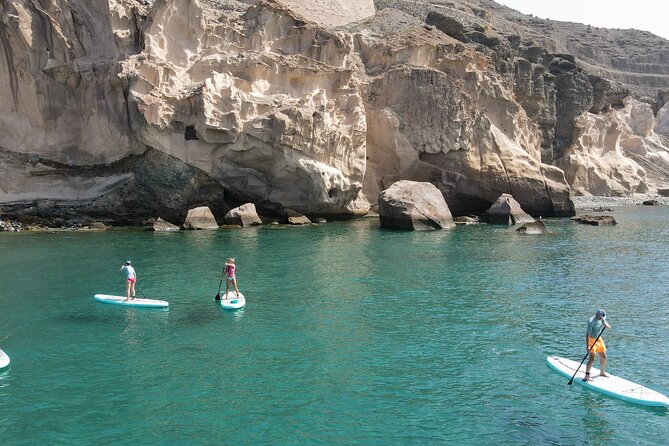
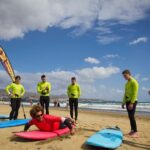
The structure is built for first-timers. You don’t get tossed onto the ocean and told to figure it out. Instead, the lesson moves in a logical order: gear and safety basics, warm-up, balance and standing practice, then more freedom out on the water.
Here’s what that usually looks like across the lesson:
On the beach: gear, rules, and how to stay safe
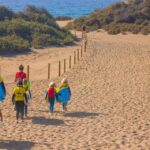
You start with an informative talk covering the ins and outs of paddle surfing. That includes the gear you’ll use and key safety tips for being on the sea. For me, this matters because it removes the guesswork. When you understand what the instructor is watching for, you stop worrying about random mistakes and start focusing on simple corrections.
Warm-up: joints and muscles first
Before anyone stands up and starts paddling, you’ll do a warm-up with joint and muscle exercises. This is a smart choice for a sport that uses your shoulders, core, and legs in a coordinated way. If you’ve ever felt tight in your hips or shoulders on day one of a new activity, you know how much better it feels when you get moved first.
Learning to stand and balance
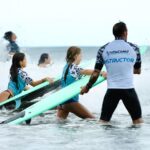
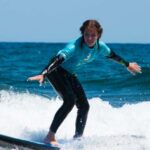
Once you’re warmed up, the lesson shifts into drills that build control. You practice standing on the board and do balance exercises designed to help you feel stable. The boards provided are described as remarkably stable, and you’ll feel why that stability matters: you spend your time learning posture and paddle technique instead of spending the lesson slipping around.
You can also read our reviews of more tours and experiences in Gran Canaria
Technique practice, then open water
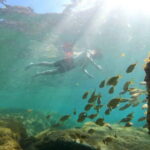
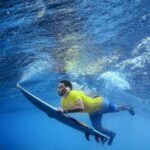
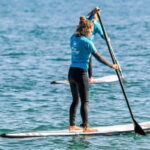
After you’re confident with the basics, the group goes out into open water. This is where the lesson turns from workout to experience. One session included a moment where the couple could see fish while paddling, which is exactly the kind of reward that makes SUP more than exercise.
On-Water Learning: What You Actually Improve
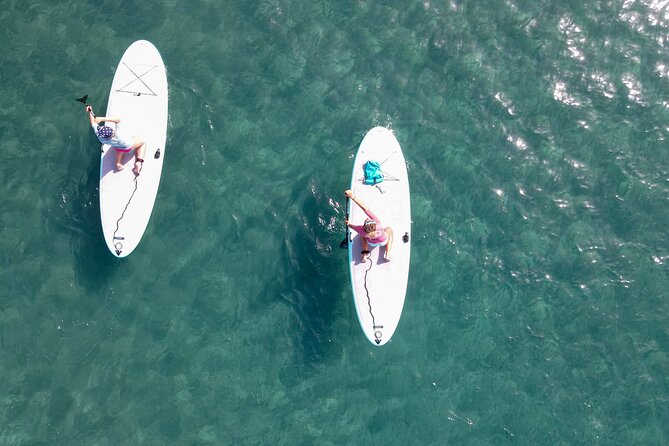
SUP looks simple from shore, but you learn fast that it’s a coordination sport. Your arms, shoulders, back, chest, legs, and core all work together, and you’ll notice the difference between paddling when you’re steady versus when you’re trying to paddle while wobbling.
I love how this lesson teaches you to find rhythm rather than relying on brute strength. You’ll be guided through basics such as how to handle the paddle and how to move without panicking when you feel the board tilt. The instructor’s job is to help you get your balance and then keep it long enough to take a real look at where you’re gliding.
And yes, it’s fun. A good first lesson should feel like you’re doing something new, not like you’re being graded. In this class, the coaching is described as patient and encouraging, even when weather doesn’t cooperate perfectly.
Instructor Energy: Small-Group Attention That Feels Personal
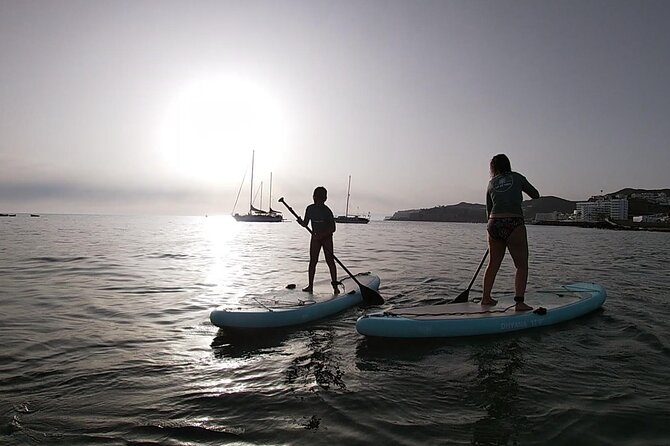
This is where the reviews strongly line up. The instructor is repeatedly described as friendly, patient, and motivating, with explanations that make sense even when you’ve never tried SUP before. Names that appear in the experience feedback include Mireie and Mirelle, and the theme is the same: the guidance is tailored to the group in front of her.
What I like is that the teaching is practical. Before you get into the water, you get walked through beach safety and how to handle the board. Then, once you’re on the water, you do basic technique and balance steps until confidence clicks. That progression is what helps beginners feel at ease rather than overwhelmed.
The small group size (max 4) also changes the feel. You’re not waiting your turn, and you’re not watching others struggle while you hope you get your chance. You can expect your instructor to notice what your body is doing and adjust accordingly.
The Workout Side: A Full-Body Sweat Without the Gym Mood
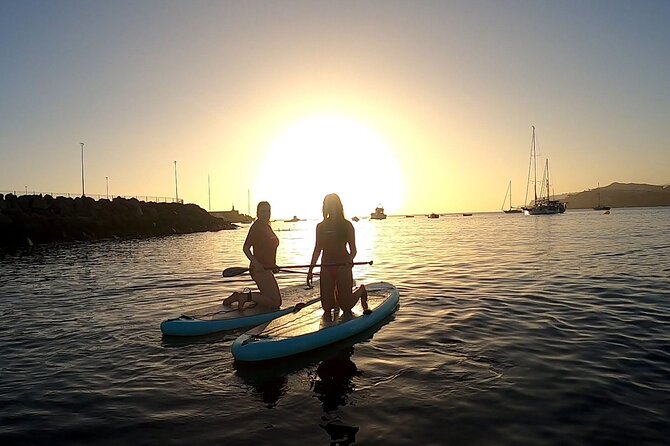
This class earns the “full-body workout” label in a very normal way. You use your arms and shoulders to paddle, your core to stay stable, and your legs to help with posture. Your back and chest also get involved as you move the paddle and hold your shape.
But here’s the twist: it doesn’t feel like a grind. Because you’re on the water and watching the ocean in front of you, the effort stays practical and focused. One of the best parts of SUP is that it forces presence. You can’t think too far ahead while you’re balancing and timing your strokes. That mental reset is part of why people come back feeling centered.
If you want a workout that’s active, outdoorsy, and not overly technical, this hits the sweet spot.
Views, Sea Moments, and Photo Timing
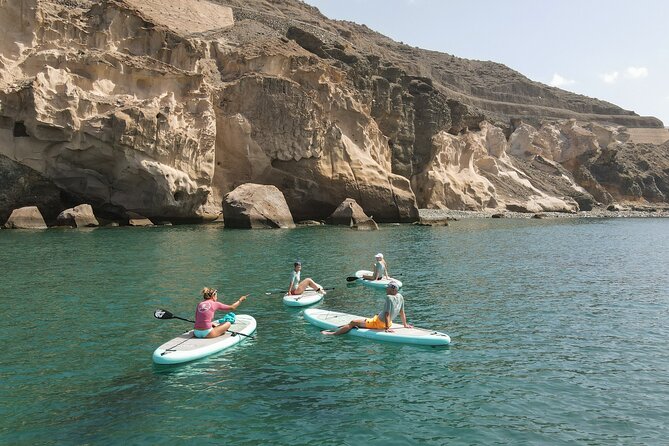
SUP is a visual sport once you’re steady. When the instructor gets you confident enough to move out into open water, the experience shifts into something more like gliding. That’s where the reviews bring in a couple of memorable details.
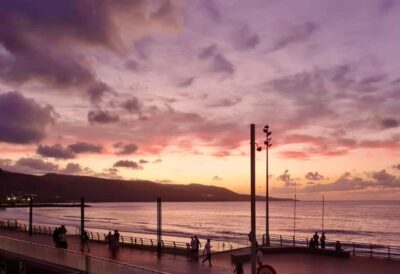
Some sessions include wildlife: one lesson described seeing fish during open water time. Others include photo moments, where the instructor took incredible pictures and even sunset shots in one case. The lesson you’re on might not line up with sunset timing, but the vibe is clear: you’re not just doing your own thing. The instructor is engaged and happy to capture the moment.
Price and Value: Is $64.71 Worth It?
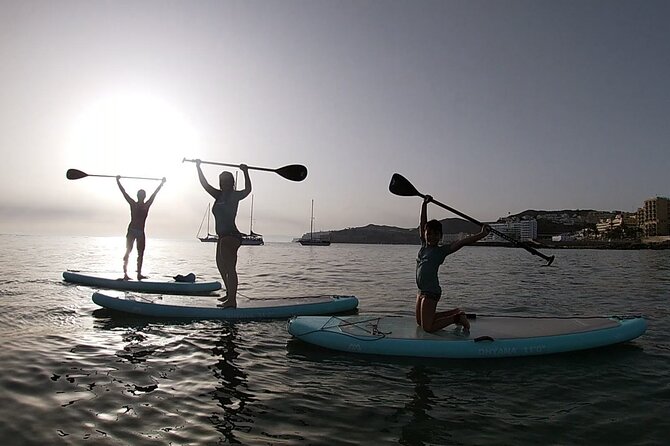
At $64.71 per person for about 2 hours, the value depends on what you want out of your vacation.
If you’re the type who enjoys trying new activities but hates paying for something vague, the pricing makes sense here because you get structure: safety briefing, warm-up, stability-focused instruction, and time on the water. Also, the class size is limited to up to 4 people, which usually means you get more direct attention than typical bigger group tours.
If you’re deciding between SUP and something else, I’d compare what you’d spend for a beginner-friendly introduction. With this, you’re paying for guidance that removes the steep learning curve. That’s worth money, especially on day one.
There’s also group discount potential, which can make the price look even better if you’re going with a partner or small group.
Logistics That Matter: Booking, Confirmation, and How the Lesson Starts
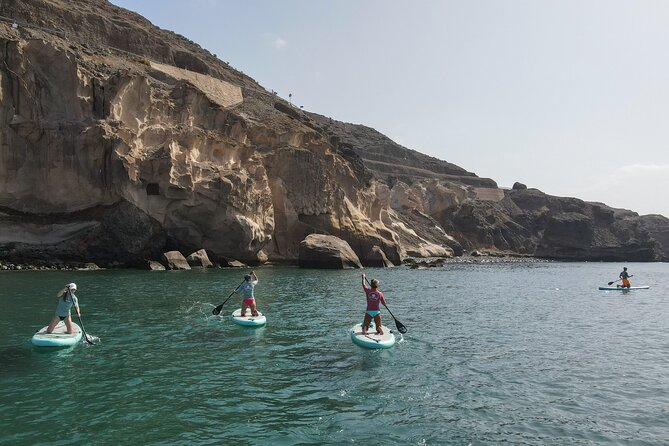
This activity is offered in English. That matters if you’re tired after traveling and don’t want to decode a language-heavy tour. Confirmation is received at booking, and you’ll get a mobile ticket.
In terms of timing, the experience is typically booked about 5 days in advance on average. If you’re traveling in busy periods, booking earlier is a smart move.
You’ll also want to treat the weather like part of the schedule. The activity requires good weather, and if it’s canceled due to poor weather, you’ll be offered a different date or a full refund. In at least one case, an option to postpone was mentioned, which suggests the team tries to work with conditions.
Who Should Take This SUP Lesson (and Who Might Want to Wait)
This class is explicitly for people who are new to paddle surfing or want to fine-tune technique. “Most travelers can participate” is the only access note given, and since the boards are described as stable and the lesson is paced for beginners, it’s a strong fit if you want to try SUP without stress.
You’ll probably enjoy it most if you:
- want a guided first attempt with safety built in
- like short, focused activities that don’t swallow your whole day
- want a full-body workout that feels outdoorsy and calm
- appreciate small-group attention
You might choose something else if you want a long, independent paddling session. Two hours is enough for the basics and a real ocean experience, but it’s not a multi-day training camp.
Should You Book This SUP Lesson in Gran Canaria?
I’d book it if you want the best version of a first SUP try: safety-first, stability-focused, and taught in a way that keeps you relaxed enough to actually learn. The combination of small group coaching, patient instruction, and two hours on the water makes it feel like time well spent.
Skip or plan around it if you’re trying to lock in a specific day no matter what. Weather matters here. But if you’re flexible, you’ll likely end up with a memorable mix of movement, fresh air, and ocean views, plus that great feeling of standing up and paddling like you knew what you were doing all along.
FAQ
Where does the SUP lesson start?
The lesson starts at World Sport Canarias Solrik WSCC, Miguel Marrero Rodríguez, 57, 35120 Arguineguín, Las Palmas, Spain, and it ends back at the meeting point.
How long is the stand up paddle lesson?
The duration is about 2 hours.
How much does it cost per person?
The price is $64.71 per person.
What language is the lesson offered in?
The lesson is offered in English.
How big are the groups?
The activity has a maximum of 4 travelers.
Is there a mobile ticket?
Yes, it includes a mobile ticket.
Do I get confirmation when I book?
You receive confirmation at the time of booking.
What if weather is bad?
The experience requires good weather. If it’s canceled due to poor weather, you’ll be offered a different date or a full refund.
Is free cancellation available?
Yes. You can cancel for a full refund up to 24 hours in advance of the experience start time.
Is this lesson suitable for beginners?
Yes. It’s tailored for people who are new to paddle surfing or who want to fine-tune their technique, and most participants can join.