REVIEW · GRAN CANARIA
The Volcano Heart Tour: Hiking, Tasting and Sunset Experience
Book on Viator →Operated by Climbo ツ · Bookable on Viator
A volcanic day with a real sunset payoff. You’ll connect the dots between Gran Canaria’s interior and its dramatic peaks, with timed stops like Pico de Las Nieves above the clouds.
I love the way the guide turns the island into a real-world science story at Caldera de Bandama. I also love the feel-good finish: a honey-rum toast at sunset, with guides like Víctor and Daylos keeping the day moving and fun.
One consideration: the Roque Nublo hike is rocky, can feel steep, and the mountain weather changes fast, so you’ll want closed shoes and a moderate fitness level.
In This Review
- Key takeaways before you go
- Where the day starts: Pico de Bandama’s viewpoint and the island’s big picture
- Caldera de Bandama: explosive volcano forces, visible on the ground
- Cruz de Tejeda: markets, local products, and a high-altitude cultural pause
- Lunch at Tajínaste Restaurant: a full reset after the craters
- Roque Nublo hike: the iconic rock, the real incline, and why shoes matter
- Pico de Las Nieves sunset: sea of clouds and a honey-rum toast
- Getting there the easy way: pickup, transport time, and how the day runs
- What’s included (and what that means for your value)
- Packing checklist: mountain weather and comfort beats style
- Who should book this Volcano Heart Tour
- Should you book? My quick decision guide
- FAQ
- How long does the Volcano Heart Tour last?
- Is pickup included, and when will I know the exact time?
- What kind of hike is Roque Nublo?
- What food and drink are included during the tour?
- Is the sunset view guaranteed to be above the clouds?
- Are restrooms available during the tour?
- What should I bring to stay comfortable?
Key takeaways before you go
- Small group energy: capped around 20–24 people, so it feels social without getting chaotic.
- Big views without navigation stress: you ride, park, and walk to the best viewpoints with a certified local guide.
- Three crater stops, not one: Pico de Bandama viewpoint, then Caldera de Bandama, then the Tejeda area before the main hike.
- Roque Nublo hike with real elevation: about 3.5 km round trip and roughly 200 m up, on uneven ground.
- Sunset at the highest point: Pico de Las Nieves, where you aim for that sea-of-clouds look.
- Tastings plus lunch plus photos: local products, a local-French fusion tasting, lunch at Tajínaste Restaurant, and guide-taken photos.
Where the day starts: Pico de Bandama’s viewpoint and the island’s big picture
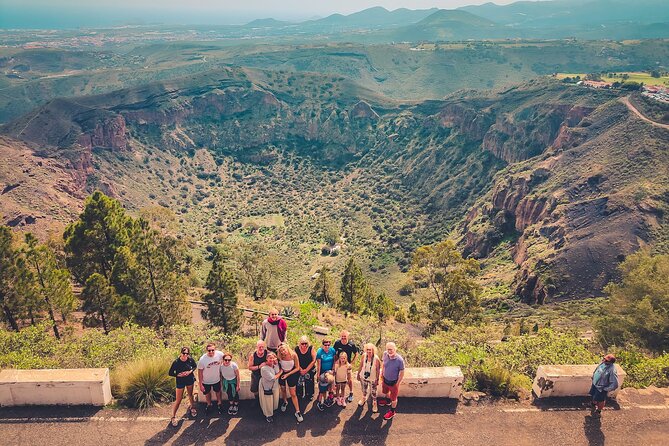
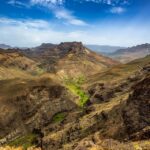
The tour begins with an iconic look at Gran Canaria from Pico de Bandama. It’s not just a photo stop. This is where you get your bearings fast—you can see how the island’s interior rises up and away from the coast, and you start to understand why volcanic activity shaped almost everything you’ll visit later.
This is also a smart way to start your day. Before you hike, you learn how the island’s climate and geography behave in pockets—one place can feel sunny and warm, while another can be cool and foggy. The guide uses the view to explain the island as a system, not a bunch of random viewpoints.
You get about a half hour here, which feels short until you realize the timing helps you move efficiently. You’re there to orient your brain, not to spend the whole morning parked in one spot.
You can also read our reviews of more food & drink experiences in Gran Canaria
Caldera de Bandama: explosive volcano forces, visible on the ground
Next up is the Caldera de Bandama, an explosive caldera formed thousands of years ago. The cool part is contrast. Inside the caldera, vegetation changes. Outside, the slopes look harsher and more exposed. That visual difference is exactly what makes the geology click.
Your guide connects what you see—rocky edges, the caldera shape, and the way water and air behave around it—to how the island formed. This stop is also a photographer’s dream because the light can reveal texture in the rock and the way the valley funnels the eye.
It’s a short stop (around 30 minutes), but it’s packed with meaning. If you like learning while you walk past real evidence, you’ll appreciate how much the guide can explain in such a limited window.
Cruz de Tejeda: markets, local products, and a high-altitude cultural pause
Then you hit Cruz de Tejeda, a mountain pass that mixes scenery with local life. It’s high enough that the air can feel different, and that’s part of the experience. This stop is where the day shifts from pure geology to Canarian culture.
You’ll have time for tasting and browsing—there’s a chance to sample products at a local stand and pick up things to take home if you want. Expect traditional Canarian delicacies and the kind of small, local shopping that makes a tour feel less like a “checklist.”
The viewpoint element matters here too. You’ll enjoy views over the caldera area around Tejeda, including the collapsed basin character that shows how the landscape formed. It’s another moment where you can look, compare, and understand the “why” behind the scenery.
One practical note: you’ll be walking less here than during the hike, but you still want to dress for mountain conditions. Even when the day feels sunny, Tejeda can surprise you.
Lunch at Tajínaste Restaurant: a full reset after the craters
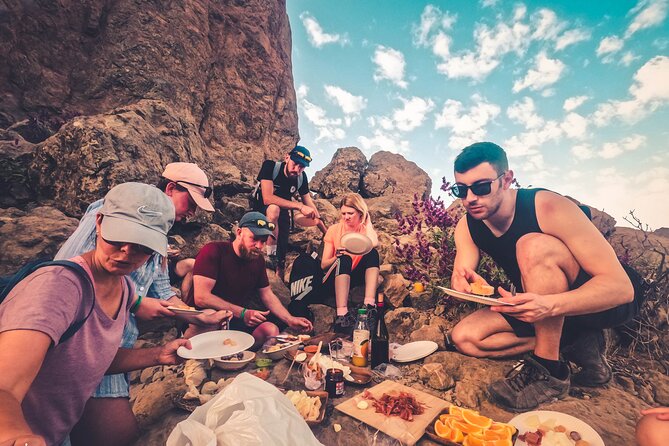
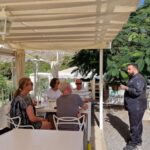
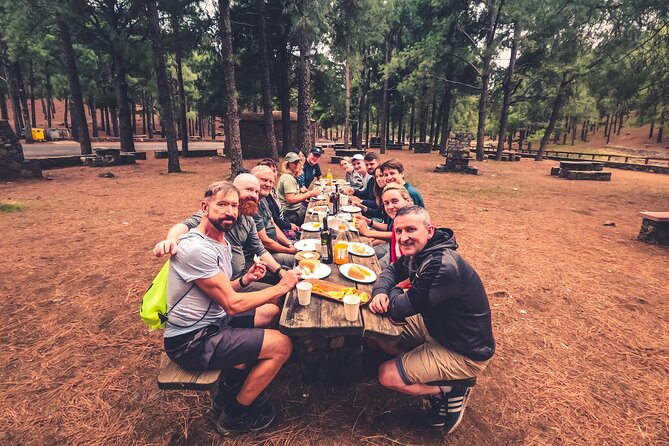
After the tasting and time at Cruz de Tejeda, you move into lunch at Tajínaste Restaurant. This meal is longer than the earlier stops—about an hour—so it gives you the break your legs will appreciate.
What I like about this lunch setup is that it’s not just a random restaurant stop. You’re eating with local ingredients, and the description points to a creative mix of Canarian food with fusion touches. In plain terms: it tends to feel more like a real meal than a rushed “fuel stop.”
There’s also flexibility in what you can do with the time you get. Use it to slow down. Sip water. Take a breather before the hike that comes next. If you’re the type who gets hangry on steep trails, this lunch timing is a big deal.
And if you eat mindfully, good news: the lunch options have included vegetarian and vegan-friendly portions in at least some cases, so it’s worth letting the operator know about any food restrictions ahead of time.
Roque Nublo hike: the iconic rock, the real incline, and why shoes matter
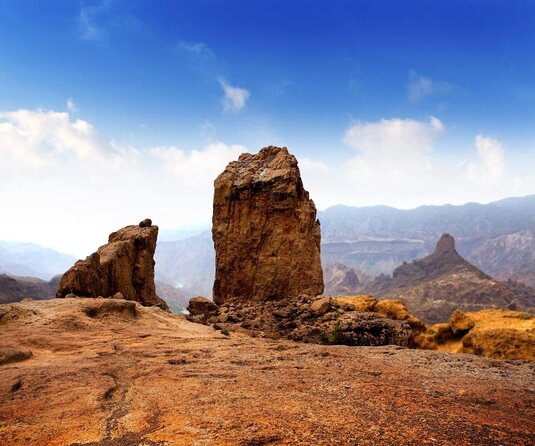
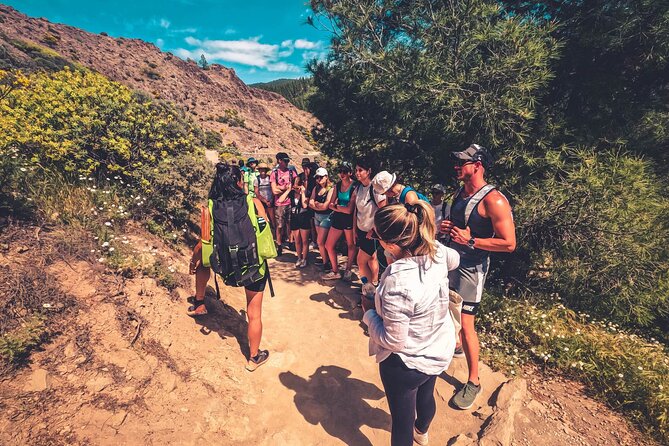
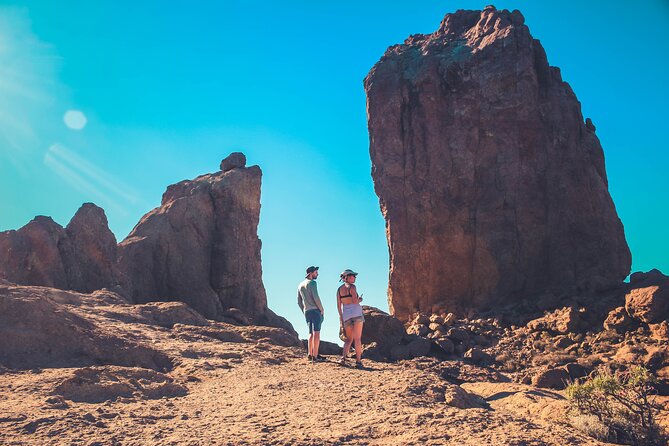
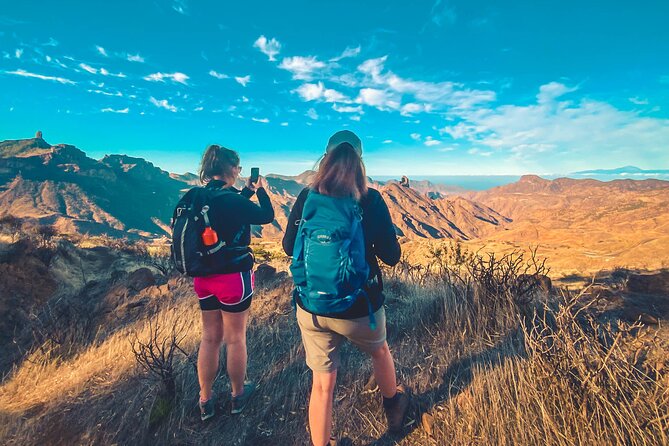
This is the main walking moment: Roque Nublo. The trail is about 3.5 km round trip with roughly 200 meters of elevation gain. It’s rated moderately challenging, but the surface is rocky and the slopes can feel steep, with gradients up to around 60%.
So here’s how to think about it. It’s not a marathon, but it’s not a stroll either. You’ll want a steady pace, especially because the ground is uneven and you’ll be switching attention between footing and views.
A detail that helps: some hikers have mentioned hiking poles being supplied. If you’re used to using them, bring your own if you have them. If you don’t, poles from the tour can still take some pressure off your knees on the up-and-down.
From the top, you get sweeping views, including the Sacred Mountains area tied to a UNESCO World Heritage designation. Even if you don’t care about the paperwork, you’ll care about the sightlines: the rock is like a natural compass point for the interior.
Also remember the practical stuff:
- there are no restrooms during the hike
- the weather can turn cold fast
- good grip matters more than speed
You can also read our reviews of more evening experiences in Gran Canaria
Pico de Las Nieves sunset: sea of clouds and a honey-rum toast
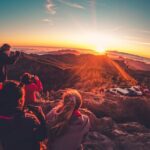
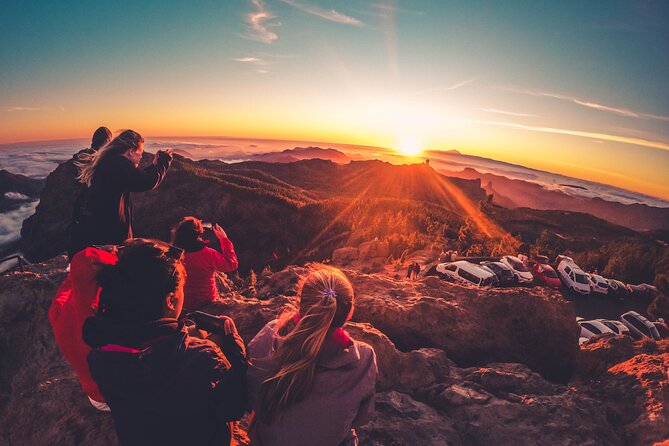
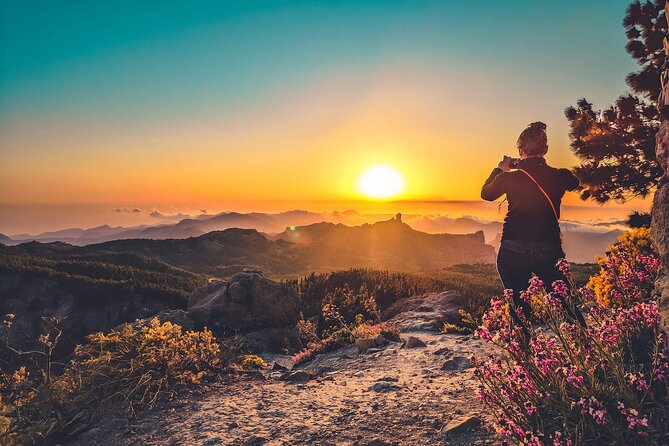
Your grand finale is Pico de Las Nieves, the island’s highest point. This is where the tour leans hard into the “sunset above the clouds” promise, with a serene viewpoint over the sea of clouds.
It’s timed so you’re not just late-day sightseeing. You’re up at the summit when light and clouds can do their best work. On clearer evenings, you may even spot the silhouette of Teide on Tenerife in the distance, plus views connected to Caldera de Tirajana.
And yes, there’s a shot of honey rum as a toast at the summit. It’s a small thing, but it’s one of those touches that makes the day feel complete. It also gives the guide a reason to stop the group, share a quick story, and let you actually take it in.
One thing to keep in mind: weather on Gran Canaria can change quickly in microclimates. The operator notes that the guide may adjust the route depending on conditions for safety and experience quality. So treat the sea-of-clouds sunset as the goal, not a guaranteed “everyone sees the same sky.”
Getting there the easy way: pickup, transport time, and how the day runs
This tour is built around door-to-door style service with an air-conditioned vehicle. Pickup times depend on season and where you’re staying, and the exact pickup time gets confirmed the day before.
The whole excursion typically runs 8.5 to 11 hours, with around 6.5 hours for the main activity plus 2 to 4.5 hours for round-trip transportation. That matters because it helps you plan your evening. You’ll likely get back after normal dinner time.
Group size stays small—max 24 travelers, with many days operating around 20—which keeps things manageable during stops and gives the guide room to keep an eye on everyone during the hike.
Also, transportation rules are strict in the way that protects the experience:
- no eating or drinking inside the vehicle
- use designated bins for waste
- avoid restricted items like drones and alcohol
If you hate waiting around, still show up early. The recommended approach is to be at the pickup point about 15 minutes before the scheduled time, since traffic can shift timing by up to around 20 minutes.
What’s included (and what that means for your value)
At $119.72 per person, the price isn’t just “a bus to viewpoints.” You’re paying for a guided day that stacks several components you’d otherwise have to plan separately.
Here’s what you’re getting:
- a professional accredited guide specialized in these routes
- free transportation service in an air-conditioned vehicle
- multiple volcanic stops (craters plus the Roque Nublo hike)
- a stop at a local stand for small product sampling
- tastings that mix local food and French fusion dishes
- lunch at Tajínaste Restaurant
- sunset at Pico de Las Nieves with a honey-rum shot
- photos taken by the guide
- medical assistance insurance coverage for accidents during the activity
Value-wise, the combo is the key. You’re paying for the logistics plus the storytelling plus the timing plus the food. If you were to DIY it, you’d spend hours on routing, parking, figuring out the best viewing windows, and trying to line up meals and tastings with a hike that has real elevation.
If you like having someone else handle the driving on winding roads while you focus on the day, you’ll feel the value right away.
Packing checklist: mountain weather and comfort beats style
Gran Canaria’s interior can get chilly even when the coast is warm. One review takeaway that matches the tour notes: layers matter.
Bring:
- closed shoes with good grip
- sportswear plus warm layers
- a small backpack
- sunscreen
- at least 1.5 liters of water
- a raincoat, because mountain weather shifts fast
- a light snack or food if you want extra energy
- your digital or printed ticket
Leave at home:
- sandals (they’re not allowed)
- strollers
- drones
- aerosols
- alcohol and drugs
Also plan for no bathroom during the hike. Your best bet is to use restrooms at the earlier stops (available at points like Pico de Bandama, Cruz de Tejeda, and the lunch location).
If you tend to feel cold easily, consider gloves. Mountain breezes can cut through even when you think you’re dressed enough.
Who should book this Volcano Heart Tour
Book this if you want a day in Gran Canaria that mixes:
- real volcanic sights (multiple crater environments)
- a guided hike to a famous landmark (Roque Nublo)
- food with tastings, not just lunch
- an actual sunset finish with a special local touch
It’s also a good fit for solo visitors. The small group size and planned photo moments make it easier to enjoy without feeling stuck in your own head.
Choose something else if:
- you have recent injuries or don’t handle steep, rocky terrain well
- you need mobility-friendly routes
- you hate colder mountain conditions
Should you book? My quick decision guide
I’d book the Volcano Heart Tour if you’re the type who wants more than beaches and you don’t mind a hike that asks for effort. The mix of volcanic craters, a real-steep rock hike, and the summit sunset is a strong combo for one day.
If your main priority is an easy stroll with no change in plans, you might find the mountain conditions stressful. The operator may adjust routes if conditions demand it, because safety and visibility both matter up there.
If you go in prepared—good shoes, layers, water—you’re set up for a day that feels full, guided, and memorable in a very Gran Canaria way.
FAQ
How long does the Volcano Heart Tour last?
It runs about 7 to 10 hours on the day, and the full excursion is typically 8.5 to 11 hours depending on your pickup location and traffic.
Is pickup included, and when will I know the exact time?
Pickup is included by air-conditioned vehicle. The exact pickup time is confirmed the day before, typically between 4:00 PM and 6:00 PM, and the pickup timing can vary by season.
What kind of hike is Roque Nublo?
The Roque Nublo hike is about 3.5 km round trip with around 200 meters of elevation gain. The trail is rocky and can feel steep, with slopes up to around 60%, so you’ll want a moderate fitness level.
What food and drink are included during the tour?
You’ll have product sampling at a local stand, a tasting that includes local and French fusion dishes, and lunch at Tajínaste Restaurant. At the summit you also get a honey-rum shot.
Is the sunset view guaranteed to be above the clouds?
The plan is a sunset over the sea of clouds from Pico de Las Nieves. Since weather can vary quickly in mountain microclimates, the guide may adjust the route depending on conditions.
Are restrooms available during the tour?
Public restrooms are available at Pico de Bandama, Cruz de Tejeda, Tajínaste Restaurant, and Llanos de La Pez. There are no restrooms during the Roque Nublo hike.
What should I bring to stay comfortable?
Wear closed shoes, bring a backpack, sunscreen, and at least 1.5 liters of water. Add layers for colder mountain air, a raincoat, and your digital or printed ticket.