REVIEW · GRAN CANARIA
Sunset Hike and Stargazing Experience in Roque Nublo Mountains
Book on Viator →Operated by RockNatour Experiences · Bookable on Viator
Sunset over volcanic peaks is hard to beat. This sunset hike and stargazing experience takes you into the mountains above the clouds, then pauses at Ventana del Nublo for golden-hour views over Roque Nublo and Teide before the sky turns into a classroom. I especially liked the practical touch of the provided mountain kit—mat, blanket, and a front light—because it lets you focus on the moment, not your logistics.
My second big win: the stargazing lesson is built around learning the sky by yourself, not relying on telescopes. You’ll get guidance to identify constellations and planets, and on some evenings the Milky Way shows up. One consideration: you’ll need your own car to reach the meeting point, because public transport doesn’t work in these zones.
In This Review
- Why the Location Above the Clouds Changes Everything
- Ventana del Nublo Sunset: Roque Nublo and Teide in One Frame
- The Forest Hike and Island Geology You Can Feel
- Stargazing Without Telescopes: Learn the Sky Like a Local
- Snacks and Hot Drinks: The Comfort Part That Actually Works
- Timing, Group Size, and How the 3 Hours Feel
- Price and Value: What $70.70 Actually Buys
- Who This Tour Suits Best (And Who Might Want to Skip It)
- Practical Tips Before You Go (So You Enjoy the Night)
- A Quick Reality Check on Weather
- Should You Book Sunset Hike and Stargazing in Roque Nublo Mountains?
- FAQ
- Do I need a car to reach the meeting point?
- How long is the experience?
- Where does the tour start?
- Is the tour offered in English?
- What equipment is provided for the mountain viewing?
- Are telescopes used during the stargazing?
- What will I see in the sky?
- What’s the group size limit?
- What happens if the weather is bad?
- Is there a cancellation window?
Why the Location Above the Clouds Changes Everything
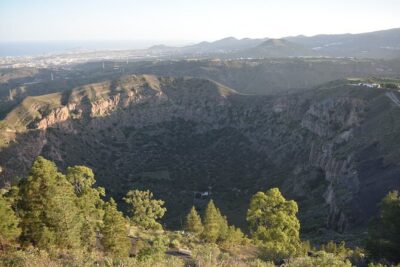
Gran Canaria’s mountain roads can feel dramatic in daylight, but at sunset they feel almost cinematic. The meeting point sits in the mountain area near Zona de Acampada de Bailico (GC-600, 35369, Las Palmas, Spain). From there, your guide leads the group into the higher terrain where the air cools and the clouds can sit below you like a ceiling.
That matters for stargazing. When you’re up above the cloud layer, you’re more likely to get a clearer view into the night sky. Even if the moon is up, you’ll still be able to track constellations and spot planets with the right guidance, and the mountain light kit helps you move safely when daylight fades.
Also, this is a small group outing (maximum 10 travelers). Fewer people usually means you can ask questions, get individualized help with identifying what you’re seeing, and actually enjoy the quiet after sunset instead of hearing 20 different conversations at once.
Ventana del Nublo Sunset: Roque Nublo and Teide in One Frame
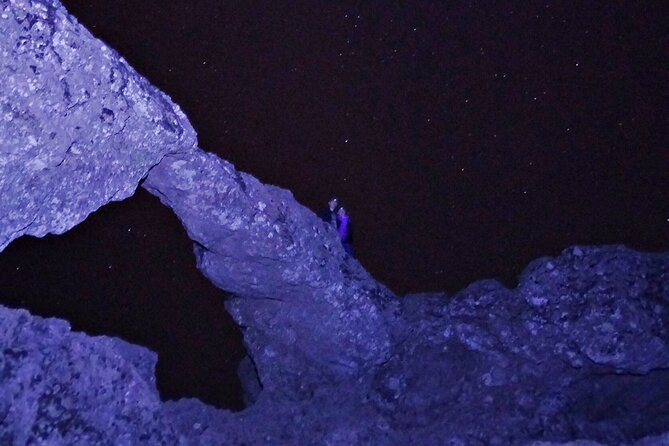
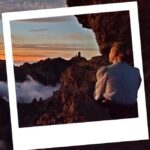
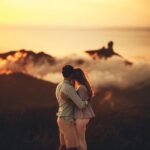
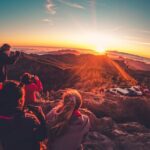
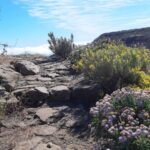
The highlight moment is the stop at Ventana del Nublo, one of Tejeda’s iconic viewpoints. As the light drops, you’ll watch the landscape shift from warm and sharp to darker and softer, with Roque Nublo and Teide visible in the wider panorama when conditions allow.
This part of the experience isn’t just scenic. Your guide also uses the sunset to teach you basic astronomy concepts in a way that makes the next phase easier. You’re not scrambling to guess what you’re looking at when the sky gets dark; you get the mental hooks first.
In the reviews, the guide’s pacing comes through strongly. One person wrote that Pablo took his time and helped the group not rush the sky-watching moment. Another mentioned how he even suggested an earlier meeting time so they would not miss the sunset they wanted. That sort of flexibility can make a big difference on an island where evening light can vanish fast.
You can also read our reviews of more evening experiences in Gran Canaria
The Forest Hike and Island Geology You Can Feel
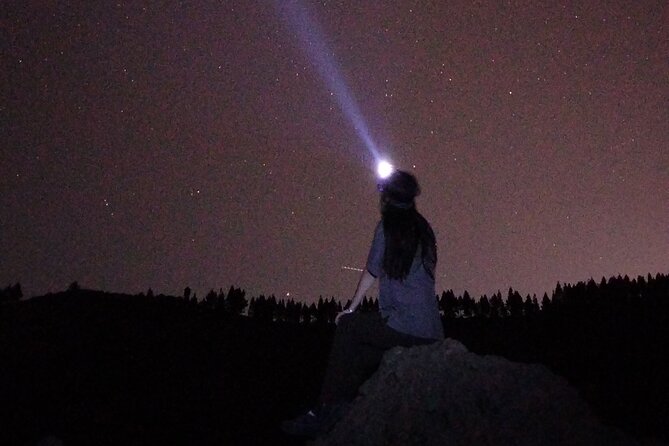
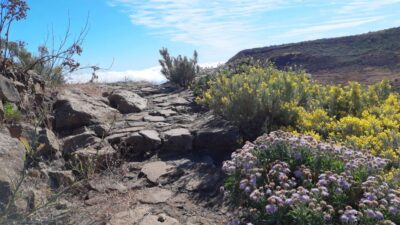
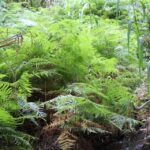
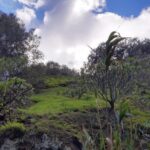
Before the sky show, you hike across a forested stretch. The goal here is not a “big cardio workout.” It’s a guided walk that brings the island’s geology into focus—how the mountains formed, why the terrain looks the way it does, and how to read the clues as you move.
I like this structure because it prevents the experience from becoming one long waiting game. You’re doing something purposeful while you’re building anticipation for the viewpoints. And geology adds context to the volcanic scenery—so when you later see Roque Nublo, it doesn’t feel like just a postcard rock. It feels like part of a bigger story.
Practical note: you’ll have your own mountain gear for sitting comfortably (mat and blanket) once you arrive at the sunset spot. That means you don’t have to bring bulky items from home just for this activity.
Stargazing Without Telescopes: Learn the Sky Like a Local
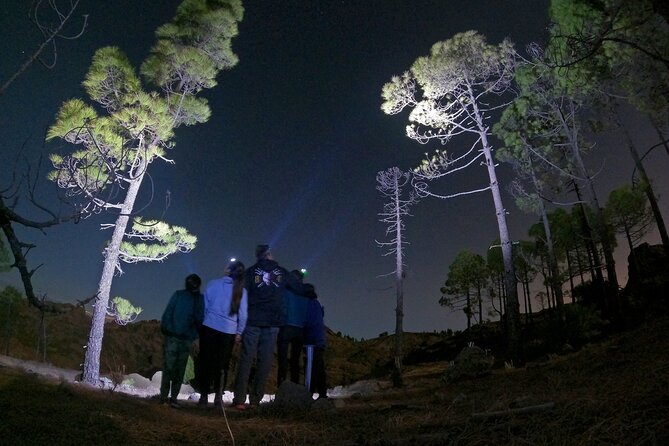
This stargazing session works differently from the usual “point-and-stare” tours. Telescopes are not used, and that’s a feature, not a limitation. You’ll learn to interpret the night sky using your own sight, with help from your guide and binoculars in some cases.
That self-reliance is the real value. Telescopes can show impressive details, but they can also create a passive experience where you don’t learn much. Here, the guide walks you through how to identify constellations and planets as the darkness settles. If Milky Way is visible on your night, you’re not just looking at a blur—you’re getting the framework to understand what’s where.
On clear evenings, you may also spot fun extras like shooting stars and satellites. Those are not guaranteed, but they’re exactly the kind of “keep your eyes moving” moments that happen when you’re learning how to watch.
One more thing I appreciated: the guides treat this as an astronomy lesson, not just a romantic outing. You get basic concepts, enough structure to feel oriented, and then time to enjoy the sky at your own pace.
Snacks and Hot Drinks: The Comfort Part That Actually Works
You get snacks and hot drinks while you watch the sky. This is not a minor add-on. Mountain weather can turn chilly quickly once sunset hits, and warm drinks keep you present instead of shivering through the good stuff.
Reviews specifically mention vegetarian options and that the snack choices can vary. One person highlighted the summer edition as especially good. Another praised the overall picnic setup and how it complemented the night-sky experience instead of distracting from it.
If you’re the type who gets hungry when you’re outside, this matters. You’re out for about three hours, and you’ll likely be hiking and sitting on a viewpoint. Having food and something warm keeps your energy steady and makes the night feel like a true activity, not a hurried stop.
Timing, Group Size, and How the 3 Hours Feel
The duration is about 3 hours. That’s long enough for sunset, full darkness, and a guided learning segment, but short enough that most people won’t feel wiped out.
Because it’s a small group, the guide can manage the pace. You’re not constantly getting lost in the shuffle, and you’re more likely to hear explanations clearly over the noise-free mountain quiet. The max 10 travelers also helps the vibe. You’ll feel like you’re sharing the night with a handful of people, not a crowd.
Timing is built around the sky. The activity depends on good weather, and the plan is designed for sunset fading into stargazing. If the forecast looks doubtful, be ready for a change in the date. One of the biggest kindnesses from the guide, according to a review, was the willingness to adjust the meeting time when possible to protect the sunset viewing.
You can also read our reviews of more hiking tours in Gran Canaria
Price and Value: What $70.70 Actually Buys
At $70.70 per person, you’re paying for more than just a scenic walk. You’re buying a guided mountain experience that includes:
- a hike with geology interpretation
- time at an iconic viewpoint for sunset
- an astronomy-focused stargazing lesson without telescopes
- provided sitting gear (mat, blanket) and a front light
- snacks and hot drinks
- a small group format led by a local guide (Pablo is one of the guides mentioned)
Here’s how I think about value on a night like this: the experience replaces a bunch of separate hassles. If you tried to do it on your own, you’d need to figure out where to park, how to reach a good viewpoint, what to bring for sitting in the cold, and how to turn “stars everywhere” into something you can actually identify. This tour compresses that into one guided, timed package.
The telescope-free approach also suggests the cost is going toward instruction and comfort, not equipment rental. If you want to leave with real skills for future nights, that’s a smart use of your money.
Who This Tour Suits Best (And Who Might Want to Skip It)
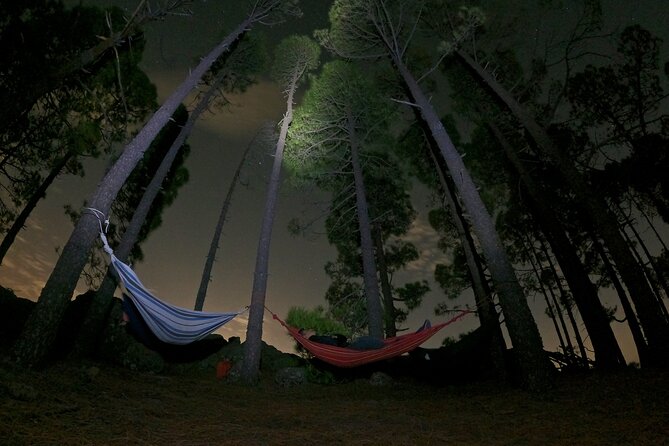
This experience is a great match if you want:
- an evening outdoors with a proper plan and time for stargazing
- a guide who explains what you’re looking at
- a mix of scenery and learning
- comfort upgrades without hauling gear
It’s also a good fit for couples and small groups who want a calm night in nature. One review even described a proposal being made more magical with help from Pablo and his wife, plus video and photo capture. That tells you the atmosphere can be gentle and respectful.
You might reconsider if:
- you don’t have access to a car (public transport doesn’t work for these mountain zones)
- you dislike hikes at dusk or nighttime movement, even with a front light provided
- you need guaranteed telescope views (this activity uses no telescopes)
Practical Tips Before You Go (So You Enjoy the Night)
Because the logistics depend on your car, plan your drive like it matters. Arrive with enough time to find the meeting point at Zona de Acampada de Bailico on GC-600, and don’t count on public transport as a backup.
Pack for cool mountain air. You’ll have a front light and sitting gear, but you still need to dress for the temperature drop once sunset arrives. Layers help. Also, bring clothing that lets you move comfortably during the hike and then sit for the stargazing portion.
A small but smart tip: when you’re learning constellations, your body language matters. Keep your head up and move slowly. If you keep checking your phone, you’ll lose the flow. The activity is designed to help you interpret the sky with your own eyes first.
If you’re booking English language sessions, you’re covered. The tour is offered in English, and your guide will use it to explain geology and astronomy concepts.
A Quick Reality Check on Weather
This experience needs good weather. If it’s canceled due to poor conditions, you’ll either be offered a different date or a full refund. In other words, don’t treat it as a gamble you can force. If the sky or visibility isn’t right, the organizers won’t run it as planned.
Because you’re in the mountains above cloud level, fog and cloud cover can be the difference between a magical star show and a flat sky. When conditions are good, this tour hits its stride.
Should You Book Sunset Hike and Stargazing in Roque Nublo Mountains?
I’d book it if you want a guided night sky experience that teaches you to see instead of just watch. The combination of Ventana del Nublo sunset views (with Roque Nublo and Teide in the frame), a geology-focused hike, and stargazing without telescopes makes this feel like a real skill-building evening.
The best reasons to choose it:
- you get provided sitting gear and a front light, so comfort is handled
- you’ll learn constellations and planets rather than relying on a telescope
- the small group size keeps it calm and personal
- snacks and hot drinks make the waiting part actually pleasant
The biggest reason not to: no car means trouble. If you can’t drive yourself to the meeting point, skip it and look for a more accessible alternative.
If you do have a car and you’re willing to dress for mountain evening weather, this is exactly the kind of Gran Canaria night outing that leaves you with both photos and a clearer map of the sky.
FAQ
Do I need a car to reach the meeting point?
Yes. You’ll need your own car because public transport doesn’t work in these zones.
How long is the experience?
It lasts about 3 hours.
Where does the tour start?
The start point is Zona de Acampada de Bailico, GC-600, 35369, Las Palmas, Spain.
Is the tour offered in English?
Yes, it’s offered in English.
What equipment is provided for the mountain viewing?
You’ll receive a backpack with a mat, blanket, and a front light.
Are telescopes used during the stargazing?
No. Telescopes are not used. You’ll learn to interpret the sky and observe it on your own resources.
What will I see in the sky?
You’ll be guided to identify constellations and planets, and on some days the Milky Way can be visible.
What’s the group size limit?
The experience has a maximum of 10 travelers.
What happens if the weather is bad?
The experience requires good weather. If it’s canceled due to poor weather, you’ll be offered a different date or a full refund.
Is there a cancellation window?
Yes. You can cancel up to 24 hours in advance for a full refund. Cancellation within 24 hours isn’t refundable.