REVIEW · GRAN CANARIA
Surf lessons in Las Canteras Beach
Book on GetYourGuide →Operated by Turisbeds · Bookable on GetYourGuide
Surfing here feels easy to plan. You’ll be learning in Las Canteras’ La Cícer area, one of the best urban stretches of sand in the world, and the whole setup is built for real beginners (or for sharpening what you already know). I also love that the school brings top-quality equipment and a strong, no-nonsense safety approach from instructors who teach everything from first timers to higher levels.
The main thing to consider is timing: the start time can shift with tide and weather, since the lesson depends on sea conditions. If you’re the type who needs a rigid schedule, keep some flexibility in your day.
In This Review
- Key Things to Know Before You Paddle Out
- Las Canteras and La Cícer: Why This Urban Beach Works for Surf Lessons
- From University Surf School to the Water: What the 2-Hour Course Feels Like
- Gear, Included Insurance, and Belongings: The Practical Stuff That Makes Surfing Less Stressful
- Safety on the Beach: How This Lesson Keeps Beginners Confident
- Learning the Basics vs. Level-Up Technique in La Cícer
- Meeting Points, What to Bring, and What Not to Do
- Who This Surf Lesson Is Best For (And Who Should Skip It)
- Price and Value: Is $54 for 2 Hours Worth It?
- Language and Group Size: Getting Real Feedback in English or Spanish
- What to Expect Day-Of: A Simple Plan So You Don’t Overthink It
- Should You Book This Las Canteras Surf Lesson?
- FAQ
- How long is the surf lesson?
- Where do I meet for the lesson?
- Is equipment included?
- Does the price include insurance?
- What language are the instructors?
- Do I need to know how to swim?
- What should I bring with me?
- Is there pick-up service?
- What kind of groups are available?
- What items are not allowed during the activity?
Key Things to Know Before You Paddle Out
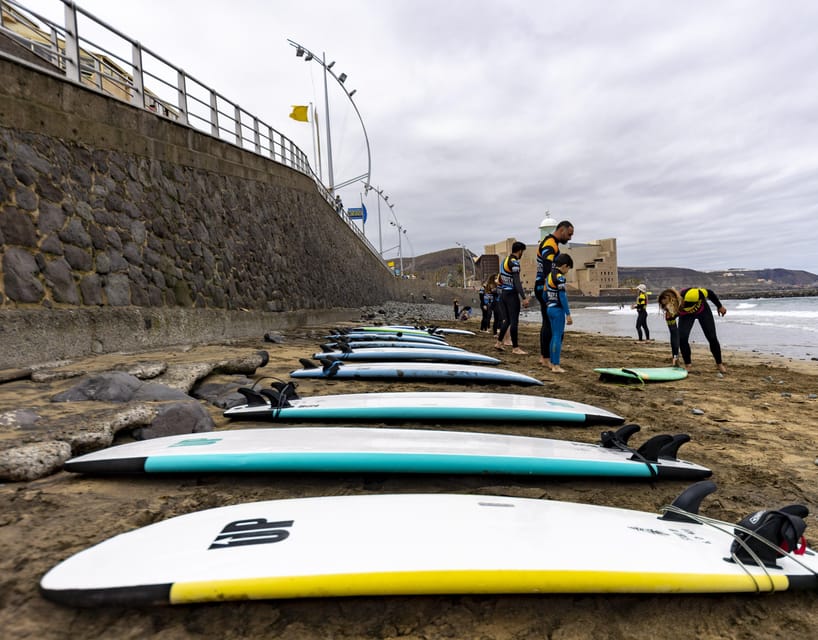
- La Cícer is the lesson zone at Las Canteras, so you’re not traveling across town to find surf.
- 2 hours of focused coaching means you spend more time on learning, less time waiting.
- Safety comes first with instructors trained to teach beginners and performance surfers.
- Gear, insurance, and care of belongings are included, so you show up ready to move.
- Small groups or private lessons are available, which is great if you want more individual attention.
- You must know how to swim and the course isn’t for everyone—read the suitability notes carefully.
Las Canteras and La Cícer: Why This Urban Beach Works for Surf Lessons
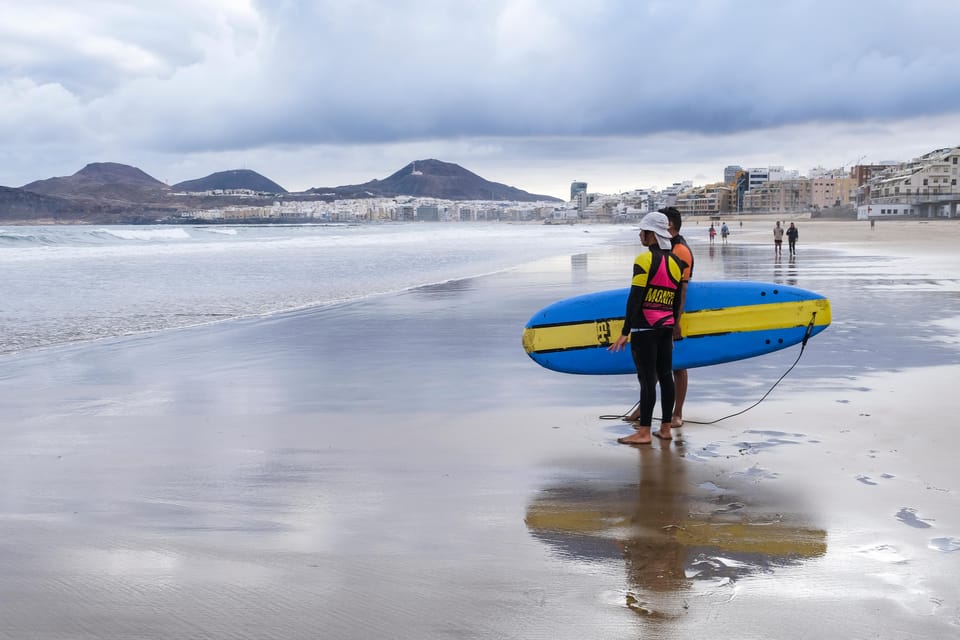
Las Canteras is the kind of beach you can actually build a day around. It’s in Las Palmas, on Gran Canaria, with the practical convenience of an urban shoreline, yet it’s set up specifically for surf learning in the La Cícer area.
That matters more than you might think. Good surf lessons aren’t just about catching waves. They’re about having access to the right stretch of water, steady guidance, and an environment where the staff can manage safety. With La Cícer being the designated spot, you’re getting the lesson where it makes sense rather than guessing and hoping.
Also, this course is designed to meet you where you are. You’ll either learn the core basics (board control, positioning, and how to approach the surf) or you’ll work on improving your technique if you’ve already stood up before. That dual focus is ideal if you’re booking as a couple or a friend group and everyone’s skill level isn’t identical.
You can also read our reviews of more tours and experiences in Gran Canaria

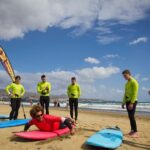
From University Surf School to the Water: What the 2-Hour Course Feels Like
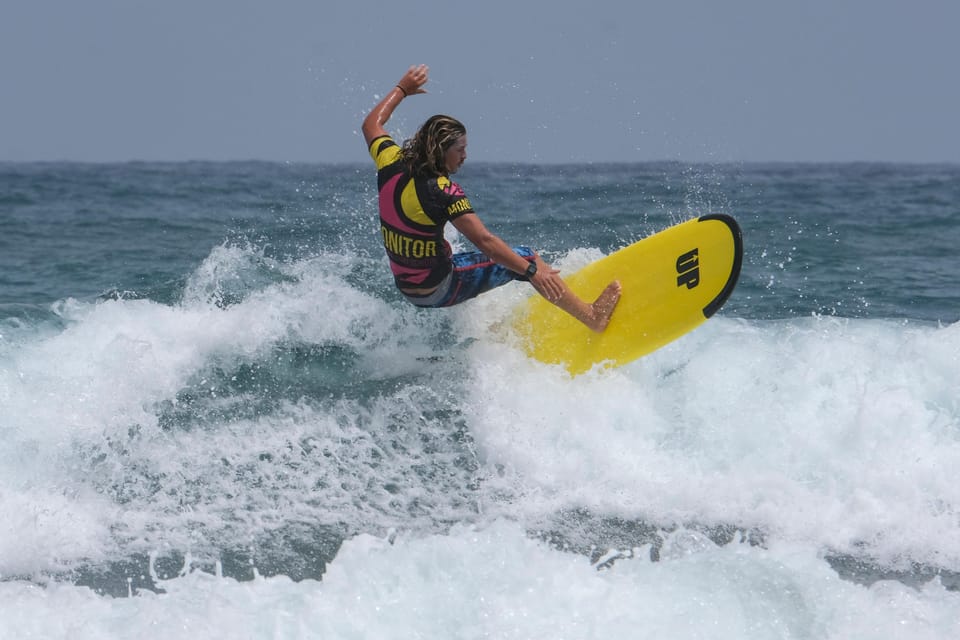
The experience starts at University Surf School right at the edge of Las Canteras. Your meeting point is:
University Surf School, Playa de las Canteras, Calle Secretario Padilla, 168, Las Palmas 35010
From there, the time is tight on purpose. The course runs for 2 hours total, and the plan is an intensive introduction—so you’ll be out learning the whole time rather than spending half the day in a classroom.
One detail to keep in mind: the exact starting time may vary based on tide and weather. The school is aiming to give you the best sea conditions for a safe, fun lesson, which is exactly what you want from a surf instructor. If your plans are too packed, that shifting start can become annoying. If you leave yourself breathing room, it’s usually a non-issue.
Another helpful point is that the lessons run from 10:00 to 19:00, Monday to Saturday, depending on tides and sea conditions. So you can usually find a slot that fits your sightseeing rhythm in Las Palmas.
Gear, Included Insurance, and Belongings: The Practical Stuff That Makes Surfing Less Stressful
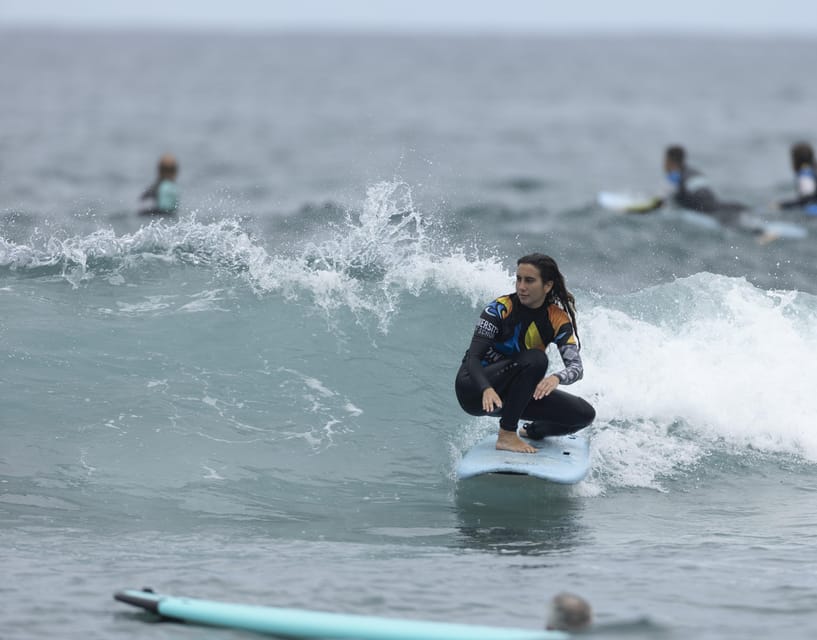
You’ll get the equipment you need as part of the lesson. That’s not just a nice-to-have—it’s a big deal when you’re visiting from elsewhere. Surf gear is bulky, easy to misjudge, and not something you want to improvise while on vacation.
On top of the equipment, the course includes insurance and takes care of personal belongings. That combination helps you stay focused on the actual lesson rather than worrying about where to stash your towel, phone, or sunscreen.
The staff also emphasizes a clean, ready-to-use setup. Instructors and gear are described as being in good condition, and the overall vibe is friendly and helpful. When you’re learning something physical and new, that kind of competence reduces the jitters fast.
Safety on the Beach: How This Lesson Keeps Beginners Confident

Surfing has a reputation for being scary until someone teaches you the rules in a clear way. What I like here is the emphasis on safety without turning it into a lecture.
The school teaches under the parameters of safety, fun, and instruction, and they’re adamant about those priorities. You’ll see that reflected in how the instructors coach you—especially if you’re a true beginner who needs step-by-step confidence.
In the instructor style described, Carlos is singled out for being patient and giving clear, professional directions. Marco is also mentioned for being easy to get along with, which matters because nerves are normal when you’re learning to read waves and handle a board.
You should also know the personal requirements ahead of time:
- You must know how to swim.
- The course is not suitable for non-swimmers or people with low level of fitness.
- It’s not suitable for people with heart problems.
- Pregnant women and anyone with mobility impairments should not book this course.
Surf lessons are physical, and the water adds unpredictability. This provider clearly tries to filter for the right fit so the group can stay safer and the instruction can be effective.
Learning the Basics vs. Level-Up Technique in La Cícer
This is where the course earns its value. It’s not just a board rental with a quick chat. You get coaching focused on what you need to start taking your board on the waves—or to improve your technique if you’ve already surfed.
For beginners, the goal is to get you comfortable with the basics quickly. Expect hands-on instruction that helps you understand how to approach the water and manage the board so you can try standing up safely. The whole point of a 2-hour intro is to get you beyond stiff-arm intimidation and into actual wave attempts.
For those with some experience, the instruction shifts to technique—how you position, how you handle movement, and how you refine what you already do. This is especially good if you’ve tried before but haven’t had feedback. A short session with an attentive instructor can often fix the one thing that’s been holding you back.
The setting helps too. Surf learning works best when the beach area is appropriate for the conditions and the staff can guide you in the same general zone without chaos. The La Cícer focus means you’re working where the school intends to teach.





Meeting Points, What to Bring, and What Not to Do

You’ll want to arrive ready so you don’t waste your lesson time.
Bring:
- Swimwear
- Towel
- Sunscreen
Not allowed:
- Smoking
- Alcohol and drugs
Also, a quick note for families and teens. Kids under 15 must go with one adult. Separately, the activity isn’t suitable for children under 14. If you’re planning this for someone younger than you, double-check ages early so you don’t get stuck at the meeting point.
Who This Surf Lesson Is Best For (And Who Should Skip It)

This course is a strong match if you want a straightforward, skill-focused surf session without overcomplicating the day. It’s ideal for:
- Beginners who want a structured intro in a real surf-learning zone
- People who can swim and want coaching with safety-first discipline
- Friends or couples who want small groups or the option for a private lesson
It’s not the right fit if you:
- Can’t swim
- Have mobility impairments
- Are pregnant
- Have heart problems
- Have a low level of fitness
- Are under the minimum age guidance (and especially under 14)
I like that the rules are clear. A surf school that filters properly tends to create better conditions for everyone in the water.
Price and Value: Is $54 for 2 Hours Worth It?

At $54 per person for a 2-hour lesson, you’re paying for more than instruction. You’re paying for the full package: equipment, insurance, and support for belongings—plus trained instructors who focus on both safety and learning.
Here’s how I judge the value:
- Equipment included means you don’t spend time hunting gear or pay extra at the beach.
- Insurance included reduces your travel hassle and gives you a layer of protection while you’re learning an active sport.
- A real instructor-led lesson is the difference between watching surf videos and actually improving your technique in a short time.
If you’re traveling for experiences, this price lands in a sensible range for a coached activity. If you’re the kind of person who wants long, multi-day progression, you might eventually look at longer courses—but for a first surf experience or a short technique tune-up, this is priced for action.
Language and Group Size: Getting Real Feedback in English or Spanish

Instruction is available in English and Spanish, which makes it easier to get clear coaching on what to do next. In a sport like surfing, misunderstandings can lead to wasted attempts or frustration, so being taught in a language you understand matters.
You can also choose private or small groups. Small groups usually mean you get more attention per person. If you’re a beginner, that’s where you’ll feel the biggest difference—having your instructor notice what your body is doing and correct it quickly.
What to Expect Day-Of: A Simple Plan So You Don’t Overthink It
Don’t show up dressed like it’s a casual beach hangout. Surf lessons are active, and you’ll want to be comfortable from the moment you arrive.
A good day-of approach:
- Arrive with your swimwear on, or at least ready to change quickly.
- Bring a towel you don’t mind getting sandy.
- Put sunscreen on before you start, since your lesson will likely take time in the sun.
Since the start time may shift with tide and weather, have a flexible mindset. Tide-driven scheduling is common in surf teaching, and the provider is doing it to maximize safety and learning conditions, not to be random.
Should You Book This Las Canteras Surf Lesson?
Book it if you want a clean, coached 2-hour surf experience in Las Palmas with included gear and insurance, taught by instructors described as patient and professional. It’s a particularly good pick for first-timers who know how to swim and want structure, not chaos.
Skip it (or choose another option) if you’re not comfortable in the water, have heart or mobility concerns, or you need a fixed start time at the minute level. Because the course depends on tide and sea conditions, some scheduling flexibility helps.
If you meet the fitness and swimming requirements, this is one of the most straightforward ways to turn a day at Las Canteras into a real skill you can take home with you.
FAQ
How long is the surf lesson?
The course lasts 2 hours.
Where do I meet for the lesson?
You meet at University Surf School, Playa de las Canteras, Calle Secretario Padilla, 168, Las Palmas 35010.
Is equipment included?
Yes. All necessary surf equipment is included.
Does the price include insurance?
Yes. Insurance is included.
What language are the instructors?
Instructors teach in English and Spanish.
Do I need to know how to swim?
Yes. Participants must know how to swim.
What should I bring with me?
Bring swimwear, a towel, and sunscreen.
Is there pick-up service?
No. Pick-up service is not included.
What kind of groups are available?
You can choose private or small groups.
What items are not allowed during the activity?
Smoking and alcohol and drugs are not allowed.