REVIEW · GRAN CANARIA
San Agustín Surf lessons
Book on GetYourGuide →Operated by Canary Wave Surf School · Bookable on GetYourGuide
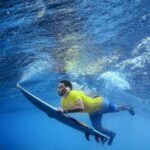
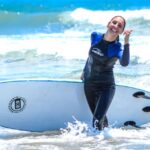
Gran Canaria makes first-time surfing feel possible. A 3-hour surf course near the Maspalomas lighthouse turns a rocky beach day into real skill-building. You’re in good company too, with a pro instructor and a setup designed for beginners and returning riders.
I especially love the small-group coaching. With lessons capped in a tight range, you get hands-on help instead of standing around. I also like that they teach technique and timing while keeping it fun, so you’re not just learning rules, you’re learning how to move like a fish on the board.
One thing to plan for is that the surf spot can change with weather and wave conditions. The course usually runs on Playa del Inglés or Maspalomas next to the lighthouse, but your exact beach and start time depend on the sea.
In This Review
- Key things I’d plan around
- Where You Meet: Faro de Maspalomas Gets You On Track
- What You Actually Do in 3 Hours (and Why It Works)
- Small Groups: The Secret to Getting Better Fast
- Playa del Inglés vs. Maspalomas: Beach Choice That Helps Your Learning
- Transfer, Timing, and the Most Common Day-Of Friction
- Price and Value: Why $58 Can Actually Be Fair
- Who This Surf Lesson Fits Best
- Should You Book This San Agustín Surf Lesson?
- FAQ
- How long is the San Agustín surf lesson?
- Where does the surf lesson usually take place?
- When does the lesson start?
- Is hotel transfer included?
- How big are the groups?
- What languages are the instructors?
- Do I get surf equipment?
- Is insurance included?
- What’s the cancellation policy?
- Can I reserve and pay later?
Key things I’d plan around
- Meet at Faro de Maspalomas so you can start calm, not scrambling for directions
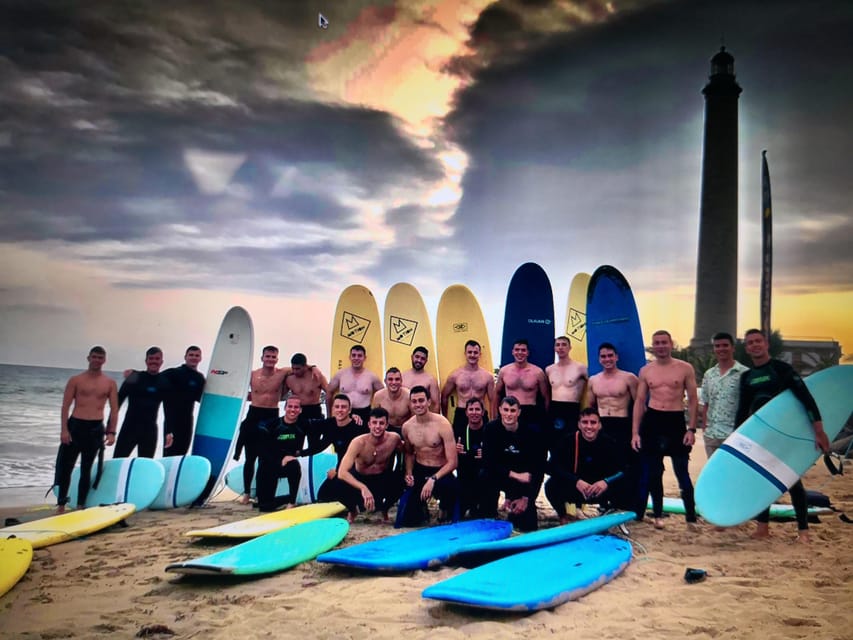
- Small groups (up to 10, often up to 8) so feedback is fast and personal
- Wave-adapted beach choice if conditions are off, the school may move you to better water
- All gear included (board and equipment) so you show up ready
- South-of-island hotel transfer available to cut down on hassle
- Spanish or English instruction so you can focus on surfing, not translating
Where You Meet: Faro de Maspalomas Gets You On Track
The day starts at the surf school’s meeting spot near the Faro de Maspalomas. That matters because it’s a clear landmark, and it keeps the morning from turning into a scavenger hunt. Once you’re with the group, your guide gets you sorted quickly.
If you’re staying in the south of Gran Canaria, you may have round-trip transport tied to your reservation. If you don’t have the transfer, you can still make it on your own and meet the group at the lighthouse area. Either way, the flow is meant to be simple: meet, gear up, head to the water.
At the meeting point, you’ll get a high-quality surfboard and equipment before you go to the beach. That timing is practical. You’re not trying to pick the right board right before you push into the sea. You also get a quick reset on what you’re doing and where you’re going next.
One more detail that can affect your plan: the activity typically runs in the morning, but the provider confirms the start time based on sea conditions. So if you’re trying to line this up with other plans, treat the morning as a flexible window rather than a fixed hour.
You can also read our reviews of more tours and experiences in Gran Canaria
What You Actually Do in 3 Hours (and Why It Works)
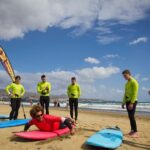
This isn’t a long “watch from shore” session. It’s a full 3-hour surfing course built around getting you standing and riding basics with proper technique. The instructors aim to balance instruction with time in the water, so you leave with more than just a photo-op.
Here’s the value of the structure they use: surfing is mostly about repetition—how you paddle, how you pop up, and how you position your body before the wave arrives. In a 3-hour class, you can’t waste time on long lectures. So you’ll spend most of your energy on the motions that actually make surfing click.
You’ll learn how to handle the board and move with better balance and timing. That “move like a fish” idea isn’t just a fun slogan. It points to what beginners struggle with: keeping your weight in the right place and making small corrections quickly. Instead of fighting the board, you start working with how it responds.
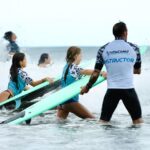
Also, the coaching style is set up for real questions. You’re not on your own once you’re in the lineup. The instructor is there to help whenever you need it, which is huge if you’re new and don’t want to spend your first lesson stuck.
And if conditions aren’t cooperating, the school has shown willingness to adjust. In one reported experience, the instructor Tony guided the group to a different beach when waves were small—so the lesson still had the right kind of energy for learning.
Small Groups: The Secret to Getting Better Fast
If you’ve ever tried a beginner activity with a big crowd, you know how it goes: brief instructions, then you wait your turn. This course is built to avoid that. The group is small, with limits listed up front (capped at 10 participants), and the lesson format also notes small groups of up to 8. Either way, the point stays the same: you get attention when you need it.
That attention translates into faster problem-solving. Instead of trying to fix your stance while someone else is getting coached, you can get direct feedback between attempts. You also get clearer guidance on safety, how to read the water a bit, and how to position yourself so you’re not just paddling randomly.
In real terms, this is what makes the difference between a fun try and a meaningful lesson. Surfing is hard partly because it’s new, not because you’re incapable. With a coach close by, you can make corrections while the session is still fresh.
The instructors also speak Spanish and English, which helps a lot if you’re visiting and you want your brain on surfing, not on translation. And the tone from instructors in reported lessons is consistently described as friendly and helpful, with clear explanations that make the steps feel doable.
Playa del Inglés vs. Maspalomas: Beach Choice That Helps Your Learning
The course usually runs at either Playa del Inglés or Maspalomas beach, close to the lighthouse (Faro). But here’s the key detail: your exact location can change depending on weather and sea conditions.
That flexibility is not a hassle. It’s a learning advantage. Beginners learn faster with the right wave size and shape. If the water is too rough or the waves are too small, your practice time drops. So when conditions aren’t ideal, switching beaches can mean you still get surf sessions that feel progressive instead of frustrating.
In one reported lesson, the waves were small and the instructor took the group to another beach with better waves. You can treat that as a sign of the school’s approach: they’d rather keep the class moving than force everyone to struggle through poor conditions.
Practical note for your planning: since the beach can shift, the “where do I go” answer is safest to treat as lighthouse-area meeting point first, beach second. Your guide will bring you to the right spot for that day’s surf.
Also, since the course often starts in the morning but is sea-dependent, don’t plan tight connections right before or after your class unless you’re okay with a bit of timing adjustment.
Transfer, Timing, and the Most Common Day-Of Friction
The course can include transfer to and from your hotel, but only for stays in the south of the island. If you’re elsewhere (or you didn’t book a transfer), plan to get to the lighthouse meeting area on your own.
This is worth thinking about because surf days have a “momentum factor.” If you arrive stressed, you’re less likely to soak up the instruction. With transfers, that stress drops. With self-arrival, you can still keep it easy by giving yourself extra time to park, walk, or navigate to the Faro de Maspalomas area.
Timing is another small friction point. The start time is usually morning, but it depends on the sea conditions, and the provider contacts you to confirm. So if you’re trying to fit in a long lunch, shopping block, or another tour, keep your schedule soft around the morning.
Finally, since this is a water activity, bring the basics you’d expect, but don’t overpack. You want enough for after the lesson, not a pile of gear that slows you down at the beach.




Price and Value: Why $58 Can Actually Be Fair
The price is listed at about $58 per person for a 3-hour session, including key items that most surf experiences charge extra for.
Here’s what you’re getting built into the price:
- Instructor coaching
- Surf equipment
- Insurance
- Optionally, hotel transfer in the south
To judge value, look at what you’d otherwise pay or arrange yourself: renting gear, finding a safe lesson setup, and paying for instruction that keeps you practicing instead of guessing. This package handles the basics so you can spend the day learning rather than organizing.
The small-group format also adds value. Even if you’re paying a similar base price elsewhere, the difference between a crowded group and a small one is huge for learning speed. At this school format, you’re paying for feedback and time in the water, not just access to the beach.
So yes, $58 isn’t a “buy it on a whim” price if you’re strict budget shopping. But when you account for gear, insurance, and instruction in a short, focused block, it’s a solid deal for a guided first surf lesson in the south of Gran Canaria.
Who This Surf Lesson Fits Best
This lesson is especially well suited to:
- First-timers who want guidance on board handling and how to stand
- People who learn better with small-group attention instead of general tips
- Anyone visiting Gran Canaria and wanting a classic south-coast activity without complicated logistics
It also works for intermediate learners who want structured technique. The course notes that it’s adapted for all levels, which matters because you don’t want your lesson to feel like a repeat of steps you already mastered, or too advanced for your current ability.
If you’re traveling with friends, this is also a good match. Small groups help, but the activity still has a social feel without becoming chaotic. And because instruction is in Spanish and English, you can pick the language that fits you best and spend more brainpower on surfing.
Should You Book This San Agustín Surf Lesson?
I’d book it if you want a beginner-friendly surf session that prioritizes hands-on help, a short 3-hour time commitment, and a setup designed for good learning conditions. The meeting point near the Faro de Maspalomas makes the start straightforward, and the school’s willingness to adapt the beach when conditions change is a smart approach.
I’d think twice if you’re the type who needs a perfectly fixed schedule. Morning start times can shift with the sea, and the beach location can change between Playa del Inglés and Maspalomas next to the lighthouse. If that flexibility sounds fine, this is a good, practical way to get competent basics quickly.
If you’re on the south side of Gran Canaria and the included transfer fits your lodging, the value gets even better since you lose less time to transportation.
FAQ
How long is the San Agustín surf lesson?
The course lasts 3 hours.
Where does the surf lesson usually take place?
It usually runs at Playa del Inglés or Maspalomas beach next to the lighthouse. The exact spot can change depending on weather and sea conditions.
When does the lesson start?
It’s usually in the morning, but the start time depends on sea conditions. The provider contacts you to confirm.
Is hotel transfer included?
Transfer to and from your hotel is included only for guests staying in the south of the island.
How big are the groups?
The activity is described as a small group, limited to 10 participants, and it also notes small groups of up to 8 people.
What languages are the instructors?
Instructors speak Spanish and English.
Do I get surf equipment?
Yes. Surf equipment is included.
Is insurance included?
Yes. Insurance is included with the activity.
What’s the cancellation policy?
You can cancel up to 24 hours in advance for a full refund.
Can I reserve and pay later?
Yes. You can reserve now and pay later, keeping your travel plans flexible.
If you want, tell me your hotel area in Gran Canaria (south or not), and whether you’re a total beginner or have surf experience, and I’ll suggest the smartest way to time this lesson.