REVIEW · GRAN CANARIA
Hiking in the Sacred Mountains of Gran Canaria: UNESCO
Book on Viator →Operated by Mogán Verde · Bookable on Viator
That crater feels like a time machine. In the heart of Gran Canaria, La Caldera de Tejeda is a UNESCO sacred site, with rock-cut caves and ancient markings still visible on its edges, and you’ll walk among big natural landmarks that make the whole story feel close. This hike runs with a small group setup, so you’re not just marching with a crowd.
I really like how the experience ties scenery to meaning, and how the guiding team (Sofie and Eulalia) keeps the walk lively, with clear explanations that help you connect the dots as you go. I also love the trail choice: you get a long day with changing views, including stops at Roque Nublo and Roque Bentayga, plus time around the crater area where ancient cave-temple work is still there. One thing to consider: the route is 7 hours with a steeper descent, and the weather can shift quickly, so come ready for wind and temperature swings.
In This Review
- Key things to know before you go
- Why La Caldera de Tejeda feels different than a normal hike
- Your 9:00 am start and what the pace really feels like
- Stop 1: Roque Nublo and the thrill of the big viewpoint
- Stop 2: Roque Bentayga and the sense of ancient scale
- Stop 3: Mesa de Acusa and the crater’s sacred details
- The price: does $107.17 make sense for a 7-hour UNESCO hike?
- What to pack for changing mountain weather on Gran Canaria
- Who this hike is best for (and who should skip it)
- Should you book this UNESCO hike?
- FAQ
- What day of the week does the hike run?
- How long is the hike?
- How far do you hike and how much elevation is involved?
- Is pickup available?
- Is the tour offered in English?
- What happens if the weather is poor?
Key things to know before you go
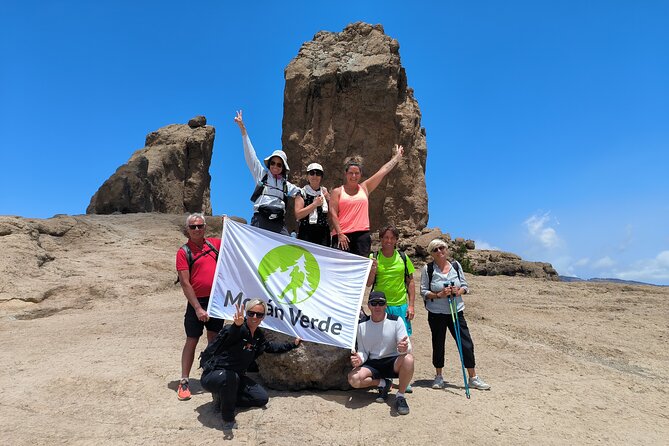
- UNESCO La Caldera de Tejeda: You’ll walk in and around a major collapse crater tied to pre-Hispanic sacred sites, with rock-cut caves where engravings and cave paintings remain visible.
- Small group of up to 8: Easier pace, more questions, and less time waiting around on the trail.
- Three landmark stops: Roque Nublo, Roque Bentayga, and Mesa de Acusa structure the day so you’re always moving toward a new viewpoint.
- A real uphill-downhill mix: About 200 m ascent and 380 m descent over roughly 7 km means you’ll feel it more in your legs on the way down.
- Weather-dependent day: The route requires good weather, and conditions can change fast, so plan for layers and sensible shoes.
- English-guided experience with pickup: You’ll start at 9:00 am and get an exact meeting time message, plus a mobile ticket.
Why La Caldera de Tejeda feels different than a normal hike
Gran Canaria can surprise you. One moment you’re thinking sunshine and beach time; the next you’re walking in a dramatic crater world where ancient people left their mark right in the rock. La Caldera de Tejeda is one of the biggest collapse craters around, and it was sacred ground for the indigenous inhabitants. The best part is that you’re not just hearing about it from a board or a photo. You’re outside, on terrain that helps you understand why it mattered.
The day has a strong human thread. Along the crater edges, important pre-Hispanic temples were carved into caves, and some of those caves still show engravings and cave paintings. That means the hike doesn’t feel like sightseeing only. It feels like a story you can pace out with your own feet.
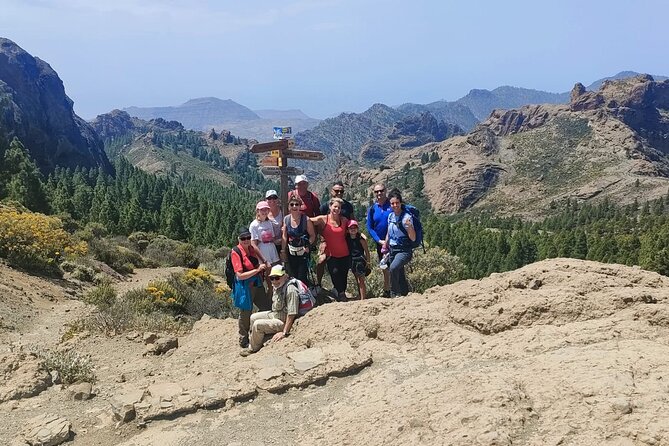
Also, I like the small-group rhythm. With a maximum of 8 people, the guide can slow down where you need it, speed up where you can handle it, and keep the explanations going without losing the group in the wind or around a tricky path segment.
One practical thing to keep in mind: this is scheduled every Wednesday between October and May. If your trip lands outside those months or you’re in Gran Canaria on a different weekday, this exact experience won’t match your calendar.
You can also read our reviews of more hiking tours in Gran Canaria
Your 9:00 am start and what the pace really feels like
You’ll begin at 9:00 am, and the operator sends your exact meeting time after booking. Pickup is offered, which matters because it reduces the stress of getting to trail access on your own. It also tends to help you start the hike without feeling like you need to solve transport logistics first.
The hike clocks in at about 7 hours total. On paper, 7 km doesn’t sound extreme. But the elevation profile is where your legs take notes: about 200 m ascent and 380 m descent. That’s not an all-flat stroll. You’ll climb enough to warm up, then spend more time going down, which can be harder on knees and calves than the uphill.
Moderate fitness is the right target here. If you’re the kind of person who hikes on vacation but doesn’t regularly train for steep descents, this can still work. Just be honest with yourself about downhill comfort. If downhill feels sketchy, you’ll want hiking shoes with grip and you’ll benefit from taking the pace seriously, especially when the ground is dry-but-powdery or windy.
Stop 1: Roque Nublo and the thrill of the big viewpoint
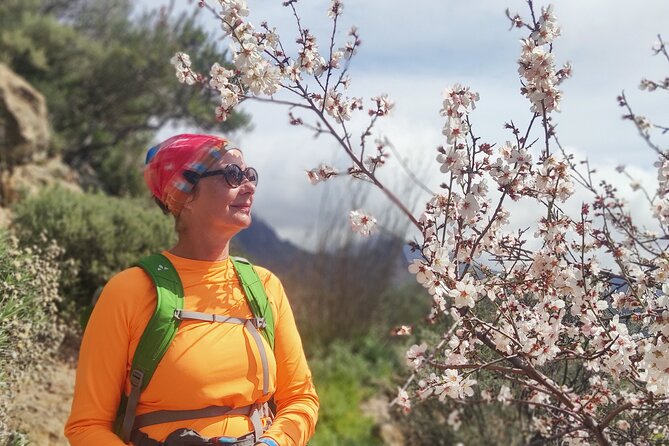
Roque Nublo is the first signature landmark on your route, and it sets the tone for the day. Expect a hike moment where the view widens and you can see how the crater area reads from above and from angles you wouldn’t catch driving past.
This stop is also a good place to feel what the day will be like for you physically. Early on, you’ll likely be switching between forward walking and short pauses. That’s where the small group helps. Instead of you trying to hear instructions over everyone’s footsteps, you can actually ask questions and get answers in context.
What I’d call out as a “success tip” for Roque Nublo: treat your photos like checkpoints, not chores. Get your shot, then refocus on the terrain and the guide’s explanation. That’s where the experience shifts from pretty rocks to something meaningful.
A possible drawback here is timing. If weather is changing, viewpoints can get harsher fast. Cloud cover and wind can turn a great view into “okay, I’m glad I brought a layer.” If the conditions look moody, stay patient and listen for the guide’s cues about when to move on.
Stop 2: Roque Bentayga and the sense of ancient scale
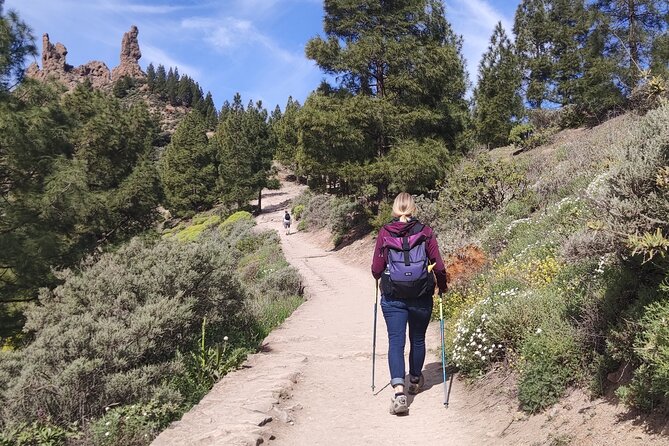
After Roque Nublo, Roque Bentayga brings a different feel. This part of the day is about continuing the progression through the crater’s world—less about one single view, more about how the terrain shapes the experience.
What makes Bentayga special is how it anchors the hike. Having a named landmark mid-route gives you a mental marker for the day, which helps if you’re managing energy. It also makes it easier to follow the story: the guide can connect pre-Hispanic sacred use to the places you’re standing in, without turning it into a lecture.
I also like that this stop helps you understand why small group matters. With a maximum of 8 participants, you’re not stuck waiting at narrow spots or turning your head every time someone steps in front of you. You keep your rhythm.
Keep in mind that the day is weather-sensitive. One review noted rapidly changing weather conditions. That matches what you might experience in the mountains: sun one minute, cool wind or brief cloud cover the next. If you start the morning in a T-shirt, you’ll probably end up wanting a warmer layer by late morning.
Stop 3: Mesa de Acusa and the crater’s sacred details
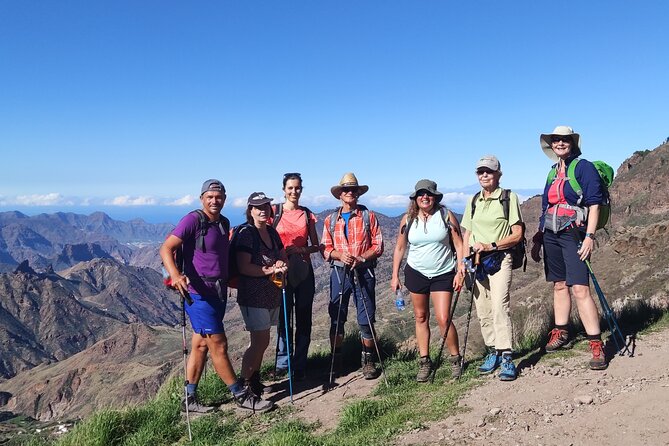
Mesa de Acusa is the last landmark stop, and it’s where the hike’s sacred tone really comes forward. This is the part of the day that connects you to what makes La Caldera de Tejeda UNESCO-worthy: the pre-Hispanic cave-temple legacy.
The overview describes caves dug into the rock that were decorated with engravings and cave paintings, still visible along the crater edges. On this kind of hike, that detail matters because it changes how you see the stone around you. You’re not staring at random carvings; you’re noticing how people shaped spaces for meaning, and how those marks survive in the environment.
This stop also tends to be where people slow down mentally, not just physically. You might find yourself watching your footing while also paying attention to the guide’s explanation in a more focused way. That dual attention is exactly why guided hikes like this can be better value than DIY. You get the context, so you don’t have to guess what you’re looking at.
Possible drawback: Mesa-area walking can feel longer at the end of the day, even if the distance is steady. That’s because you’re tired, the descent may still be in play, and your energy is lower than at the start. Bring water, move steadily, and don’t feel you need to sprint for the last viewpoint.



The price: does $107.17 make sense for a 7-hour UNESCO hike?
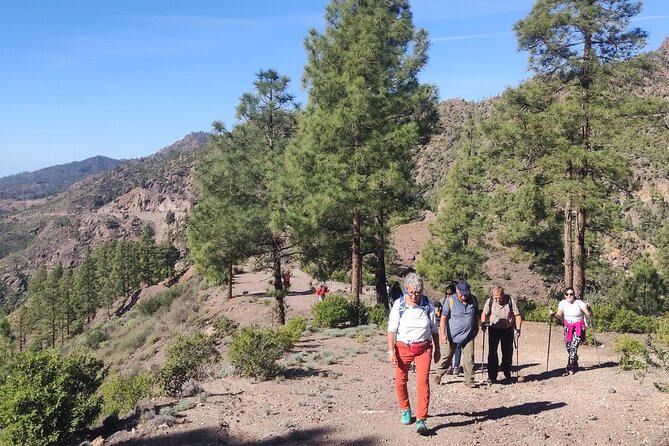
At $107.17 per person for a roughly 7-hour guided hike with pickup, you’re paying for a few key things: time, interpretation, and organization that would be annoying to recreate yourself.
First, this is a small group (max 8). If you’ve ever tried to manage your own route in a volcanic mountain area, you know how much time gets eaten by route planning, transport, and figuring out where to pause and what to look for. This operator handles the guiding and the flow.
Second, you get English instruction throughout. That matters when the experience includes specific cultural and historical details like cave engravings and cave paintings. Without a guide, you’d likely spend a lot of time wondering what you’re actually seeing.
Third, the hike runs in a defined window: every Wednesday between October and May. That kind of scheduling can be hard to match solo, and it’s another reason a packaged tour can feel like better value.
Could it be expensive? Sure, if you’re the type who hates guided time and prefers total freedom. But if you want a day that’s both active and meaningful, this price looks reasonable for what you get.
One extra note: it’s booked about 34 days in advance on average. That’s usually a hint that people plan ahead for a midweek, seasonal slot.
What to pack for changing mountain weather on Gran Canaria
You don’t need a full mountaineering kit, but you do need practical comfort. The experience requires good weather, and one of the strongest review signals was that conditions can shift quickly.
Here’s what you should bring:
- Layering clothes (a light warm layer plus something that handles wind)
- Hiking shoes with grip for a descent-heavy day
- Water (7 hours is a long time to rely on willpower)
- Sun protection (even when it’s cooler, mountain sun can still be strong)
- A small daypack for the layers and water
- A phone charger plan (not mandatory, but helpful for using the mobile ticket)
If it turns windy at a viewpoint, you’ll be glad you planned for it. The goal isn’t to be overprepared. The goal is to avoid the classic mistake of bringing summer clothes and then regretting it on the downhills.
Who this hike is best for (and who should skip it)
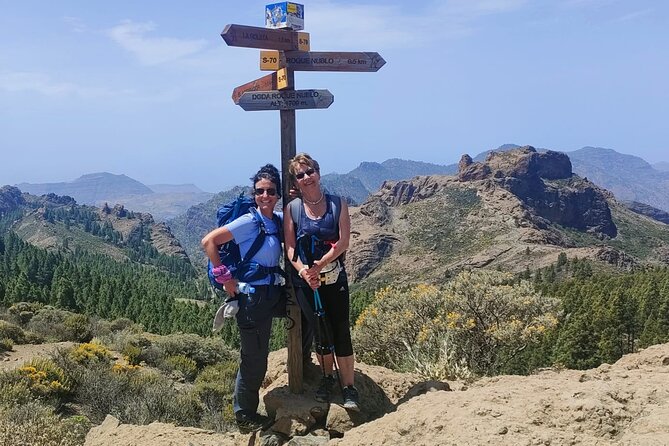
This is a good match if you:
- Want a guided walk with cultural context, not just a physical workout
- Enjoy viewpoints and named stops that help you follow the day
- Can handle a 7-hour outing with downhill emphasis
- Prefer small-group hiking (max 8)
You might want to choose something else if:
- You’re uncomfortable with steep descents or knee trouble
- You dislike weather-based planning and don’t like the idea of moving dates if conditions are poor
- Your travel schedule doesn’t include a Wednesday between October and May
Should you book this UNESCO hike?
If you’re curious about how people shaped the island’s sacred spaces, this is one of the more satisfying ways to experience Gran Canaria. The combination of La Caldera de Tejeda context plus three well-chosen landmark stops makes the day feel intentional. And the guiding team (including Sofie and Eulalia) is a big part of why this hike lands well for people who care about learning while they walk.
Book it if you want a full-day hike that mixes big views with something deeper than photos. Skip it if you want a short, casual stroll or you’re not comfortable with a descent-heavy route. If you can manage that moderate fitness challenge and you’ll dress for shifting weather, you’re likely to have a memorable Wednesday.
FAQ
What day of the week does the hike run?
It runs every Wednesday between October and May.
How long is the hike?
It lasts about 7 hours.
How far do you hike and how much elevation is involved?
The distance is 7 km, with about 200 m of ascent and 380 m of descent.
Is pickup available?
Yes, pickup is offered. You’ll receive a message with the exact meeting time.
Is the tour offered in English?
Yes, it’s offered in English.
What happens if the weather is poor?
The experience requires good weather. If it’s canceled due to poor weather, you’ll be offered a different date or a full refund.