REVIEW · GRAN CANARIA
Full Day Across the Island Tour from Las Palmas
Book on Viator →Operated by ExcursionsGranCanaria.com · Bookable on Viator
Gran Canaria in one long day. This full-day loop from Las Palmas mixes volcanic viewpoints, inland villages, and the famous Maspalomas dunes, with English commentary that makes the scenery easier to read. I especially like the way the route uses air-conditioned transport to keep the day comfortable, while guide Pavel (and the driver team) keep the stops moving.
What I like most is the variety packed into 8 hours 30 minutes. You get north-side high points like Caldera de Bandama, then greener pockets around Santa Brígida, then the palm oasis of Fataga, and finally the desert feel of Maspalomas.
One consideration: it’s a long day with winding mountain roads, and one key viewpoint (Pico de las Nieves) depends on weather—if clouds roll in, the views may be limited.
In This Review
- Key things I’d bet on before you go
- One across-island loop from Las Palmas (why this tour is worth your time)
- Caldera de Bandama: crater views without a big hike
- Santa Brígida: old town charm and a greener pocket of the north
- Pico de las Nieves: highest peak views, with a weather backup
- San Bartolomé de Tirajana: the mountain village museum stop
- Fataga: the palm-filled oasis feel (and a real lunch window)
- Maspalomas dunes: 45 minutes to feel the desert edge
- How the day actually feels: timing, comfort, and winding roads
- Pavel’s English commentary (and why the guide makes a tour like this click)
- Packing and clothing tips for mountain chill and Maspalomas sand
- Price and value: paying for the day loop, not entrance fees
- Who this tour fits best (and who might want something else)
- Should you book this across-island tour from Las Palmas?
Key things I’d bet on before you go
- Small group, up to 25 people: easier conversations and quicker “where are we going next” energy.
- Big highlights in one day: crater, villages, palm canyon, and dunes—without you having to stitch buses together.
- English-only guidance: clear commentary throughout, so you’re not left guessing what you’re seeing.
- Stops with free admission: at Caldera de Bandama, and on to the other itinerary stops, entry tickets are listed as free.
- A weather-aware plan for viewpoints: if Pico de las Nieves isn’t cooperating, the day can shift to other sunnier viewpoints on the drive south.
- Maspalomas time for sand and sea: you’ll get a realistic chunk of dune time, and Charco de Maspalomas is right there at the edge.
One across-island loop from Las Palmas (why this tour is worth your time)
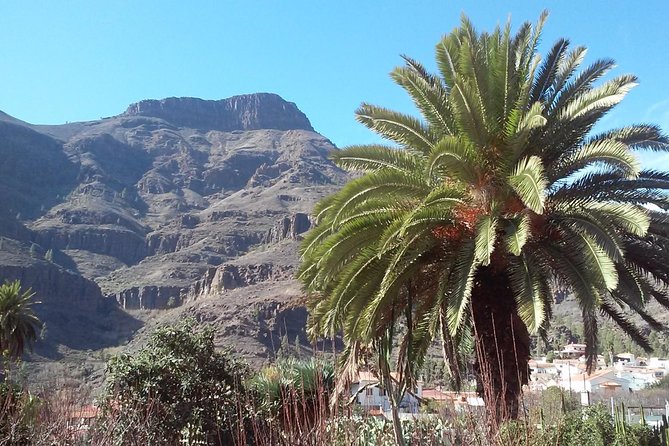
If you’re short on time in Gran Canaria, this is the efficient move. Instead of doing the island in pieces, you get a full-day route that pushes north-to-south contrasts: volcanic craters, green inland pockets, mountain villages, and then the sand-dune world at Maspalomas.
I like that the tour isn’t built around optional extras. It’s built around the places you came for. You also get air-conditioned transport for most of the day, which matters when you’re crossing elevations and spending time on winding roads.
The group stays small (max 25). That makes the schedule feel less like cattle herding and more like a guided day trip. It also helps the guide manage timing at viewpoints where photo stops can easily run long.
You can also read our reviews of more tours and experiences in Gran Canaria

Caldera de Bandama: crater views without a big hike
Stop one is Caldera de Bandama, a volcanic crater. You’ll spend about 15 minutes at a viewpoint with big island views. No long slog is built into this first stop, so it’s a good opener if you want the “wow” factor fast.
Why it works: early views set the frame for the rest of the day. Once you’ve seen how much volcanic shape the island has, the next villages and valleys make more sense.
The admission detail is nice too: the tour lists the admission ticket as free here. So your money goes toward the guide and the transport, not entrances.
Photo tip: bring something for steady hands. Even when the sun is out, lookers tend to lean over railings or wind-exposed spots. Quick, confident shots beat panicked last-second posing.
Santa Brígida: old town charm and a greener pocket of the north
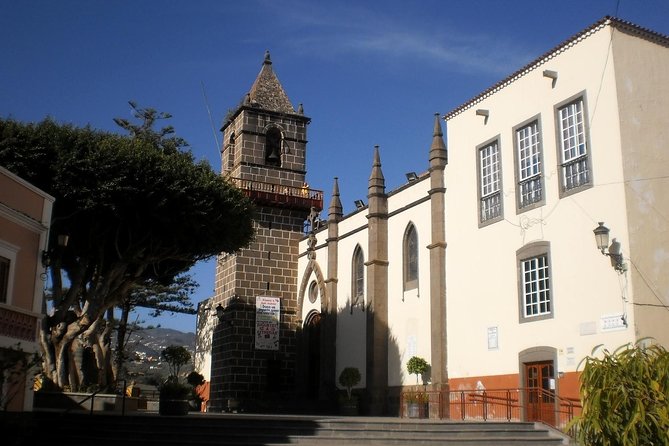
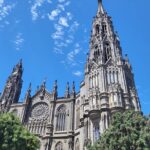
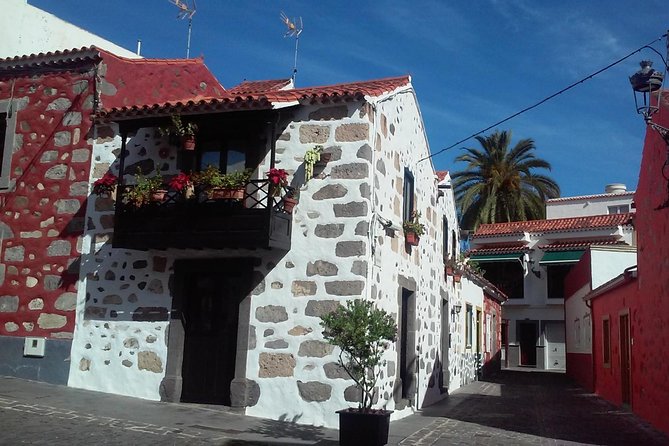
Next is Santa Brígida, a smaller city with a pretty historical center. You get around 30 minutes to walk the streets and soak up the atmosphere.
What makes this stop different is the vibe. The tour description points to water sources and lush vegetation around the area, with palm trees in the mix. You’re not just seeing “high scenery” here. You’re seeing a lived-in inland town.
This is also the stop where you can grab a coffee in a traditional old coffee shop. Even if you don’t linger, it’s a useful mental reset after the crater viewpoint.
Timing note: 30 minutes sounds short, but it’s enough for a quick loop through the center and one coffee, which keeps the rest of the day from turning into rush-hour stress.
Pico de las Nieves: highest peak views, with a weather backup
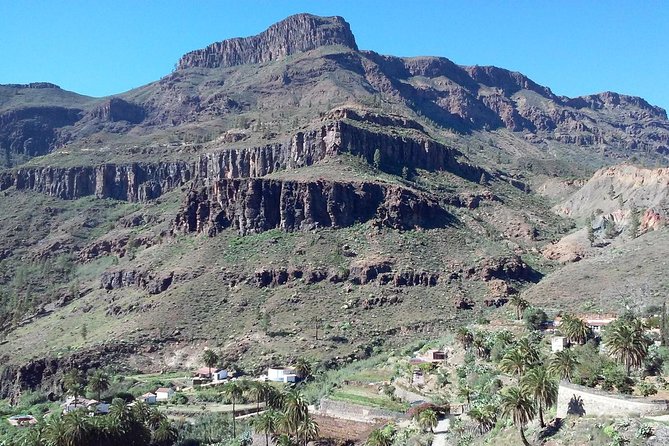
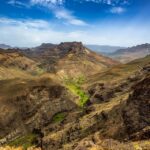
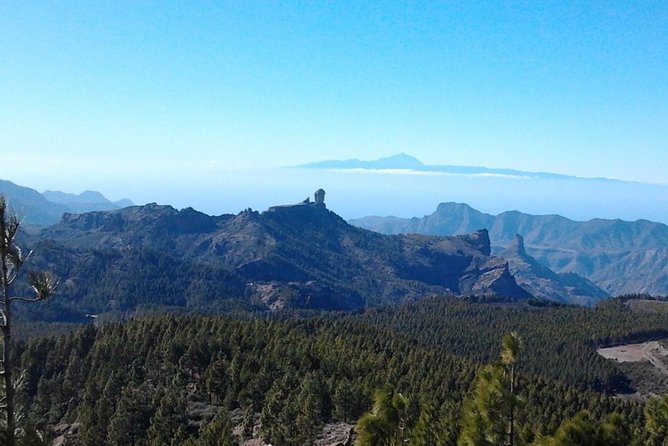
Then you climb toward Pico de las Nieves, the island’s highest peak. The planned stop is about 20 minutes, and the payout is the view across mountainous countryside.
This is where the tour gets extra interesting for photographers. Your photos are likely to feature the big rock formations: Roque Nublo and Roque Bentayga. If the sky is clear, you might even spot Tenerife on the far horizon.
Now the reality check: this stop is weather-dependent. The plan says that if clouds block the view on the day, the tour tries to swap in other viewpoints during the drive down south, where conditions often feel sunnier.
So what should you do? Bring a light layer and stay ready to pivot. Don’t decide you’re disappointed until you’ve hit the viewpoint. If it’s socked in, take the guide’s shift in stride—the day still aims for strong views.
San Bartolomé de Tirajana: the mountain village museum stop
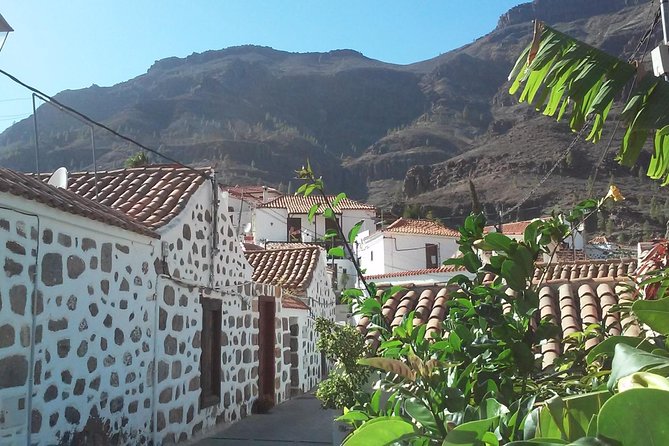
In the mountain village of San Bartolomé de Tirajana, you’ll visit an interesting museum housed in an old home of a well-positioned family. The visit lasts about 25 minutes, and it’s listed as free admission.
This is a smart stop if you want more than scenery. It adds texture to what life in the villages was like in older times. You’ll get context for why the island looks the way it does, and how inland communities organized around family life and local resources.
Drawback to know: it’s not a long museum session. If you’re hoping for a slow, deep read, this won’t be it. But as a short cultural stop inside a long day, it fits well.



Fataga: the palm-filled oasis feel (and a real lunch window)
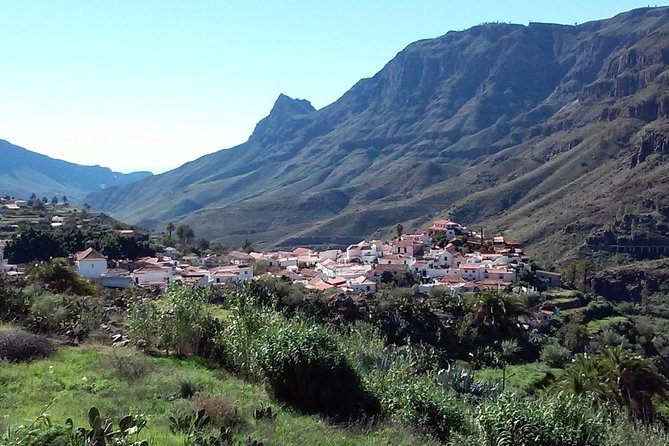
Next comes Fataga, described as a charming village surrounded by hundreds of palms, tucked into a canyon-like area. You get about 1 hour of free time, which is a big deal on a day tour where many stops are short.
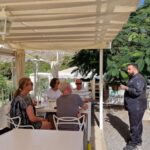
This is your best chance to slow down. You can eat lunch in a traditional taverna. The tour info notes meals start around €7.50 per person/main dish, and that gives you a sense of price range for where your money will go.
In a couple of the feedback notes, the lunch stop includes the Labrador restaurant. Either way, the important part is that lunch is timed and planned, not a scramble where you end up eating whatever is closest.
What I like: Fataga is visually distinct from both the crater and the dunes. It’s a middle chapter that makes the island feel lived-in rather than just photographed.
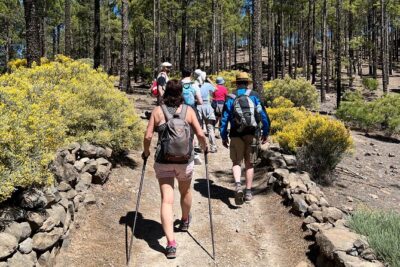
Practical note: bring comfortable walking shoes. You’ll likely do a bit more wandering here than at some viewpoint stops.
Maspalomas dunes: 45 minutes to feel the desert edge
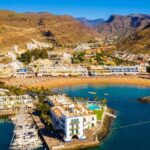
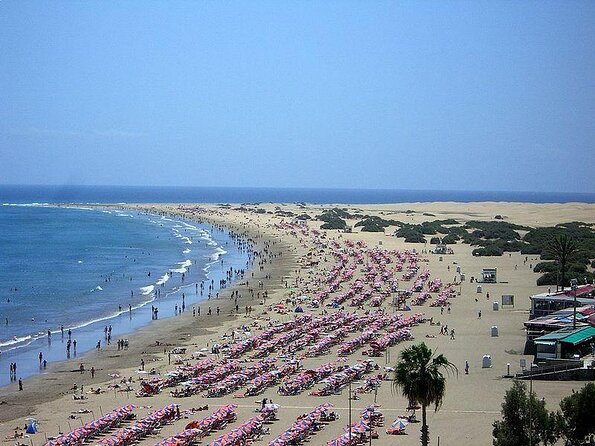
Finally, you hit Reserva Natural Especial de Las Dunas de Maspalomas. You’ll have about 45 minutes in the dunes, and you’re dropped off and picked up near Charco de Maspalomas at the edge.
This is the point where the island flips. One day earlier you might be thinking “volcanic and green,” and now it’s all sand and sea wind energy.
The tour info is very clear about what to bring: don’t forget swimwear if you want a quick jump to the ocean. Even if you don’t swim, it’s still helpful for cooling off or just planning your personal comfort.
Sand reality check (from hard-earned experience shared in notes): pack or bring sandals/flip flops if you plan to walk on the sand. Regular shoes can fill up with sand fast, and once that happens it turns your “quick stroll” into a sand-shake ritual.
Photo and pacing tip: dunes look endless. You only have 45 minutes. So pick one line to follow, aim for the water edge/pond area, and leave time to return without racing.
How the day actually feels: timing, comfort, and winding roads
This tour runs about 8 hours 30 minutes. That’s plenty of time to see a lot, but it also means you’ll be “on” most of the day.
The comfort factor is mainly the transport—air-conditioned and built for year-around comfort. That helps you stay steady, because you’ll switch between vehicles and short stops, not long hikes.
But do take the road warning seriously. The tour info notes there are many winding roads in the mountains. If you suffer from road sickness, bring your medication. I’d also recommend you plan for motion comfort: sit where you feel most stable, keep your eyes on the horizon when you can, and avoid reading small print in the bus.
This is also the kind of day where weather can change faster than you expect. The tour says it operates in all weather conditions. Still, the cancellation language says they may offer a different date or full refund if weather is too poor. Translation: expect a weather-aware approach, not blind optimism.
Pavel’s English commentary (and why the guide makes a tour like this click)
The biggest difference between a bus trip and a real tour is the guide. Here, the English commentary is a centerpiece, and the guide’s style comes through strongly in the feedback.
Pavel is repeatedly described as funny, engaging, and fast at answering questions. What matters for you is not just facts—it’s interpretation. When you hear why the crater matters, what palm-filled Fataga represents, and how island life changed with time, the places stop being random stops on a map.
You’ll also get little pacing and logistics supports. Notes mention the guide pitching in to help with things like parking during the day. That sounds minor, but it usually means the schedule runs smoother, and you spend less time waiting around.
Bottom line: if you want a “see the highlights” day where you also leave with context, the guide factor here is one of the strongest reasons to book.
Packing and clothing tips for mountain chill and Maspalomas sand
Gran Canaria can feel warm at sea level, then cooler and windier as you gain altitude. A helpful note shared with the trip: take a jacket for the mountains. Wind is part of the game, and it’s not always obvious until you’re standing still at a viewpoint.
For women, there’s also practical advice not to wear mini or midi skirts/dresses. Winding roads and breezy viewpoints can be uncomfortable. If you want to feel at ease, choose something that stays put when the air moves.
Footwear matters most at Maspalomas. Athletic shoes help for walking around towns and along viewpoint areas. But if you plan to cross sand, bring sandals or flip flops so you’re not stuck with gritty shoes.
Also consider this: you’ll be in and out of the bus, so layer up and down. A jacket plus a simple base layer is usually a safe plan.
Price and value: paying for the day loop, not entrance fees
The price is $55.63 per person for a full day (about 8 hours 30 minutes). What you’re really buying here is the route and the human glue: transport, an English guide, and a structured list of highlights.
Entrance fees aren’t the driver. The stops listed include free admission tickets for Caldera de Bandama and the other itinerary points. So the cost mainly covers your guide and logistics, not ticket math.
Food and drinks are not included. That’s a fair trade because Fataga gives you an hour to choose lunch in a traditional taverna. With meal pricing noted around €7.50 per main dish, you can keep lunch from feeling expensive if you go with the basics.
For value, consider your alternative: doing this across the island on your own means multiple buses, transfer time, and figuring out viewpoints. This tour compresses that work into one day and replaces uncertainty with a plan.
If you’re traveling with limited time and want the interior highlights, this can be a good deal for the effort it saves.
Who this tour fits best (and who might want something else)
This is best for you if:
- you want the island’s highlights in one full day
- you like explanations and context, not just photo stops
- you prefer small-group pacing (up to 25 people)
- you want comfortable transport with air conditioning
It may be less ideal if:
- you’re expecting long hikes or slow walks at every stop (most stops are timed tight)
- you strongly dislike mountain roads or motion sickness risk is high
- your main goal is a single beach day (this is a full inland and dunes-focused itinerary)
If you’re visiting Gran Canaria for the first time, doing this earlier can help you get your bearings fast—then you can explore the rest with public buses where it makes sense.
Should you book this across-island tour from Las Palmas?
I’d book it if you want a well-paced highlights day that covers volcanic viewpoints, inland village life, a palm oasis, and Maspalomas dunes without you having to plan the whole route.
The strongest reasons to go are the guide-led English commentary from Pavel, the small group feel, and the way the day mixes “high” and “green” and “desert” into one storyline. The only real caution is practical: the roads are winding, and viewpoint luck at Pico de las Nieves depends on weather.
If that sounds like your kind of day, you’ll likely come away with more than photos—you’ll come away with a map of how the island works.