REVIEW · GRAN CANARIA
Agaete: Gran Canaria Coasteering. Marine Ferrata and Zipline
Book on GetYourGuide →Operated by RockNatour · Bookable on GetYourGuide
Some days you hike. This one hangs over the sea. Coasteering in Agaete blends cliff walking, abseiling with ropes, sea climbs, optional jumps, and a snorkel break, all wrapped with geology talk and volcanic-history context. You’ll be moving for hours, not just taking photos.
I especially like the way the day is built around real water time: you drop to the coastline, tackle a sea route with the chain pass, then finish in a bay where you snorkel in clear coastal scenery. I also like that you get the gear and the photo report included, so you can focus on the moves instead of logistics. One more quality touch: the small group size (up to 8) keeps the pace safer and easier to manage.
A fair warning: this tour is not for you if heights make you tense. The route includes abseils, climbing along the sea, and a marine via ferrata above the water, and it’s specifically marked as not suitable for people with fear of heights or vertigo.
In This Review
- Key highlights you’ll actually care about
- Coasteering in Agaete: the mix of ropes, rock, and real ocean views
- The 5-hour plan: how the adventure actually flows
- Meeting at COMSILIENCE: simple start, no shuttle drama
- Safety briefing first: where the guide sets the tone
- The cliff hike to an ancient aboriginal cave
- Abseiling down to the coastline: the moment your brain locks in
- Sea climbing and the chain pass: moving along the shoreline
- Optional jumps from 12 meters: adrenaline when you want it
- Snorkel in a cliff-surrounded bay: when the pace slows
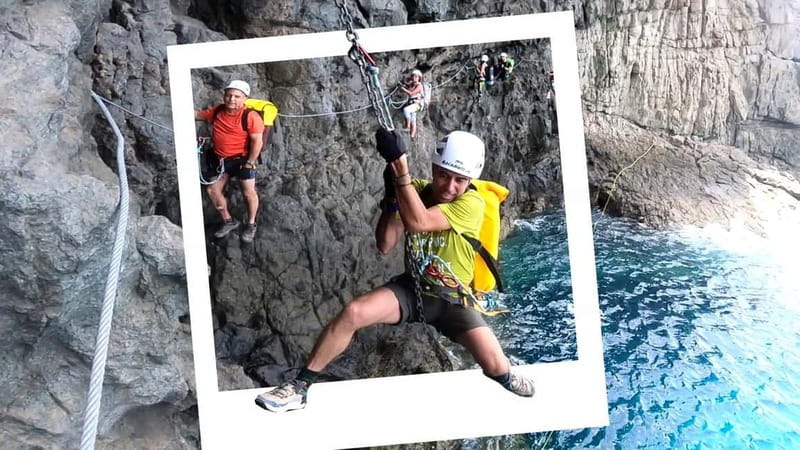
- Marine via ferrata and zipline above the sea
- Photos and snacks: small extras that matter
- Price and value: what you get for $79
- What to wear and bring (so your day stays comfortable)
- Who this coasteering day is best for
- Who should skip it
- Should you book Agaete coasteering with marine ferrata and zipline?
- FAQ
- How long is the Agaete coasteering tour?
- Where does the tour start and end?
- What’s included in the price?
- Is there a zipline and marine via ferrata?
- Can I skip the 12-meter jump?
- What language will the instructor speak?
- What should I bring?
Key highlights you’ll actually care about
- Abseiling with secure, safest-possible gear plus a proper safety briefing before you start the rope work
- A full coasteering route that moves from cliff hike to coastline to sea climbing, then to snorkel time
- Snorkel in a bay near the north cliffs, ending at a wild beach
- Chain pass and coastal climbing that feels active (and not like a sightseeing stop)
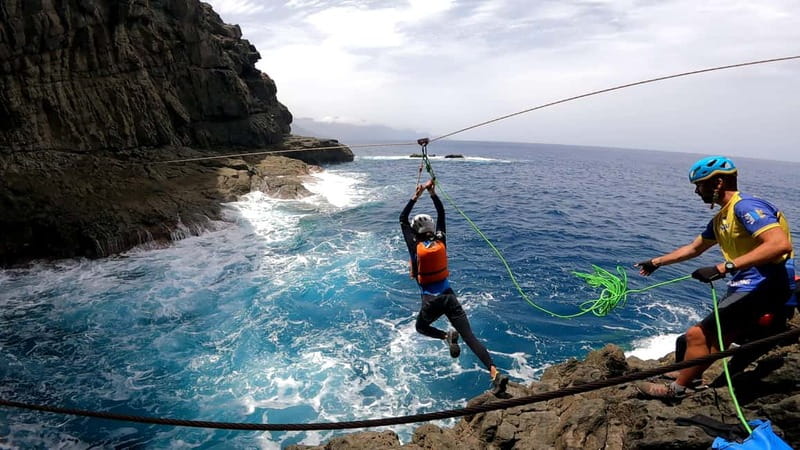
- Marine via ferrata above the sea and a zipline, adding a second style of adrenaline
- Free photo report so you can relive the jumps, ropes, and views without editing all day
Coasteering in Agaete: the mix of ropes, rock, and real ocean views
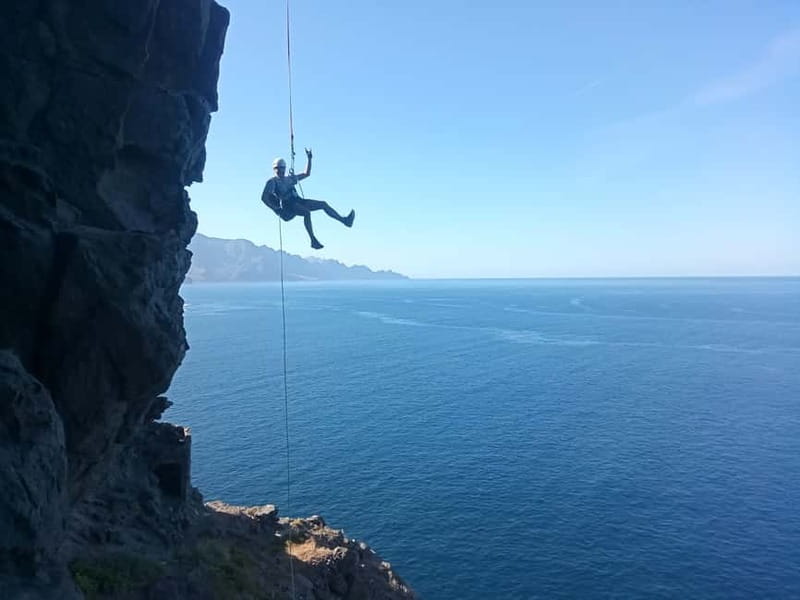
Gran Canaria’s north coast around Agaete has a dramatic feel: you’re close to steep cliffs, hard rock edges, and narrow pockets of beach that look reachable until you’re standing there. This coasteering tour leans into that. The day is part hiking, part rope work, part climbing, and then part underwater viewing through snorkeling.
What makes it interesting is that it’s not only adrenaline for adrenaline’s sake. The guide talks about the area’s geology and volcanic history as you walk and before you start the harder sections. You end up learning why the cliffs and coves look the way they do, not just what to do next.
The pacing is built for a single goal: keep you moving along the route. There’s no long bus ride between “activities.” Instead, each segment feeds the next one—cliff hike to abseil down, then coastline travel, then sea climbing and water entry.
You can also read our reviews of more tours and experiences in Gran Canaria.
The 5-hour plan: how the adventure actually flows
The full experience runs about 5 hours. You’ll start and end at the same meeting point, and there’s no hotel pickup. That matters: you’ll want to arrive on time and comfortable, because the day starts with a warm welcome and equipment prep, then goes quickly into safety.
Most of your time is concentrated in one main area: the Agaete stretch. You’ll spend time hiking and doing the rope/cliff tasks, plus the part that includes the marine via ferrata and the zipline.
If you prefer tours with lots of downtime, you might find this a bit intense. But if you like being busy and earning your ocean views, that’s the sweet spot here.
Meeting at COMSILIENCE: simple start, no shuttle drama
You’ll meet at the parking close to the roundabout of Playa de Caleta (Agaete), at COMSILIENCE. The tour ends back at that same location, so you’re not juggling drop-offs.
Because there’s no hotel pickup, it’s easiest if you’re already in Agaete or willing to get yourself there. I like this setup for active tours. Fewer moving parts usually means less waiting and more time on the route.
Safety briefing first: where the guide sets the tone
Before the real climbing and rope work, you get a safety briefing and a guided handoff into the technical parts. You’ll also receive the key gear: harness, helmet, and wetsuit, plus snorkeling gear later.
In the reviews tied to this kind of outing, one theme keeps showing up: a guide who explains what you’re doing, stays calm when things feel scary, and keeps the group organized. In this case, people highlight Pablo for being supportive and professional while still keeping things light with humor. That blend matters, because the day can feel intense even when your equipment is solid.
The cliff hike to an ancient aboriginal cave
The adventure begins with a hike along the cliff. You’ll head toward a high point where you discover an ancient aboriginal cave. It’s not just a random stop; the guide shares history and explains the area’s significance.
This segment is a good “warm-up,” but it’s also practical. Moving on cliff terrain teaches you how the ground feels and how to balance with ocean air and rock texture around you. You also get a feel for the route before the rope work begins.
If you’re prone to getting cold, consider this: you’ll be near the sea in an exposed setting. Even on a sunny day, you might appreciate bringing a jacket.


Abseiling down to the coastline: the moment your brain locks in
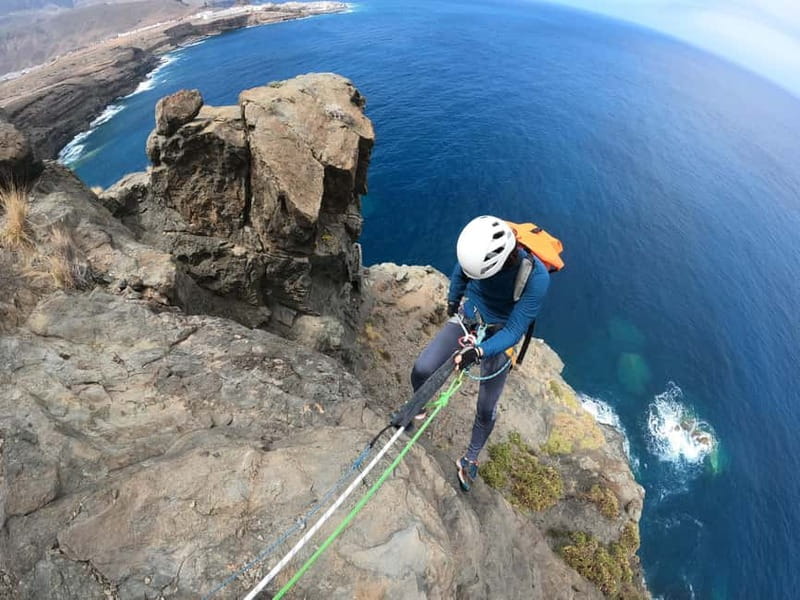
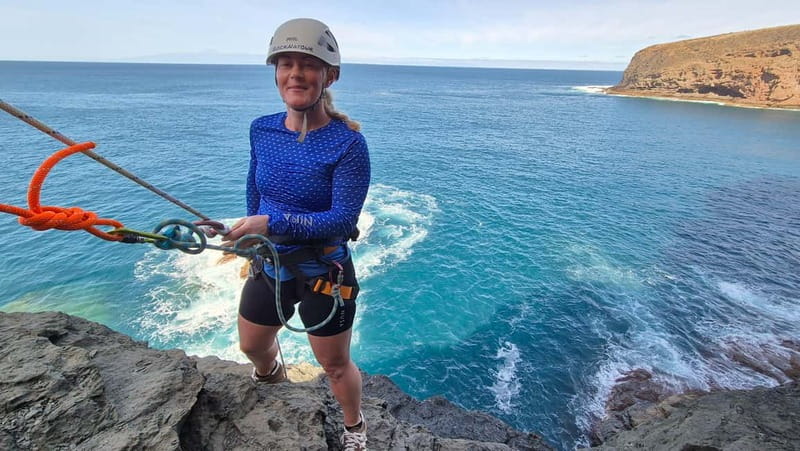
After you reach the rock formation with panoramic views of Agaete and a hidden beach, the tour shifts into the signature part: abseiling down to the coast.
You’ll do this with ropes and the tour emphasizes the safest equipment setup. That’s the core value here. Coasteering without solid rope systems is a hard pass, and this one is clearly designed around controlled descent.
What I like about including abseiling early is that it “frames” the day. Once you’ve committed to the descent, the rest of the route feels like one continuous ocean-focused line instead of separate stunts.
A heads-up from the tour’s own suitability notes: this isn’t for people afraid of heights. Even if you’re brave, fear can turn into wasted energy. If you know you struggle with vertigo or height anxiety, skip it and look for a different Gran Canaria adventure.
Sea climbing and the chain pass: moving along the shoreline
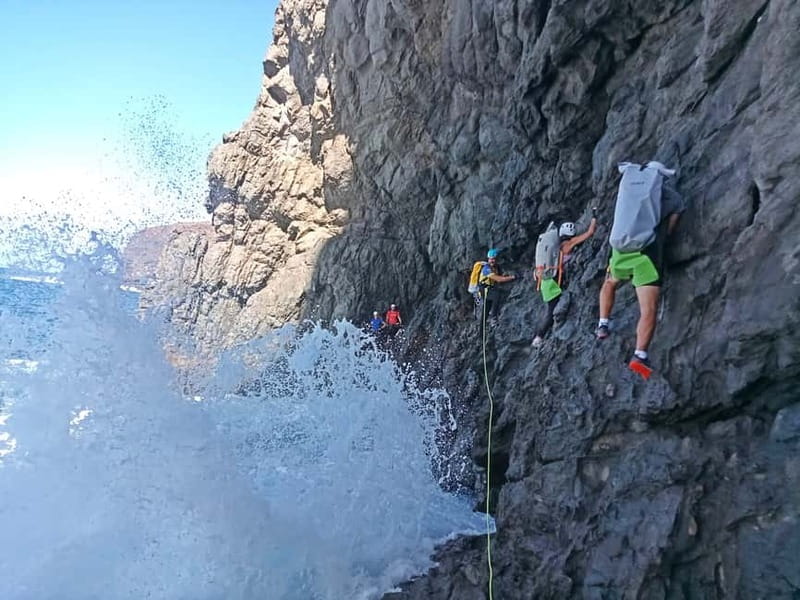
Once you’re at coastal level, the route becomes an ongoing coastal climb. You follow a climbing line along the sea, including the thrilling chain pass.
This is where coasteering stops feeling like a photo shoot and starts feeling like a skill-building day. You’ll be using both route knowledge from the guide and your own balance on rock that’s close to moving water.
Also, this part tends to favor people who are comfortable with their legs and feet under pressure. If you’re the type who gets nervous when the next hold is unclear, take comfort in two things:
- you’re guided,
- you’re not alone on a massive group.
Optional jumps from 12 meters: adrenaline when you want it
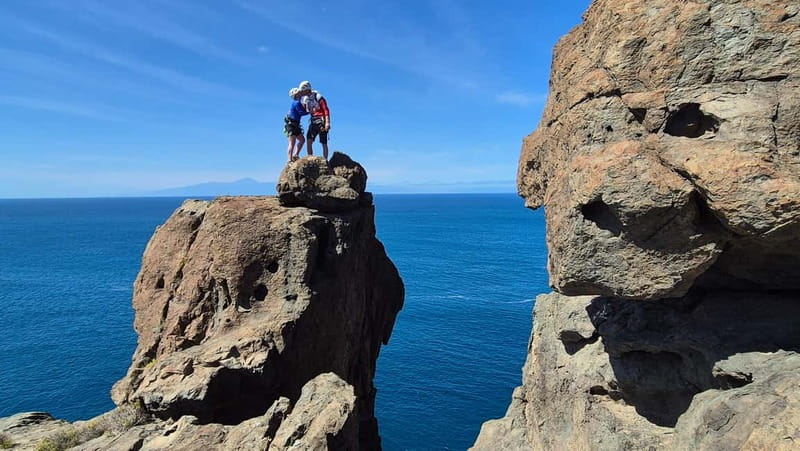
Next comes the ocean segment. If you enjoy jumping, you’ll have a chance to jump from 12 meters, but it’s always optional.
Optional is important. Even within the same day, people have different comfort levels with water entry, exposure, and body momentum. You don’t want to force a jump just because others are doing it.
If you’re a non-swimmer, though, this tour is not recommended for you. And if heights or falling make you tense, the jump option probably isn’t your best match. For the right person, though, the jump can be the kind of memory you talk about long after you’ve left Gran Canaria.
Snorkel in a cliff-surrounded bay: when the pace slows
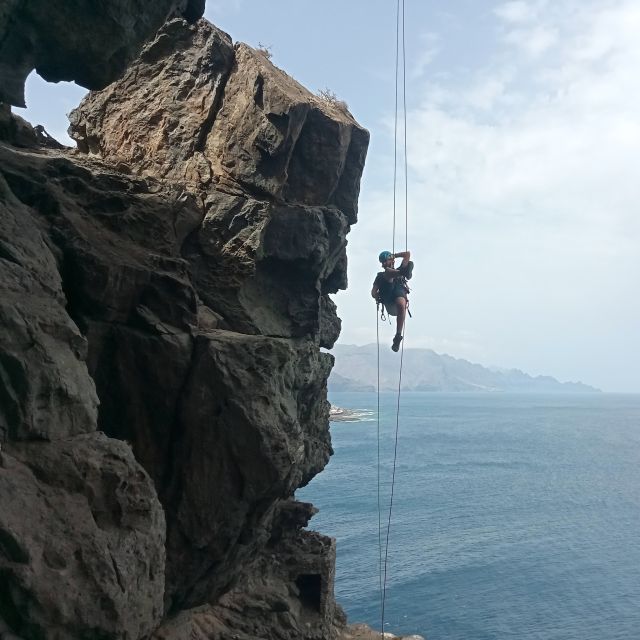
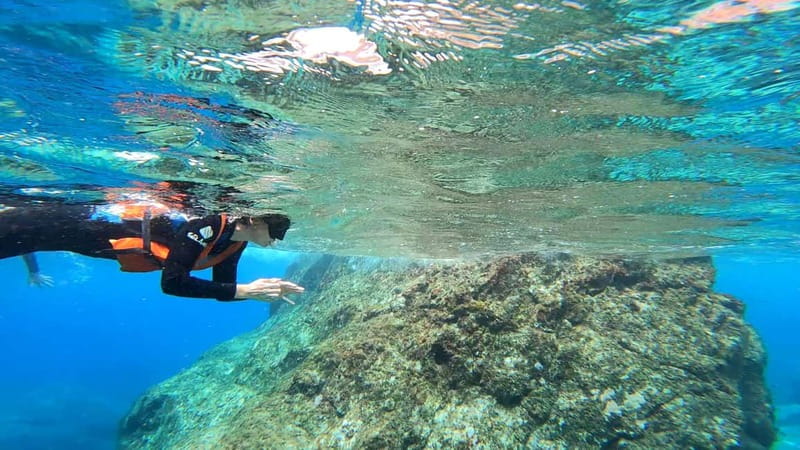
After the climbing and water entry, you get snorkeling in a beautiful bay surrounded by the cliffs of the north. This is one of the best “reset” moments in the day.
You’ll use the included snorkel kit, and you’ll have time to see the submarine side of the coastline. In practice, snorkeling after a rope-and-rock day feels like a reward: less strain on your muscles, more visual payoff from calmer movement.
This part ends with reaching a wild beach. That last stretch matters because it gives the day a real finish point, not just a return to a starting gate.
Marine via ferrata and zipline above the sea
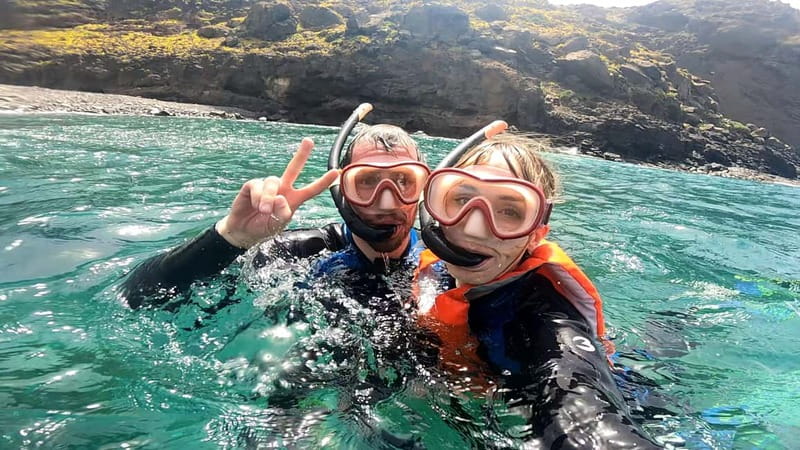
The highlights promise a marine via ferrata of Agaete plus a zipline. Even if you’ve done one adrenaline activity before, adding these two means you get variety in how you experience the coast:
- ferrata-style sections emphasize exposure and steady progression along a fixed route,
- the zipline turns the route into a glide above the waterline.
This is also why the tour is best for people who want a full day of mixed skills. If you’re only chasing one type of thrill (like snorkeling only, or zipline only), your money might be better spent elsewhere.
Photos and snacks: small extras that matter
At the end, you’ll be back at the meeting point where you can relax and enjoy snacks. You also get a free photo report. That’s a big deal for experiences like this, because your hands are usually busy, your face is usually reacting, and you’re not thinking about documenting the moment.
I like getting photos included. It removes the awkward half-ask of asking the guide to stop and capture a shot. Instead, you can keep moving and trust the day will be recorded.
Price and value: what you get for $79
At $79 per person, this tour is priced like an activity day that includes more than a guide. Here’s what’s bundled in:
- professional guide and insurance
- harness, helmet, wetsuit
- snorkel kit
- snack
- pictures/photo report
When you price out gear rentals plus guided safety support, the “cheap part” isn’t really cheap. It’s more that you’re paying for a structured route with equipment and staff oversight, not just a route with someone walking behind you.
So the value question is simple: if you’re the kind of traveler who will use the ropes, do the climbing, and then snorkel at the end, $79 makes sense as a packaged day. If you only want one piece of the route, you may feel like you’re paying for things you didn’t use.
What to wear and bring (so your day stays comfortable)
The tour is clear about what helps:
- Swimwear
- Towel
- Sunscreen
- Water
- Breathable clothing and sportswear
- Sports shoes (or hiking boots)
A few details I’d treat as non-negotiable:
- wear hiking boots or sports shoes and sports clothes
- tight clothes are okay, since you store items in dry bags (space is limited)
- you may need a jacket
- don’t bring shorts; they can scratch on the rocks
Shoes matter more than you think. You’re stepping on uneven rock during climbing and transferring between dry land and water tasks. Good grip and ankle stability reduce stress.
Also, bring enough water for a 5-hour active outing. Even with snacks included, hydration is still on you.
Who this coasteering day is best for
This is ideal if you want an active Gran Canaria day with variety:
- you’re comfortable with heights at least to some degree
- you can move over rocky terrain without panicking
- you can swim enough for snorkeling and water entry
- you want the guide to teach you about the coastline instead of just pointing and waving
It’s especially a fit for people who want more than beaches. You’ll leave with rope skills, sea route confidence (with plenty of guide support), and a view of the coast from both above and below.
Who should skip it
The tour is explicitly not suitable for:
- children under 16
- pregnant women
- people with back problems
- people with mobility impairments
- people afraid of heights
- people with vertigo
- non-swimmers
- people over 243 lbs (110 kg)
- people with low level of fitness
- people over 55
If any of these apply, don’t “try anyway.” A safer choice is to pick a different kind of Agaete day—one that still lets you enjoy the coast without exposing you to rope and vertical tasks.
Should you book Agaete coasteering with marine ferrata and zipline?
Book it if you want a full, action-heavy day: cliff hike, abseiling ropes, sea climbing including the chain pass, optional 12-meter jump, and snorkeling, then a marine via ferrata plus zipline. The small group size (up to 8) and the included gear and photo report make it feel like a well-run package.
Skip it if you’re height-averse, have vertigo, struggle with climbing terrain, or don’t swim. This isn’t a relaxed “ocean walk.” It’s a hands-on route built for people who can handle exposure and movement.
If you want one practical check before booking: be honest about your comfort level with ropes and steep drops. If you’re okay with heights and you can walk steadily on uneven rock, this is the kind of Gran Canaria experience that sticks.
FAQ
How long is the Agaete coasteering tour?
It lasts about 5 hours. Starting times depend on availability.
Where does the tour start and end?
You start in the parking close to the roundabout of Playa de Caleta in Agaete (at COMSILIENCE). The tour ends back at the same meeting point.
What’s included in the price?
Included are a professional guide, insurance, harness, helmet, wetsuit, snorkel kit, snack, and a free photo report.
Is there a zipline and marine via ferrata?
Yes. The tour includes a zipline as part of the Agaete section, and it also features a marine via ferrata.
Can I skip the 12-meter jump?
Yes. The jump from 12 meters is described as optional.
What language will the instructor speak?
The instructor speaks English and Spanish.
What should I bring?
Bring swimwear, a towel, sunscreen, water, breathable clothing, and sports shoes and sportswear. You should wear hiking boots or sports shoes and sports clothes, and don’t bring shorts. A jacket could be necessary.