REVIEW · GRAN CANARIA
Full Private Tour of Gran Canaria with Natural Pools
Book on Viator →Bookable on Viator
Windmills, pools, and a lot of real Gran Canaria.
This private day tour strings together some of the island’s most photogenic stops without rushing you through everything. I especially like the mix of geology, coastline, and local food time, from the towering Molino de Viento to the port’s fish restaurants. Another big plus is how the day feels personal, guided by Fabien, with his clear passion for the island’s history and nature.
One thing to consider: the roads are winding and the day runs long, so if you get motion sickness or have issues with vertigo, this is not the best fit.
In This Review
- Key highlights before you go
- A private day that swaps crowds for wild corners
- Molino de Viento near Mogán: the windmill with a legend
- Los Azulejos de Veneguera: volcanic layers that look painted
- Playa de la Aldea and El Charco: the only easy beach on that coast
- Agaete natural pools: bring a swimsuit and pick your moment
- Puerto de las Nieves: fish lunch with sea views, plus Dedo de Dios
- Arucas and Iglesia de San Juan: black basalt in a green agricultural area
- Price and value: what $421.44 per person buys you
- When this tour fits best (and when it doesn’t)
- Practical tips to keep the day smooth
- Should you book this private natural pools day?
- FAQ
- How long is the private tour?
- What time does the tour start?
- Is pickup available from Las Palmas de Gran Canaria?
- What’s included in the price?
- Is lunch included?
- Is admission free at the stops?
- Is the tour suitable if I get motion sickness or have vertigo?
Key highlights before you go
- Molino de Viento photo stop near Mogán, including the story of Moulin Brûlé and a restored 7-meter tower
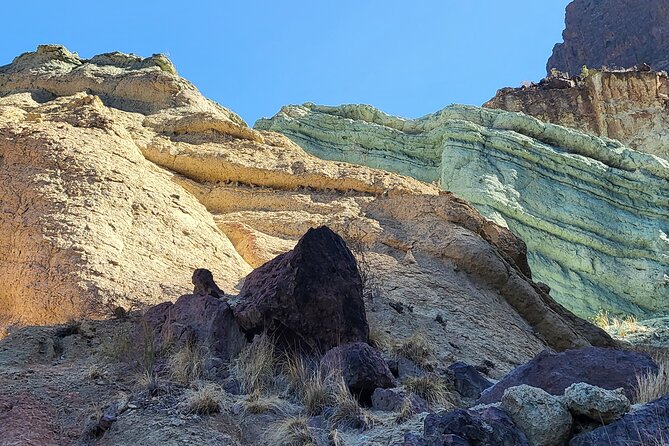
- Los Azulejos de Veneguera viewpoint for colorful volcanic layers revealed by erosion
- El Charco at Playa de la Aldea, a sea-water natural lake tied to a pre-Hispanic Sept 11 tradition
- Agaete natural pools with the real invite to bring a swimsuit
- Puerto de las Nieves lunch at fishing-port fish spots, plus the Dedo de Dios rock history
- Arucas Iglesia de San Juan exterior visit with black basalt and four towers
A private day that swaps crowds for wild corners
This tour is built like a full island outing, not a checklist. You start at 9:00 am, and you’re in a private, air-conditioned vehicle with pickup offered (but not in Las Palmas de Gran Canaria). That matters on Gran Canaria, where “getting there” can be half the experience—if you’re comfortable with driving turns and time on the road.
The best part of the schedule is the balance. You get quick wow-stops (windmill, colorful rock layers), plus two calmer coastal segments where you can actually look, walk, and reset. Even the timing works: short photo stops at key viewpoints, then enough time on the ground for the places that deserve it.
You can also read our reviews of more private tours in Gran Canaria
Molino de Viento near Mogán: the windmill with a legend
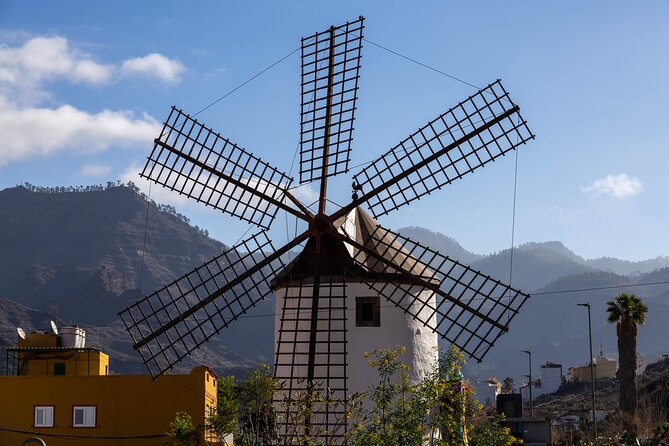
Your first stop is Molino de Viento, a classic windmill photo moment a few kilometers from Mogán. It’s not just a tall structure; it comes with a local oral tradition. The story goes that a shepherd from La Aldea set it on fire in retaliation against municipal power. After that, it was known as Moulin Brûlé.
The practical upside here is that you don’t need to plan an excursion around it. You get about 15 minutes for photos, and admission is free. The tower is 7 meters, and it’s described as the largest windmill in Gran Canaria—so even if you’ve seen windmills before, this one hits different.
If you like your travel with a little folklore attached, this is a strong opener. And if you’re a photo person, this is also the kind of stop where a quick stop still feels satisfying.
Los Azulejos de Veneguera: volcanic layers that look painted
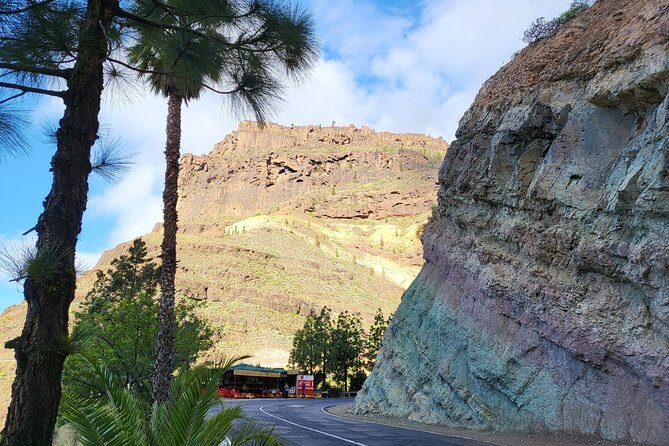
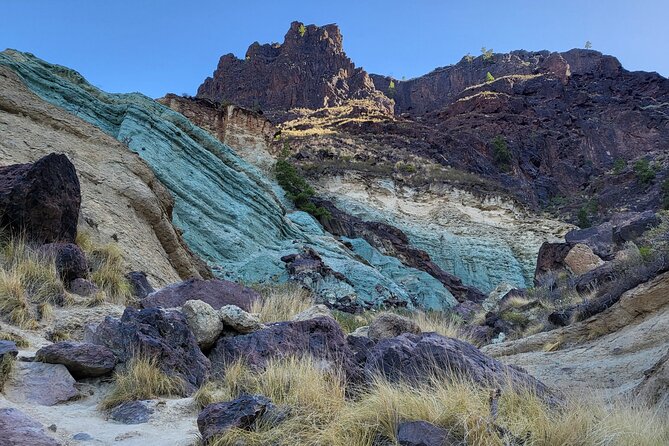
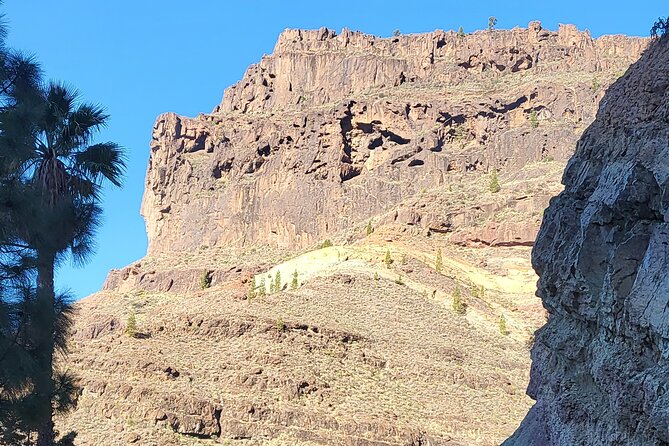
Next up is Los Azulejos de Veneguera, a natural monument formed through volcanic fluids solidifying, then revealed over thousands of years through erosion. Think of it as a mountain-side diagram of time—layers of minerals tinted in tones like reddish, ocher, green, and blue.
The name comes from a local comparison: it resembles the brightly tiled walls connected to San Nicolás de Tolentino, so locals called it Los Azulejos, tiles. That detail helps you see it differently. You’re not just staring at color—you’re seeing geology wearing a costume.
Plan on about 25 minutes here, and admission is free. I like this stop because it doesn’t need swimming, hiking, or complicated logistics. It’s a quick visual education that you can absorb even if you’re tired after the morning drive.
Playa de la Aldea and El Charco: the only easy beach on that coast
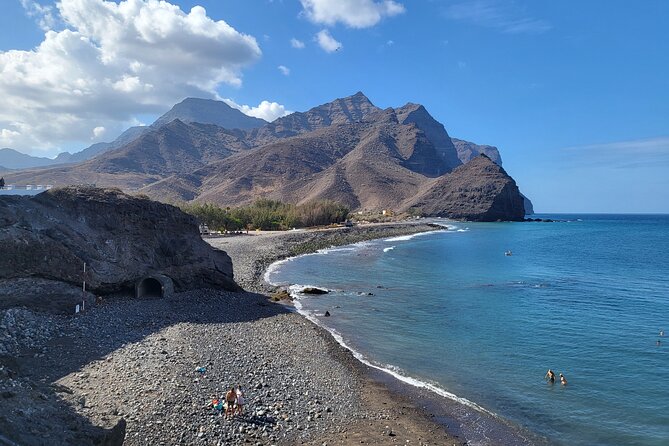
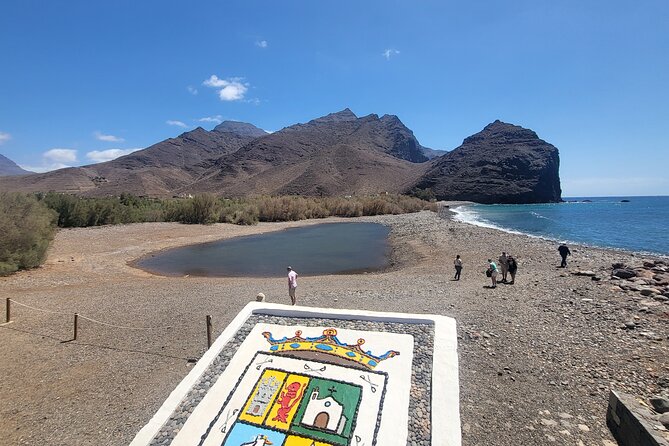
By the time you reach Playa de la Aldea in Puerto de la Aldea, the day shifts from rock science to shoreline life. This is described as the only easily accessible beach on that entire coast. You’ll walk around the port first, then head toward El Charco.
El Charco is a small natural lake on the beach made of sea water. What makes it more than a pretty spot is the human tradition tied to it: every year on September 11 in the village of San Nicolás, hundreds of people gather to fish by hand in the lake. It’s described as an Asset of Cultural Interest and rooted in pre-Hispanic tradition.
You’ll have about 40 minutes at this segment, and admission is free. If you’re traveling with someone who likes culture but also wants outdoor moments, this stop usually hits the sweet spot.
One small drawback: this is a shoreline stop, so you’ll want to be ready to stand and walk on uneven ground near the port.
Agaete natural pools: bring a swimsuit and pick your moment
After the coast drive with photo stops along the wild rocky stretches, you land in Agaete. This area is known for popular natural pools and beaches on Gran Canaria’s northern side.
You’ll walk along the maritime promenade, then stop at the natural pools themselves. The tour advice is direct: don’t forget your swimsuit if you want to swim. That’s one of the reasons I like this day plan. It doesn’t just show the coastline—it gives you a chance to experience it.
You’ll have about 30 minutes here, and admission is free. The time window is short enough that you won’t lose the day, but long enough to change plans on the spot. Want to swim? Do it. Prefer to just watch and photograph? Fine—there’s time.
If you’re worried about slippery surfaces, keep it simple: shoes with grip help, and you’ll want to take your time. The tour avoids making this feel like a sports event, but nature doesn’t do safety rails.



Puerto de las Nieves: fish lunch with sea views, plus Dedo de Dios
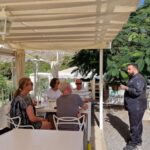
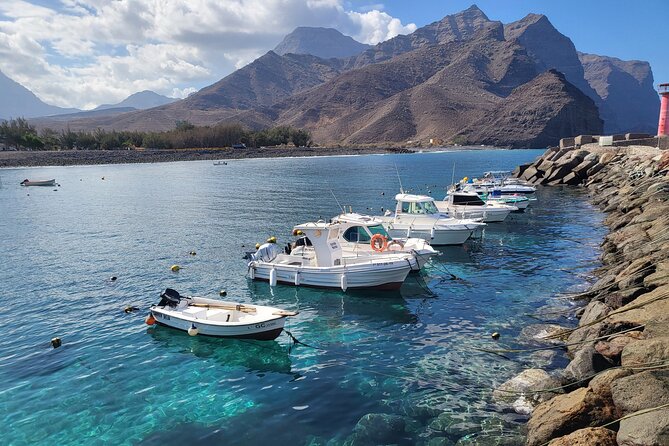
The day’s next anchor is Puerto de las Nieves, a small fishing port with lots of fish restaurants by the sea. This is where you’ll get a well-deserved lunch break. Meals aren’t included, so you’re choosing your own restaurant and budget.
I think this stop is good value even without lunch included. You’re paying for the transportation and guidance between multiple memorable places, then you still get to make your own meal decision in the most practical way: eat what the port is known for, right where the boats are.
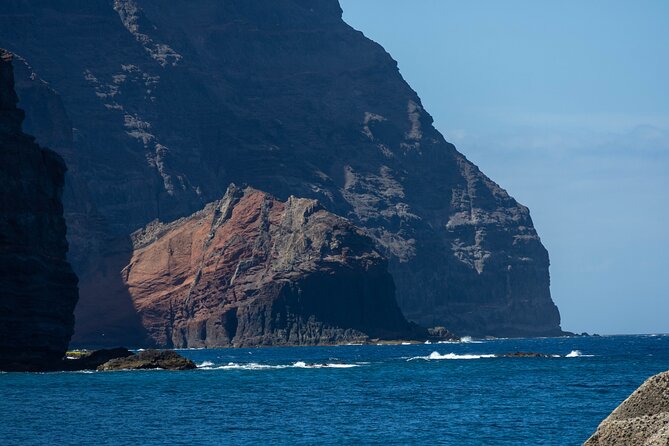
After lunch, you’ll walk through the port area with white and blue houses at the foot of a pebble beach. Then you’ll have a chance to see what remains of Dedo de Dios, the rock once shaped like a hand and finger pointing toward the sky. After a storm in fall 2005, the finger collapsed, leaving only the hand.
This adds a neat layer to the trip: you’re moving from volcanic layers and sea-water pools into a story of weather reshaping the coastline. The port feels lived-in, not staged.
Arucas and Iglesia de San Juan: black basalt in a green agricultural area
Finally, you head toward Arucas, leaving the main road for a route described as greener, with banana plantations and typical fincas. If you want a change of pace from coast and volcanic forms, this part of the drive helps.
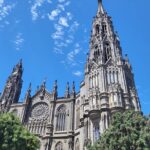
In Arucas, you’ll visit the Iglesia de San Juan cathedral from the exterior. The big visual detail is the building material: it’s built in black basalt, and it has four towers. The cathedral admission is listed as not included, but since this is an exterior visit, you’re not losing out on the main visual payoff.
You get about 30 minutes here. It’s a good way to close the day with a strong architectural moment without requiring extra planning or a longer stop.
Price and value: what $421.44 per person buys you
At $421.44 per person for an approximately 9-hour private tour, the value comes from how the day is put together.
You’re paying for:
- Private transportation in an air-conditioned vehicle
- Pickup offered (with the key note that there’s no pick-up in Las Palmas de Gran Canaria)
- A guided route across several distinct zones
- Bottled water and pictures
- Multiple stops where admission is free (most of the day), with only the Arucas cathedral admission flagged as not included
So the real “value math” is this: you’re buying time and transport convenience, plus a guide to connect the dots between volcanic history, coastal life, and local traditions. If you tried to do this on your own, you’d still need a lot of driving, and you might spend that time guessing where the stories are—this tour keeps the narrative threaded.
Lunch is on you, and coffee or snacks aren’t included. But the tour already gives you plenty of included moments where you’re not paying entry fees.
When this tour fits best (and when it doesn’t)
This is a strong match if you:
- Want a private day (only your group)
- Like a blend of views, culture, and nature
- Don’t mind walking for short stretches at each stop
- Are comfortable with a full day schedule starting at 9:00 am
It’s not a great fit if:
- You get motion sickness (the route has many turns)
- You have vertigo or trouble with winding roads
- You need a tour that’s easy to shorten or simplify, because the structure is fixed for a reason
Also note the age range stated as suitable: 12 to 90, as long as you don’t have walking problems.
Practical tips to keep the day smooth
A few things make your day easier without turning it into over-planning:
- Bring a swimsuit if you want to swim at Agaete natural pools. That’s one stop where you’ll feel the difference between watching and doing.
- Plan your lunch budget in Puerto de las Nieves. Fish lunch is the natural fit here, but it’s not included.
- Wear comfortable shoes. You’ll walk at ports and along the promenade, and some areas can be uneven.
- Keep your expectations for timing realistic. This is built around several short-to-medium stops, plus driving between them.
- If you’re not staying near pickup zones, check whether the tour can start from your area. Pickup is not available in Las Palmas de Gran Canaria, and the note also says the excursion may not be feasible from Las Palmas if there are fewer than four people.
Should you book this private natural pools day?
If you want Gran Canaria that feels real—wind and water, volcanic color, fishing-port meals, and small slices of cultural tradition—this is a great choice. The itinerary is packed, but it doesn’t feel random. It strings together places where the scenery has a story, not just a view.
I’d book it if you’re the type who enjoys being outside for most of the day and you’re okay with curvy roads. Skip it if motion sickness or vertigo is an issue, because the tour openly warns about the road conditions.
FAQ
How long is the private tour?
It runs for about 9 hours (approx.), and the total route duration includes travel time.
What time does the tour start?
The start time is 9:00 am.
Is pickup available from Las Palmas de Gran Canaria?
No pick-up is offered in Las Palmas de Gran Canaria.
What’s included in the price?
Included items are bottled water, an air-conditioned vehicle, private transportation, and pictures. Photos are part of the tour offering.
Is lunch included?
No. Lunch is not included, though there’s a lunch stop in Puerto de las Nieves where you can eat at typical Canarian fish restaurants.
Is admission free at the stops?
Most listed stops are marked as free admission, but the Arucas stop notes that admission is not included (the cathedral visit is from the exterior).
Is the tour suitable if I get motion sickness or have vertigo?
It’s not recommended if you are prone to motion sickness. The route has winding roads that are not suitable for people with vertigo.