REVIEW · LAS PALMAS
Gran Canaria : Vía Ferrata “Amor & Odio” – Medium level
Book on GetYourGuide →Operated by UMIAGA experience · Bookable on GetYourGuide
Cables, coast air, and real commitment. This Gran Canaria via ferrata, Amor y Odio, mixes solid challenge with gorgeous sea views, so it feels more like an adventure than a workout. I love the safety-first setup and the top-quality equipment that lets you focus on the climb instead of worrying about the basics. One consideration: this route is not a good match if you deal with vertigo or have health or mobility limitations listed by the operator.
In practice, the experience runs in a small group of up to 9, which makes it easier to get personal coaching on the trickier bits. I also like that you get a professional photo report, plus an energy bar and water, so the day keeps its momentum. If you prefer ultra-solo time, the guided rhythm may feel a touch structured, but that’s the trade for safety and good instruction.
In This Review
- Key moments that make this via ferrata worth your time
- What makes Amor y Odio a smart pick on Gran Canaria
- Meeting at Bahia Feliz and timing your day (4 hours in total)
- The 30-minute approach: where your shoes and mindset matter most
- Inside the ferrata: how medium difficulty works in real life
- Monkey Bridge and the swing: the sections you’ll remember
- The return walk: finish strong, not wiped out
- Safety, gear, and guide support: the real value behind “medium”
- Price of about $82: what you’re actually paying for
- What to bring (and what to skip) so you don’t ruin the experience
- Who Amor y Odio is (and isn’t) for on this day in Gran Canaria
- Should you book this Gran Canaria via ferrata?
- FAQ
- FAQ
- Where is the meeting point for the via ferrata?
- How long does the activity take?
- Is this via ferrata suitable for beginners?
- What’s the route like before you start climbing?
- What are the main highlights on the climb?
- What should I bring for the day?
- Is any equipment provided?
- Who guides the group and what languages are used?
- Can I cancel and get a refund?
Key moments that make this via ferrata worth your time
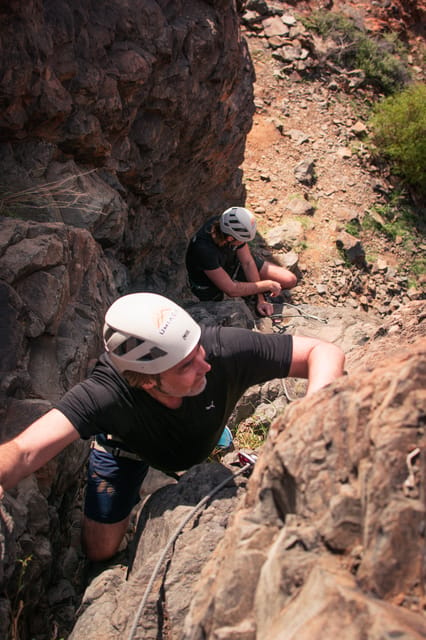
- Medium difficulty with choice: you can follow different paths depending on your level and the group.
- A sea-view “reward” built into the route: the swing is timed so you actually enjoy it, not just survive it.
- The Monkey Bridge moment: a standout section in the middle that adds character and nerves.
- Two 30-minute walks: a warm-up approach and an easy return back to the parking area.
- Top-quality gear and qualified guides: safety is not treated as an afterthought.
- Small group energy: limited to 9 participants, so you get more attention on the wall.
What makes Amor y Odio a smart pick on Gran Canaria
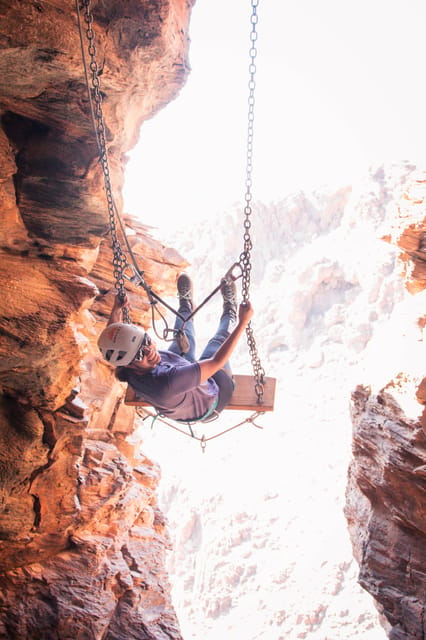
“Via ferrata” means an iron path: a protected route designed for climbing with fixed cables and safety devices. On Gran Canaria’s coast area, Amor y Odio brings the added ingredient of views. That matters because a lot of people try a ferrata and only remember the hard moments. Here, the sea scenery gives your brain a breather, especially when you’re crossing the sections where you might otherwise tense up.
The difficulty is described as medium. That’s the sweet spot for most first-timers who don’t want a tame walk, but also aren’t looking for a fight-the-clock, head-down-only type of climb. The operator specifically frames it for people who want to start in the mountains and for those who have already tried via ferrata before. In other words, it’s not a “learn from zero” promise, but it is designed to be approachable with guidance.
And the theme of the route is in the name: Amor y Odio. You’ll feel both on the cables. The parts that are fun tend to come with height and movement. The parts that feel hard tend to show up when you have to stay calm and technical while your body wants to rush. The good news is the setup is meant to help you manage that mental side of climbing.
You can also read our reviews of more tours and experiences in Las Palmas.
Meeting at Bahia Feliz and timing your day (4 hours in total)
Your meeting point is simple: there’s parking just behind the Bahia Feliz bus stop. From there, you’re not dropped straight onto the steel. You start with a walking approach of about 30 minutes until you reach the beginning of the ferrata.
That approach walk is more than a formality. It’s your chance to get your shoes sorted, check your grip comfort, and settle your breathing before you clip into the climbing route. If you show up under-prepared for walking, you’ll feel it once the climbing starts. If you’re ready, the ferrata feels like a proper “act two” instead of the moment you discover your footwear doesn’t cut it.
Plan for the whole activity to take around 4 hours. That’s long enough to feel the full experience, but not so long that you’ll lose the plot. The route itself also has a clear rhythm: approach, climb, key highlights, then return walk back to the parking area with another 30 minutes.
The 30-minute approach: where your shoes and mindset matter most
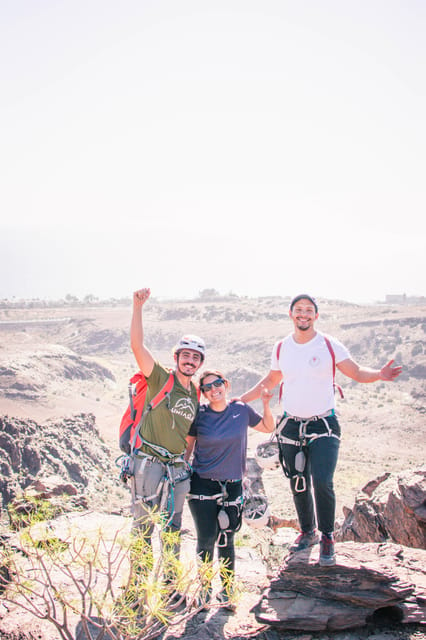
That first 30-minute walk is your warm-up and your reality check. The operator’s “medium” label assumes you can handle walking on uneven ground while carrying a daypack. It also assumes you’ll be wearing the right stuff from the start.
Here’s what you’ll want to do before the cables:
- Wear comfortable shoes with a secure fit and closed toes.
- Put on long pants (it’s required).
- Bring sunscreen and use it early. You’re in the open with sea air.
- Bring water and keep it accessible. You’ll be given water, but you’ll still want your own comfort level.
I like treating this approach as part of the training, not just transportation. Once you reach the start, your body already knows what the route environment feels like. That’s especially useful if you’re a little nervous about heights. The approach lets you get used to the terrain and focus on steady breathing, which helps a lot when the climbing gets more demanding.
Inside the ferrata: how medium difficulty works in real life
Once you’re on the route, via ferrata is all about progress along a protected line. You use fixed cables plus safety devices like ladders and bridges, so you’re moving through sections rather than free-climbing into the unknown.
The big practical detail here is that you can choose different paths depending on your level and the group. That’s not a small point. Many “medium” activities either force everyone down the same line or pretend there are options. With Amor y Odio, you’re told there are different difficulties inside the same overall route experience.
So you should think of this as a guided choose-your-own-pace climbing day:
- If you want to start, you can aim for the sections that match your comfort.
- If you’ve done ferrata before, you can take on the tougher options when the group and guide allow it.
You’re not just climbing randomly. You’re climbing with a plan, and that plan comes from qualified guides. The guide is also responsible for keeping everyone safe, pacing the group, and managing the route choices so you don’t end up with a mix that’s too far apart in ability.
Small-group size matters here too. With a maximum of 9 participants, you’re less likely to get swept along like a number. You can ask questions, and your guide can read what you need, not just what everyone needs.
Monkey Bridge and the swing: the sections you’ll remember
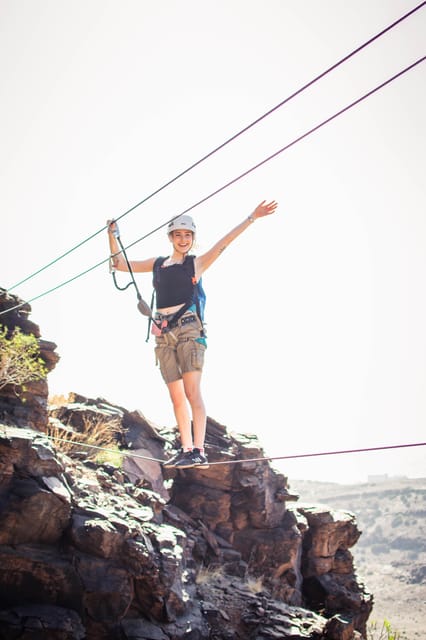
Midway through the route, you hit the Monkey Bridge. It’s specifically called out as a key point, which usually means it’s both memorable and a real test of coordination and nerve control. Bridges on ferrata routes tend to do two things at once: they change your balance and they break your rhythm. If you stay calm here, the rest feels more manageable.
Then further ahead comes a swing section. What makes it stand out is the pairing: you’re able to enjoy wonderful views while you’re on it. That’s a smart design choice. If the route is only difficult, you stop noticing anything except the next move. Here, the swing is a built-in reward moment that keeps the day emotional in a good way.
So how should you approach these highlights?
- Don’t rush them. Swing and bridge moments are where rushed timing turns into extra stress.
- Keep your focus narrow: one handhold, one foot placement, one breath at a time.
- Let the guide set the pace for your group. Your best success depends on timing, not speed.
Between Monkey Bridge and the swing, the route is doing what ferrata should do: it forces you to overcome personal limits, then hands you a view-based payoff that makes the effort feel worth it.
The return walk: finish strong, not wiped out
When you finish the via ferrata section, you return by the path back to the starting parking lot. That return walk is about 30 minutes. This is where people either feel proud and energized, or they feel flat if they pushed too hard on the climb.
To finish well:
- Use the return to normalize your breathing.
- Drink water and eat the energy bar if you haven’t already.
- Take a moment to look back at the route you did. Even if you don’t want to be dramatic, it helps your brain file the experience as a win.
You also get a photographic report after. That’s a nice touch because via ferrata is fast, and your memory can get distorted by adrenaline. Having pro images helps you remember the actual line you took and the key moments, instead of only remembering the tough parts.
Safety, gear, and guide support: the real value behind “medium”
The headline promise is safety in all activity, and it’s backed by qualified guides plus the right materials for the climb. You’re also covered with RC and ACC insurance, which is another way of saying the operator treats risk management as part of the product, not an extra.
That matters because via ferrata is mentally intense. Even when your body is capable, your brain can get loud. A good guide reduces that noise by giving you clear instructions at the moments you need them.
And the reviews support that kind of guide impact. One example: Aron is mentioned as a fantastic guide who combined a great ferrata experience with knowledge about local history and nature. Another guide is described as very good, with the small group setting making the experience feel personal. The common thread: instruction isn’t just “hold this, clip that.” It’s also about making the setting understandable, which helps you stay present instead of panicking.
You’re also given an energy bar and water, plus the operator provides the specific activity materials. So your money goes toward more than just access to cables. You’re paying for safety systems, qualified oversight, and a day that’s designed to run smoothly.
Price of about $82: what you’re actually paying for
The price is $82 per person for about 4 hours. That might look steep if you think of it as “just climbing.” But you’re not just climbing.
Your cost is covering:
- Services and materials for the activity
- Qualified guides for safety and route management
- RC and ACC insurance
- A professional photographic report with high-quality images
- An energy bar and a bottle of water
When you break it down that way, $82 starts to look more like “paying for a complete guided outdoor experience” rather than “paying for a self-guided hike.” The small group limit of 9 participants also increases guide attention and reduces crowd pressure on decision points like harder versus easier path choices.
Is it still worth it if you’re only after views? The swing and sea-view sections are real perks. But the value really comes when you want the combination of guided challenge plus a safety-managed route. If you want total freedom with no instruction, you’d likely be happier with a different kind of outdoor day.
What to bring (and what to skip) so you don’t ruin the experience
You’ll want to pack smart, not heavy. The essentials listed are:
- Comfortable shoes
- Long pants
- Comfortable clothes
- Daypack
- Sunscreen
- Reusable water bottle
- Drinks
The operator also prohibits:
- Weapons or sharp objects
- Smoking
- Drones
- Alcohol and drugs
- Littering
- Bare feet
That’s not just rules for fun. Long pants and closed-toe shoes protect you in common friction zones. Sunscreen matters because you’re outside for hours. A daypack helps you keep your basics together so you’re not fumbling when the guide calls you forward.
If you’re tempted to show up in sandals because you’ll change later, don’t. Ferrata days don’t pause for fashion emergencies. Wear what keeps you safe and moving.
Who Amor y Odio is (and isn’t) for on this day in Gran Canaria
This via ferrata is best for:
- Adults 14 and older
- People with enough fitness for an outdoor half-day and a walking approach/return
- Climbers who want a medium challenge with safety and guidance
- Anyone who gets something out of conquering small fear moments on a guided route
It’s not suitable for a long list of conditions. Key examples from the operator details include:
- Pregnant women
- People with back problems, mobility impairments, heart problems
- Anyone with vertigo
- People with respiratory issues or epilepsy
- People with motion sickness
- People with recent surgeries or altitude sickness
- People with haemophilia
- People with low level of fitness
- People under specific height thresholds (listed) and children under 14
If you’re unsure about medical suitability, don’t guess. Via ferrata can be mentally demanding even when you’re physically okay, and the operator clearly wants to avoid situations where someone could be put at risk.
Should you book this Gran Canaria via ferrata?
Book Amor y Odio if you want a guided climb that mixes challenge with big payoff moments: Monkey Bridge, a swing, and sea views, all wrapped in safety gear, qualified guides, and a small-group feel.
Skip it if you know heights trigger vertigo, you have mobility or medical limitations listed by the operator, or you’re not comfortable with a moderate outdoor commitment that includes a 30-minute approach and 30-minute return.
If your goal is “a real day outside” that feels active and memorable, this hits the mark. And if you’re nervous, that’s not a reason to avoid it outright, as long as you’re within the suitability guidelines and you’re ready to listen to your guide and take it step by step.
FAQ
FAQ
Where is the meeting point for the via ferrata?
You meet at the parking area just behind the Bahia Feliz bus stop.
How long does the activity take?
The total duration is about 4 hours.
Is this via ferrata suitable for beginners?
It’s listed as medium difficulty, aimed at people who want to start in the mountains and people who already started via ferrata.
What’s the route like before you start climbing?
You begin with an approximately 30-minute walking approach before reaching the start of the ferrata.
What are the main highlights on the climb?
You’ll pass the middle section with the Monkey Bridge, and later you’ll do a swing designed to enjoy wonderful views. The route also includes sea views.
What should I bring for the day?
Bring comfortable shoes, long pants, comfortable clothes, sunscreen, drinks, water (and a reusable bottle), and a daypack.
Is any equipment provided?
Yes. The activity includes services and materials and all the specific material for the climb, plus qualified guides.
Who guides the group and what languages are used?
Guides speak Italian, English, and Spanish.
Can I cancel and get a refund?
Free cancellation is available up to 24 hours in advance for a full refund.